
Yes, solar pool heating really works for fiberglass. You’ll see your water temperature climb 5°F to 15°F, depending on sun exposure and system sizing. Fiberglass gives you an edge here. Its non-porous surface retains absorbed heat longer than other pool types, so every degree your collectors deliver compounds instead of dissipating quickly. Add a thermal blanket and you’ll conserve up to 15°F overnight. There’s more you’ll want to know before installing.
Key Takeaways
- Solar pool heating raises fiberglass pool water temperature by 5°F to 15°F, depending on sun exposure and system sizing.
- Fiberglass retains absorbed heat longer than other pool types, amplifying every degree delivered by the collectors.
- The system works best in sunny regions, with efficiency dropping markedly during overcast days and cool nights.
- Thermal blankets add up to 15°F overnight retention, extending warmth beyond the immediate heating cycle.
- Annual heating costs can drop up to 70%, with payback in two to three years and a 10, 20 year lifespan.
How Solar Pool Heating Actually Works
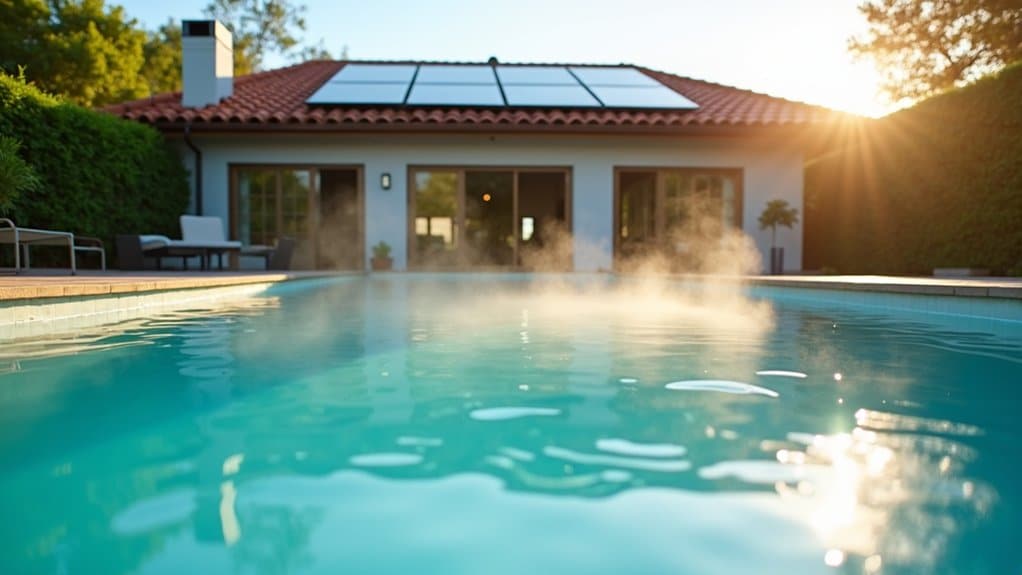
Solar pool heating works through a straightforward circulation loop that you’ll find remarkably efficient once it’s dialed in. Your solar pump, drawing roughly 1 kW per hour, pushes cold water through capillary tubes mounted on collector plates atop hot roofs or sunny areas. These plates absorb solar radiation, heating the water before it returns to your pool. Temperature sensors and automatic flow valves activate the system only when panels exceed pool temperature, preventing unwanted cooling. So does solar pool heating work? Absolutely, and solar pool heaters shine with fiberglass pool heating specifically because fiberglass retains absorbed heat longer than other pool types. Insulate your piping properly and minimize distances between components, and you’ll maximize fluid flow efficiency throughout the entire loop.
Does Solar Heating Work Well on Fiberglass Pools?
You’ll see solar heating raise your fiberglass pool’s water temperature by 5°F to 15°F, depending on your sun exposure. Fiberglass holds onto that absorbed heat longer than other pool types, which stretches your solar system’s efficiency well beyond the actual heating cycle. That combination means you’re not just gaining warmth, you’re keeping it.
Temperature Gains Achieved
Solar heating systems on a fiberglass pool typically raise water temperatures 5°F to 15°F, depending on your sun exposure. That range isn’t arbitrary. It reflects how much direct sunshine your collector plates receive throughout the day. On the solar heater unit itself, direct sunlight can boost exit tube temperatures by 10°F, meaning water returns to your pool noticeably warmer than it left.
What makes solar pool heating fiberglass setups particularly effective is heat retention. Fiberglass holds absorbed heat longer than concrete or vinyl, so your gains compound rather than dissipate. Your solar pool maintains consistent temperatures throughout the entire volume, not just near the surface. Add a thermal blanket, and you’ll retain that heat overnight, gaining up to 15°F more.
Heat Retention Advantages
Fiberglass retains heat better than concrete and vinyl, holding onto the warmth your solar system delivers. The non-porous surface resists heat transfer to surrounding soil, so the warmth your collector plates generate stays in the water longer. You’ll notice this advantage most during evenings, when concrete pools bleed temperature into their surroundings while yours maintains consistent readings.
Pair this natural retention with a thermal blanket cover, and you’ll gain up to 15°F in overnight heat conservation. That combination reduces how hard your solar system works the next day, since you’re not starting cold each morning.
For occasional users heating seasonally, this retention means fewer sunny hours needed to reach comfortable temperatures. You’re maximizing every degree your panels produce, stretching efficiency across the entire volume.
How Much Warmer Will Solar Heating Make Your Pool?
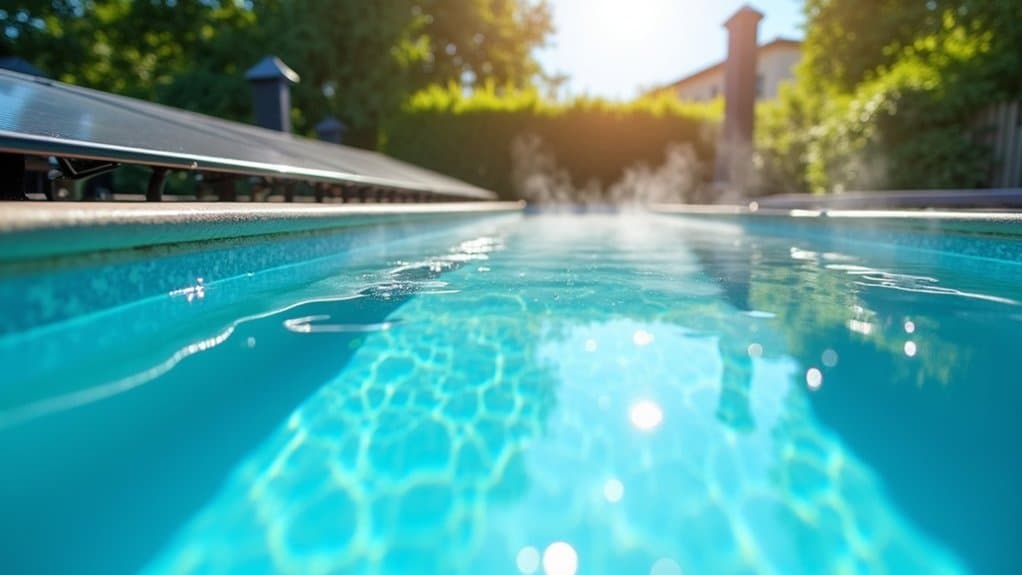
Solar heating raises fiberglass pool water temperatures by 5°F to 15°F, depending directly on your sun exposure and system sizing. The exact gain hinges on several measurable factors:
- Sun intensity: Direct sunshine can push exit tube temperatures up by 10°F, feeding warmer water back to your pool.
- Pool size: Smaller pools heat within hours, while larger volumes may need several days to reach target temperatures.
- Heat retention: Adding a thermal blanket cover retains nighttime heat and boosts temperatures by up to 15°F.
Fiberglass works in your favor here, holding absorbed heat longer than other pool types. That retention amplifies every degree your collectors deliver. A fiberglass pool closing checklist is essential for maintaining the longevity of your pool. It ensures that you address key areas like water chemistry and equipment maintenance.
Where Solar Pool Heating Performs Best
Solar pool heating performs best in sunny regions with high solar irradiation, where warm ambient days and abundant sunshine drive effective heat transfer. Where you install these systems determines whether they deliver real results or disappoint. If you’re in an area with frequent overcast conditions or low sunlight, you’ll see efficiency drop markedly. Cool nights and cloudy days work against you, actually cooling your water rather than warming it, so you’ll want to avoid running the system then. Regional climate variations dictate everything, whether solar heating alone suffices for year-round use or just seasonal spring-through-fall operation. Ample sunlight and warm seasonal temperatures make solar heating ideal; marginal climates leave you needing supplemental heating for consistent results.
When Sunlight Isn’t Enough for Your Pool
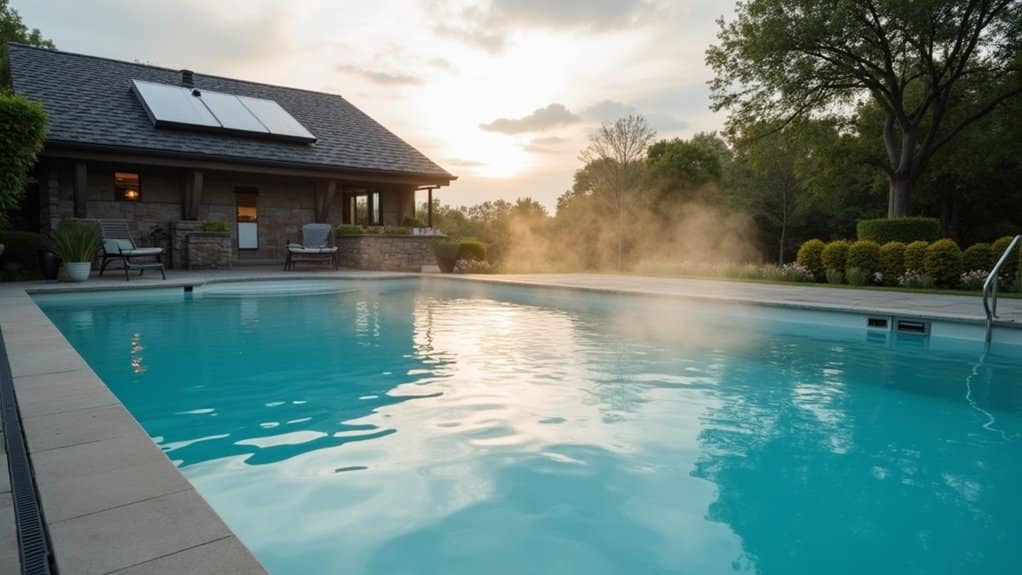
Solar heating falls short when your climate can’t deliver consistent solar irradiation. Efficiency drops markedly in overcast regions, and running the system during cool nights or cloudy days actually cools your water. If you’re a frequent or year-round swimmer, sunlight alone won’t maintain reliable temperatures.
Watch for these situations where you’ll need backup:
- Frequent use: Daily swimming demands consistency that intermittent sunshine can’t guarantee, so pair your setup with a heat pump or gas heater.
- Large pools: Bigger water volumes require more efficient heating to hold uniform temperatures across the entire pool.
- Off-season swimming: Winter and extended overcast stretches leave solar underperforming.
In these cases, a complementary system keeps your fiberglass pool comfortable regardless of weather.
What Solar Pool Heating Costs to Install
When you’re budgeting for solar pool heating, expect professional installation to run between $2,500 and $6,500 depending on your pool size and roof configuration. You’ll typically recoup that upfront cost within two to three years through utility savings, since the system runs on free solar energy instead of gas or electricity. After that payback period, you’re cutting your annual pool heating costs by up to 70%, which makes the long-term operational savings hard to ignore.
Typical Installation Price Range
Most professional solar pool heating installations run between $2,500 and $6,500, and where your project lands within that range depends on your pool size, roof configuration, and the collector square footage you’ll need. Larger pools demand more collector plates and longer piping runs, which push costs toward the upper end.
Several factors shift your final price:
- Roof accessibility and pitch, complex layouts or multi-level roofs increase labor time and mounting hardware costs.
- Collector square footage, you’ll typically need collector area equal to 50-100% of your pool’s surface, and more panels mean higher material costs.
- Piping distance, greater separation between your collectors, pump, and pool raises both material and insulation expenses.
Keep these distances minimized and you’ll reduce installation costs measurably.
Payback Period Timeline
The payback period for a solar pool heating system is typically two to three years. Every dollar you sink into that $2,500-$6,500 installation starts working immediately, and you’ll recover it through utility savings. Here’s how the math works: solar systems cut your annual pool heating costs by up to 70%, so the more you’d normally spend on gas or electric heating, the faster you’ll hit break-even. Your solar pump draws roughly 1 kW per hour to circulate water, which keeps operating expenses minimal since the sun’s energy costs nothing.
If you live in a sunny region with high solar irradiation, expect the shorter end of that timeline. After payback, everything’s pure savings, and with a 10 to 20-year lifespan, you’ll enjoy years of essentially free heating afterward.
Long-Term Operational Savings
Long-term operational savings are where solar pool heating pulls ahead. Once your system’s running, you’re drawing free solar energy instead of paying for gas or electricity. Your annual heating costs drop by up to 70%, and the only power you’ll use is the solar pump, consuming roughly 1 kW per hour to circulate water.
Here’s what keeps your long-term costs low:
- Minimal maintenance, durable components need little servicing beyond standard pool pump upkeep
- Long lifespans, systems last 10 to 20 years or longer when installed properly
- Zero fuel expenses, you’re not buying gas or drawing heavy electrical loads
Over two decades, those savings compound significantly, easily outpacing what you’d spend running a gas heater.
How Fast Solar Heating Pays for Itself
Solar pool heating typically pays for itself within two to three years. You’re looking at an installation cost between $2,500 and $6,500 for professional work, which sounds steep until you factor in the operational savings. Your system cuts annual pool heating costs by up to 70%, since you’re using free solar energy instead of gas or electricity. That single kilowatt-per-hour solar pump draws minimal power, so your utility bills stay low month after month. The exact payback period depends on your pool size, local sun intensity, and how often you heat. After that, you’re basically heating your pool for free, with 10 to 20 years of continued savings ahead.
Make Your Solar System Last 20 Years
Making your solar system last 20 years comes down to proper installation and maintenance, since solar systems last 10 to 20 years or longer and good care makes the difference between hitting that upper range and replacing components early. Your biggest threats are UV exposure and poor water flow, both of which you can control.
Focus your maintenance efforts on these key areas:
- Pipe insulation: Install rubber-type insulation to protect piping against UV degradation and environmental damage
- Component distances: Minimize the distance between collectors, pump, and pool to improve fluid flow efficiency
- Pump servicing: Maintain your solar pump alongside standard pool pump maintenance since it consumes only about 1 kW per hour
Keep your collector plates clean and your flow valves calibrated. Do this consistently, and you’ll get durable performance with minimal servicing across two full decades.
Is Solar Pool Heating Right for You?
Solar pool heating is right for you if you live in a sunny region, swim seasonally, and can tolerate some temperature variation. Your decision depends on three factors: your climate, how often you use your pool, and your tolerance for temperature swings. If you live in a sunny region with high solar irradiation, you’ll see water temperatures rise 5°F to 15°F consistently. In cloudy or low-sunlight areas, efficiency drops noticeably, and you’ll fight cooling effects during overcast days and cool nights. Heat a pool naturally by utilizing solar energy, which is one of the most sustainable methods available. You can enhance this process by ensuring your pool is properly insulated, minimizing heat loss during cooler nights.
Consider your usage pattern. If you’re an occasional swimmer using your pool from spring through fall, solar heating’s sufficient. But if you demand year-round consistency, you’ll need a complementary heat pump or gas heater to fill the gaps. Gas vs heat pump pool heating presents distinct advantages depending on your needs. Gas heaters provide rapid heating, making them ideal for spontaneous swims, while heat pumps are more energy-efficient for consistent use.
Finally, weigh the economics. You’ll pay $2,500 to $6,500 upfront, but you’ll recover that within two to three years through utility savings.
Conclusion: Is Solar Heating Worth It for a Fiberglass Pool?
Solar pool heating works well with fiberglass pools and can meaningfully extend the swim season with almost no running cost. Because fiberglass insulates better than concrete and holds heat longer, it makes the most of the warmth solar collectors provide. The main requirements are enough sun and suitable space for the panels. For owners in sunny climates who want cheaper, greener heating, solar is a smart long-term investment.
Call Today and Design a Pool Made for You
Whether you’re planning saltwater conversion, solar heating, or robotic cleaner integration, the right team makes it all seamless. At Schiller Pools in Port St. Lucie, FL, our skilled team delivers dependable Fiberglass Pool Installation built for Florida’s climate and your lifestyle. Call +1 (561) 475-5997 today and turn your backyard into a private retreat.
Frequently Asked Questions
Can I Install a Solar Pool Heating System Myself?
Simple systems and solar mats are within reach for a handy homeowner, but a rooftop system involves mounting panels, plumbing connections, and sometimes roof penetrations that are better left to professionals. Proper installation protects the roof and ensures the system performs. For anything beyond a basic setup, professional installation is the safer choice.
Does Solar Heating Work for Indoor or Shaded Pools?
Solar heating depends on direct sunlight on the collectors, so it does little for a pool whose collector location is heavily shaded. The pool itself can be indoors as long as the panels sit somewhere sunny, like a roof. Where good sun exposure is not available, another heating method will be more reliable.
How Much Roof Space Do Solar Collectors Require?
A common guideline is a collector area equal to a large share of the pool’s surface, often around half to the full surface depending on climate and goals. Sunnier locations need less. A solar installer can assess your roof orientation, angle, and available space to size a system that meets your heating needs.
Can Solar Heating Be Combined With Saltwater Pool Systems?
Yes. Solar heating warms the water and works independently of how the pool is sanitized, so it pairs fine with a saltwater system. Many owners run both, using solar for low-cost heat and salt for gentle sanitizing. An installer can integrate the solar heating into the existing plumbing alongside the salt system.
Are There Tax Credits or Rebates for Solar Pool Heaters?
Some states, utilities, and local programs offer incentives for solar pool heating, though availability and amounts change over time and vary by location. Federal solar tax credits have generally applied to home solar rather than pool heating specifically. Check current federal, state, and utility programs, and confirm eligibility before counting on a rebate.