
You’ve got several inground pool conversion ideas depending on your current pool setup. Shape modifications run $30,000 to $60,000, while depth changes range from $4,000 for deep-to-shallow to $50,000 for shallow-to-deep excavations. Saltwater upgrades offer the most budget-friendly option at $500 to $4,000, and natural pool transformations top out around $175,000. Your pool’s material, concrete, fiberglass, or vinyl, directly impacts labor costs and feasibility. Understanding the full cost breakdown helps you choose the right conversion for your budget.
Pool Conversion Costs at a Glance: $500 to $175,000
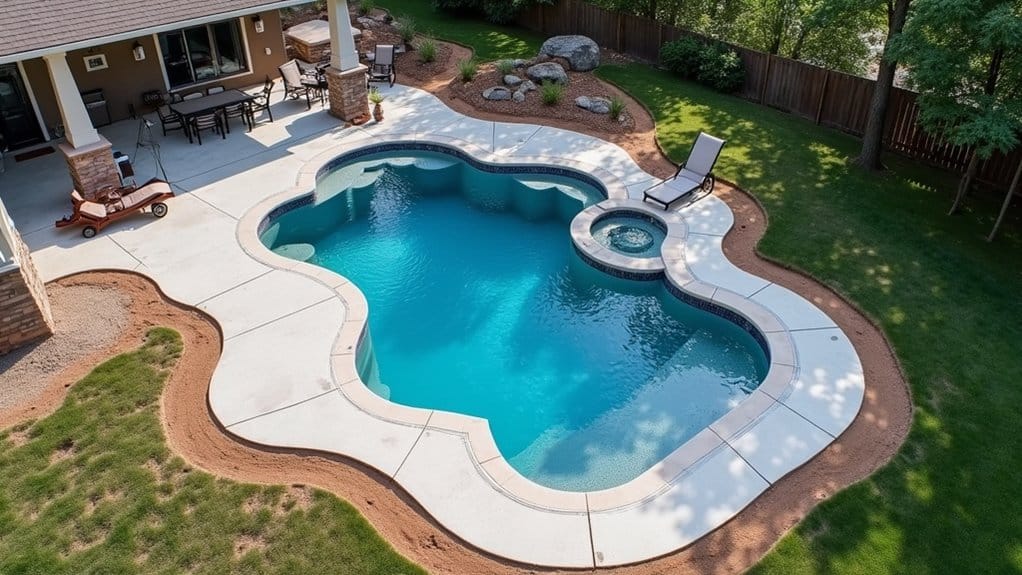
Pool conversion costs span a wide range, from $500 for basic saltwater system upgrades to $175,000 or more for extensive structural transformations. Your final investment depends on the conversion type you’re pursuing and your pool’s existing structure.
A pool depth modification typically falls within mid-range costs, while a complete pool shape change involving concrete work can reach $65,000 to $120,000. If you’re considering a pool function redesign, such as converting a recreational pool into a lap pool or therapy-focused space, expect costs between $50,000 and $85,000 for standard projects. Adding enhancements like spas or water features during your conversion can push costs toward the higher end, since a common range for quality inground pool work falls between $75,000 and $100,000. Concrete pools offer complete customization options for shape and design, making them ideal candidates for extensive conversion projects.
Labor accounts for 25% to 50% of your total budget. Excavation adds $500 to $3,020, and regional factors greatly impact pricing. California homeowners, for example, face costs ranging from $59,000 to $140,000 for thorough conversions.
Shape Conversion Costs: $30,000 to $60,000
Reshaping your pool’s footprint represents one of the most impactful structural conversions available, with costs typically ranging from $30,000 to $60,000 for standard modifications. Your pool type considerably influences pricing, concrete pools command higher costs due to hand-shaped construction requiring extensive labor, while fiberglass options offer fixed pricing based on existing molds. In addition to the initial investment, ongoing maintenance and potential upgrades can also contribute to your overall pool renovation cost. Homeowners often overlook these factors, yet they can significantly affect the total budget over time. It’s essential to consider these aspects when planning a pool renovation to ensure it aligns with your financial goals. Investing in a pool upgrade can enhance not only the aesthetic appeal of your outdoor space but also its functionality and value. With the right enhancements, such as integrated lighting, heating systems, or improved filtration, you can transform your pool into a year-round oasis. This modernization ultimately leads to a more enjoyable swimming experience and can significantly boost the resale value of your property.
When exploring inground pool conversion ideas, consider that standard shapes like rectangles cost less than freeform designs. Vinyl liner pools require custom-fitted liners precisely measured for each unique shape, adding material and labor expenses. Labor costs typically represent 40% of your remodeling budget, making this a significant factor when planning shape conversions. Keep in mind that vinyl liners typically need replacement every 5 to 9 years, which adds to long-term costs when budgeting for shape modifications.
Among swimming pool conversion ideas, shape modifications involve excavation, structural changes, and finishing work similar to expansion projects. Straight-lined designs remain easier and cheaper to construct than curved configurations, making them practical choices for budget-conscious homeowners seeking meaningful transformation. California homeowners should also factor in permitting requirements and compliance with local building codes, which can add time and cost to shape conversion projects. Homeowners also need to consider the various remodeling options for inground pools that align with their aesthetic preferences and lifestyle needs. From adding water features to implementing more energy-efficient systems, these enhancements can provide both visual appeal and improved functionality. Engaging with a reputable contractor can help facilitate these decisions while ensuring compliance with local regulations.
Depth Conversion Costs: $4,000 to $50,000
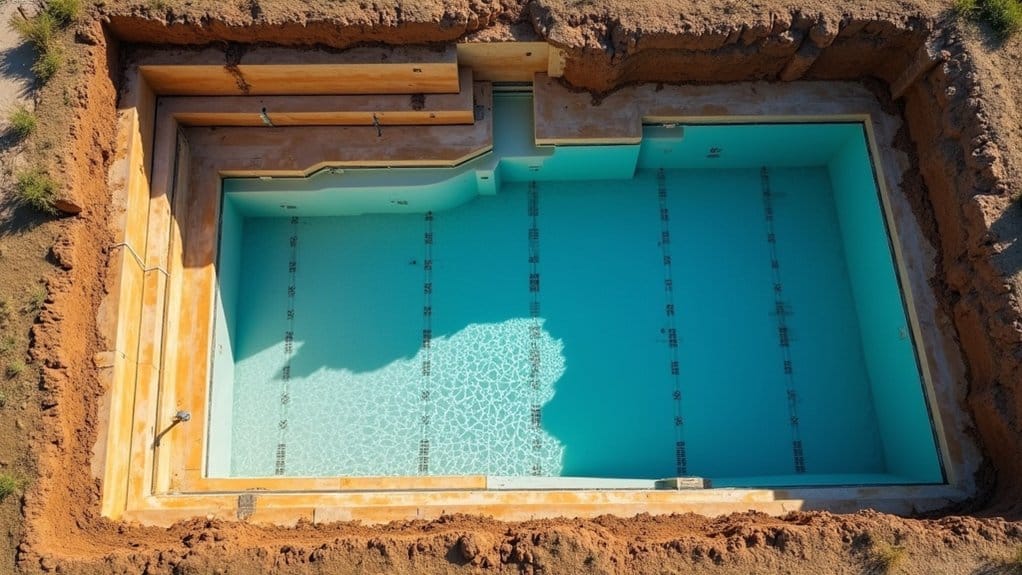
When you’re considering depth modifications for your inground pool, costs vary dramatically based on whether you’re going deeper or shallower, ranging from $4,000 to $50,000.
| Conversion Type | Cost Range |
|---|---|
| Deep-to-Shallow | $4,000, $7,000 |
| Shallow-to-Deep | $10,000, $50,000 |
| Sinking Platform Alternative | $3,500, $7,000 |
| Resurfacing (Required) | $10,000, $20,000 |
Shallow-to-deep conversions demand excavation, surface removal, and complete resurfacing, driving costs noticeably higher. You’ll face additional expenses as pool size increases since contractors price by square or linear foot. Keep in mind that labor costs average $6,000, which contributes significantly to your total project budget.
Deep-to-shallow projects cost less because they involve filling with dirt or gravel rather than excavating. If you want gradual depth changes without permanent modifications, a sinking platform creates adjustable shallow zones within your existing structure. Your concrete pool will require resurfacing every 10-15 years regardless of conversion type, and you should also factor in the high maintenance costs and effort associated with concrete pools over their lifetime.
Saltwater and Natural Pool Conversions: $500 to $175,000
You can convert your traditional chlorine pool to a saltwater system for as little as $500 with a DIY approach or up to $4,000 for professional installation with a premium generator. Saltwater conversions offer long-term savings since annual chemical costs drop from $370, $900 to just $70, $100, though you’ll need to budget for salt cell replacement every 3, 7 years at $700, $2,000. Beyond cost savings, saltwater pools provide water that is gentler on eyes, skin, and hair compared to traditional chlorine systems. The lower maintenance requirements also mean less time spent testing, shocking, and adjusting water levels throughout the season. You should also factor in annual servicing costs of $200 to $400 for the salt cell and control unit to keep your system running efficiently. For a more dramatic transformation, natural pool conversions eliminate chemicals entirely by using plants and biofilters, though these projects typically range from $50,000 to $175,000 due to the excavation and ecosystem infrastructure required.
Saltwater Conversion Costs
A saltwater conversion transforms your pool’s sanitation system from traditional chlorine dosing to automated chlorine generation through electrolysis. You’ll invest $1,500 to $2,500 total for inground pools, with salt chlorine generators representing the largest expense at $1,000 to $3,200. Above-ground pool conversions cost significantly less, typically ranging from $600 to $1,200.
Your initial salt requirement adds $100 to $300, calculated at one 40-pound bag per 2,000 gallons of water. A 20,000-gallon pool needs 10 to 12 bags at $10 to $40 each.
The financial advantage becomes clear in annual operations. You’ll spend $70 to $100 yearly on salt and chemicals versus $370 to $900 for traditional chlorine maintenance. Factor in $35 to $50 additional electricity costs and salt cell replacements every 3 to 7 years at $700 to $1,100. Most homeowners recover conversion costs within two swimming seasons. Beyond cost savings, swimmers enjoy softer water that eliminates harsh chlorine smells and reduces skin irritation.
Natural Pool Transformation
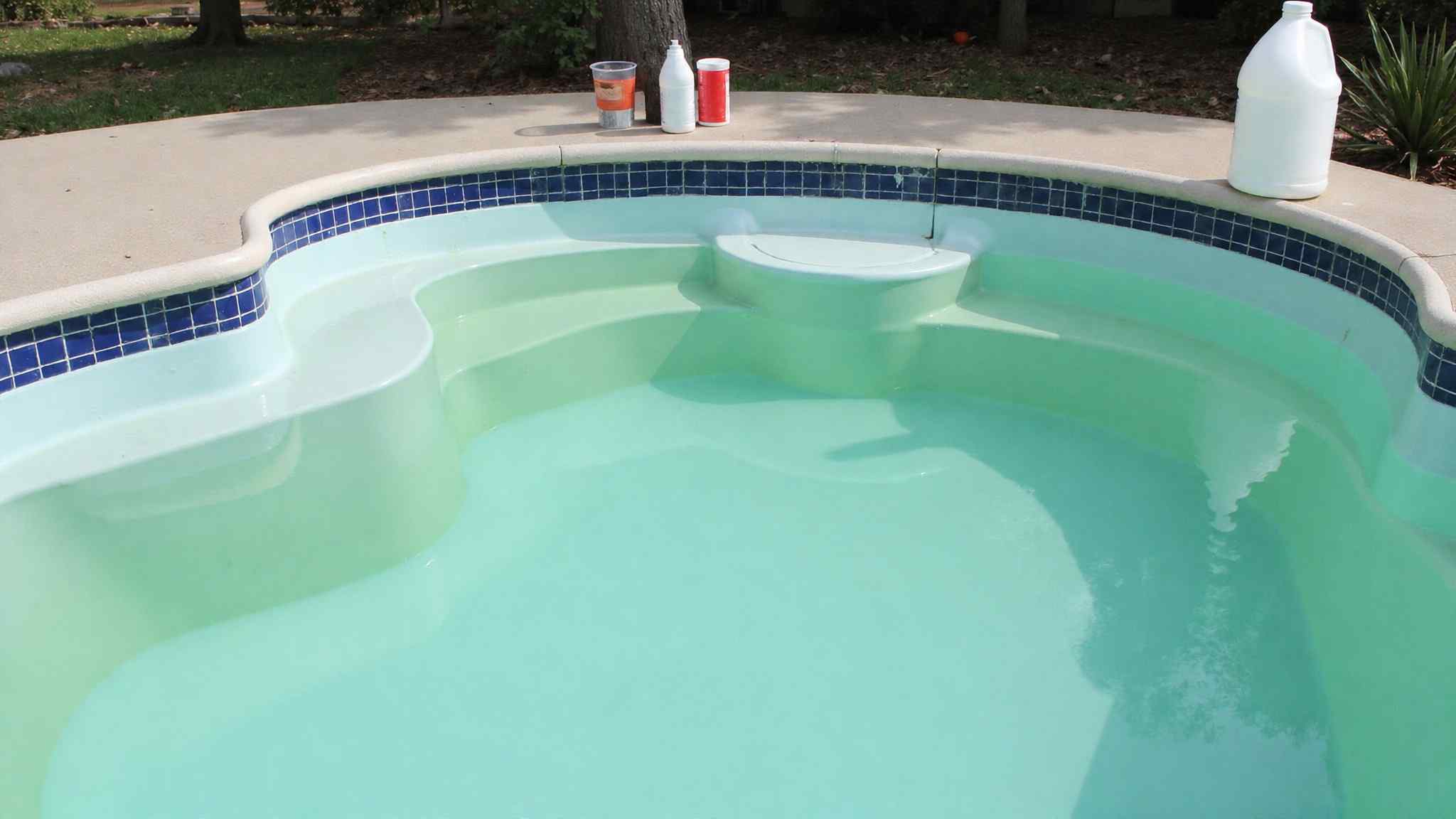
How drastically you want to transform your pool determines whether you’ll spend $500 on a basic conversion or $175,000 on a complete natural swimming pond. You’ll start by ceasing chemical use and assessing your pool’s structural integrity for cracks or damage.
Your conversion requires building distinct zones, a bathing area and a regeneration zone separated by non-permeable walls. You’ll install biological filtration using submersible pumps, gravel beds, and wetland areas where beneficial bacteria break down waste naturally.
Plan for 25% vegetation coverage with submerged, floating, and marginal plants. Layer your regeneration zone with geofabric, river sand, and native reeds over 10-20 cm rocks for ideal filtration.
Expect your ecosystem to fully establish over two summers. Once established, maintain your water’s ideal pH range of 8.0-8.6 to keep the biological system functioning properly. Check local regulations regarding safety requirements and ecosystem compliance before beginning construction.
Deck, Pond, and Removal Conversions: $5,000 to $80,000
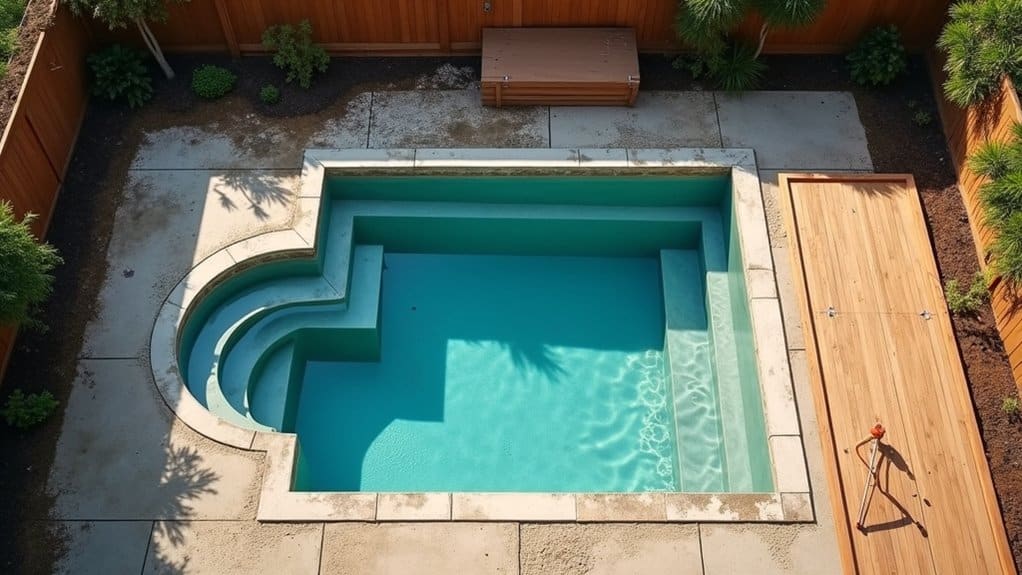
When your pool no longer serves its original purpose, converting it into a functional deck, naturalized pond, or fully removed space offers practical alternatives that reclaim your backyard.
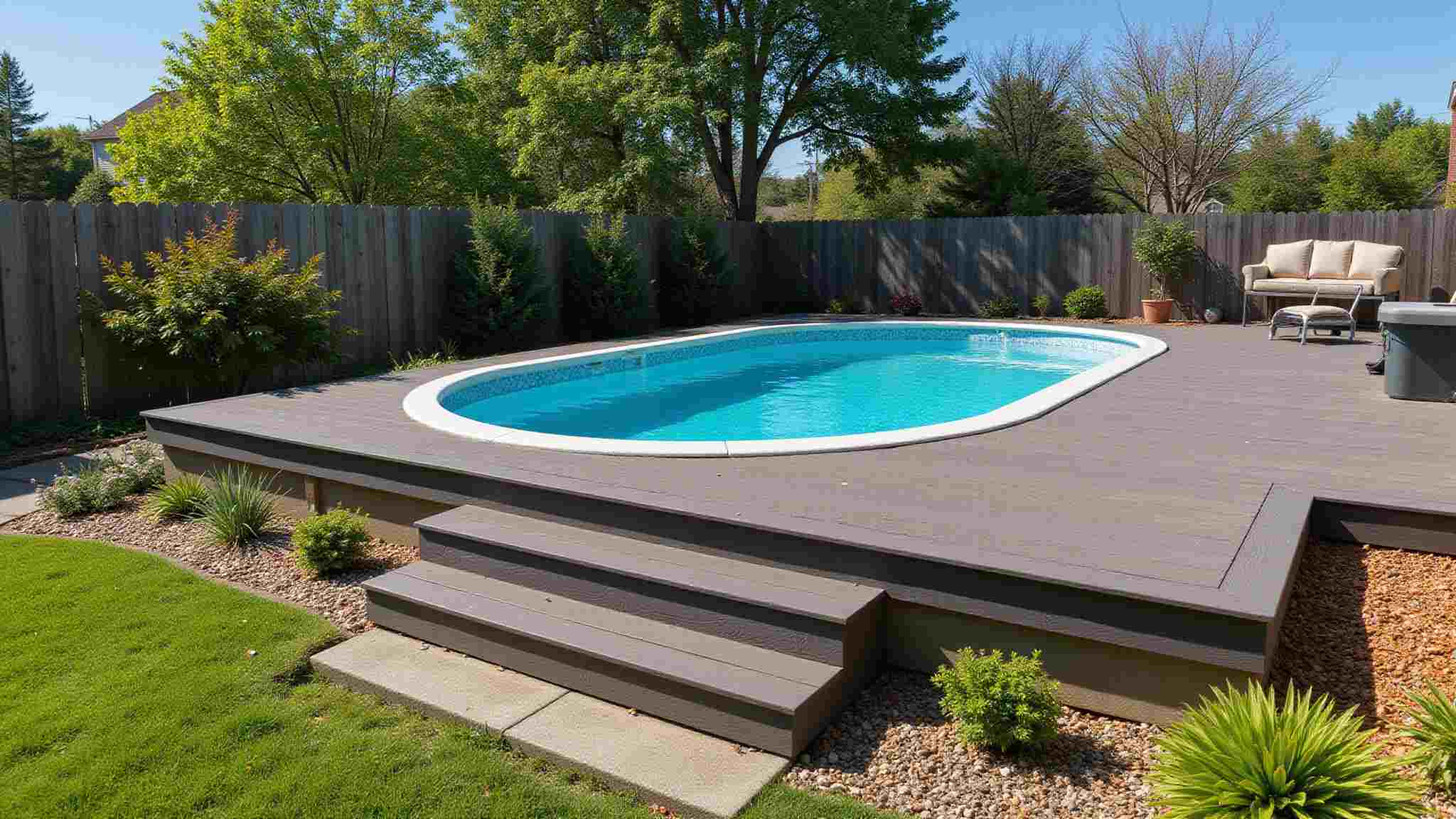
Deck conversions cost between $5,000 and $20,000, with material choices ranging from budget-friendly pavers at $3 to $7 per square foot to premium composite decking at $40 to $80 per square foot. Pool-to-pond conversions require more extensive work, running $40,000 to $80,000 due to specialized filtration and ecological modifications.
Key conversion considerations:
- Labor accounts for 30% to 40% of deck projects, making material selection your primary cost variable
- Pond conversions demand ecological consultation and complete infrastructure replacement
- Permits typically run $50 to $150, though site preparation costs vary considerably based on terrain
Each option transforms unusable space into purposeful outdoor living.
How Your Pool’s Size Changes Conversion Costs
Pool size directly determines your conversion budget, whether you’re transforming an unused pool into a deck, pond, or modified swimming space. Small pools measuring 10 x 20 ft. require less labor and materials, keeping conversion costs lower. Medium pools at 16 x 32 ft. demand considerably more resources, while large 20 x 40 ft. pools require extensive excavation, materials, and labor.
Your per-square-foot costs typically range from $50 to $125, though complex conversions can reach $250 per square foot. Larger projects sometimes qualify for per-square-foot discounts, offsetting some expenses.
Depth modifications add another cost layer. Converting shallow to deep costs $10,000 to $50,000, while deep to shallow runs $4,000 to $7,000. Adding tanning shelves or zero-entry edges increases your total by approximately 25%. Factor these variables when planning your conversion budget.
Red Flags to Spot Before Signing a Conversion Contract
Before you sign any pool conversion contract, verifying your contractor’s credentials should top your priority list. Request proof of current licensing and insurance coverage that extends to all subcontractors working on your property. Without this protection, you’re assuming liability for on-site injuries and potential construction defects.
Watch for these critical warning signs during the bidding process:
- Vague or unitemized estimates that lack transparency about materials, labor, and permit costs
- Deposit requests exceeding 10-15% of total project cost before work begins
- Evasive responses when you ask direct questions about timelines, techniques, or change order procedures
Contractors who pressure you for quick signatures or dodge straightforward questions rarely improve once construction starts. Insist on written contracts detailing scope, payment milestones tied to completed work, and warranty terms.
Ready to Transform Your Backyard?
Your dream pool is closer than you think. At Schiller Pools, our experienced team brings over 40 years of expertise to every project, delivering stunning fiberglass pool installations and custom pool construction that turn ordinary backyards into extraordinary outdoor retreats. With flexible financing options and lifetime warranty backing, there has never been a better time to get started. Call (561) 475-5997 today for your free estimate.
Frequently Asked Questions
How Long Does a Typical Pool Conversion Project Take to Complete?
You can expect a typical pool conversion project to take 4-8 weeks from start to finish. However, your timeline depends on the scope of work involved. If you’re making concrete structural changes, plan for 8-12 weeks due to curing requirements. Don’t forget that permits can add days to several weeks, and weather delays may extend your project further. We’ll provide a detailed timeline during your initial consultation.
Do Pool Conversions Require Permits From My Local Building Department?
Yes, you’ll need permits for most pool conversions involving structural changes like depth modifications, shape alterations, or functional upgrades. Your local building department requires separate permits for electrical and plumbing work too. You’ll submit site plans, pool specifications, and fencing details for approval. Expect 2, 4 weeks for processing in most Texas municipalities. Don’t start construction before approval, you could face double permit fees, fines, or mandatory removal of unpermitted work.
Will Changing My Pool’s Depth Affect My Homeowner’s Insurance Rates?
Changing your pool’s depth likely won’t directly impact your homeowner’s insurance rates, but it could influence your liability exposure. Deeper pools may increase drowning risk, potentially affecting claims assessments. You should notify your insurer before completing depth modifications to verify your coverage classifications remain accurate. Installing safety features like pool alarms and proper fencing can help offset any premium concerns while reducing your overall liability risk.
Can I Use My Pool During Any Phase of the Conversion Process?
You can use your pool during the design and planning phase, which typically lasts 1-4 weeks while consultations and permits progress. However, once excavation begins, you’ll lose access entirely. Structural work, including steel reinforcement, plumbing, gunite application, and curing, keeps your pool offline for 6-12 weeks. Finishing phases add another 1-4 weeks before you’re swimming again. We’ll provide a detailed timeline so you can plan accordingly.
What Pool Conversion Options Work Best for Aging Homeowners Needing Accessibility?
You’ll find pool lifts, sloped entries, and transfer walls work best for aging-in-place accessibility. Battery-powered lifts offer the most economical retrofit solution, letting you enter and exit independently without major structural changes. If budget allows, a sloped entry provides permanent, maintenance-free access for wheelchairs and walkers. Transfer walls with grab bars serve as effective secondary access points. We’ll help you combine these features to meet your specific mobility needs.