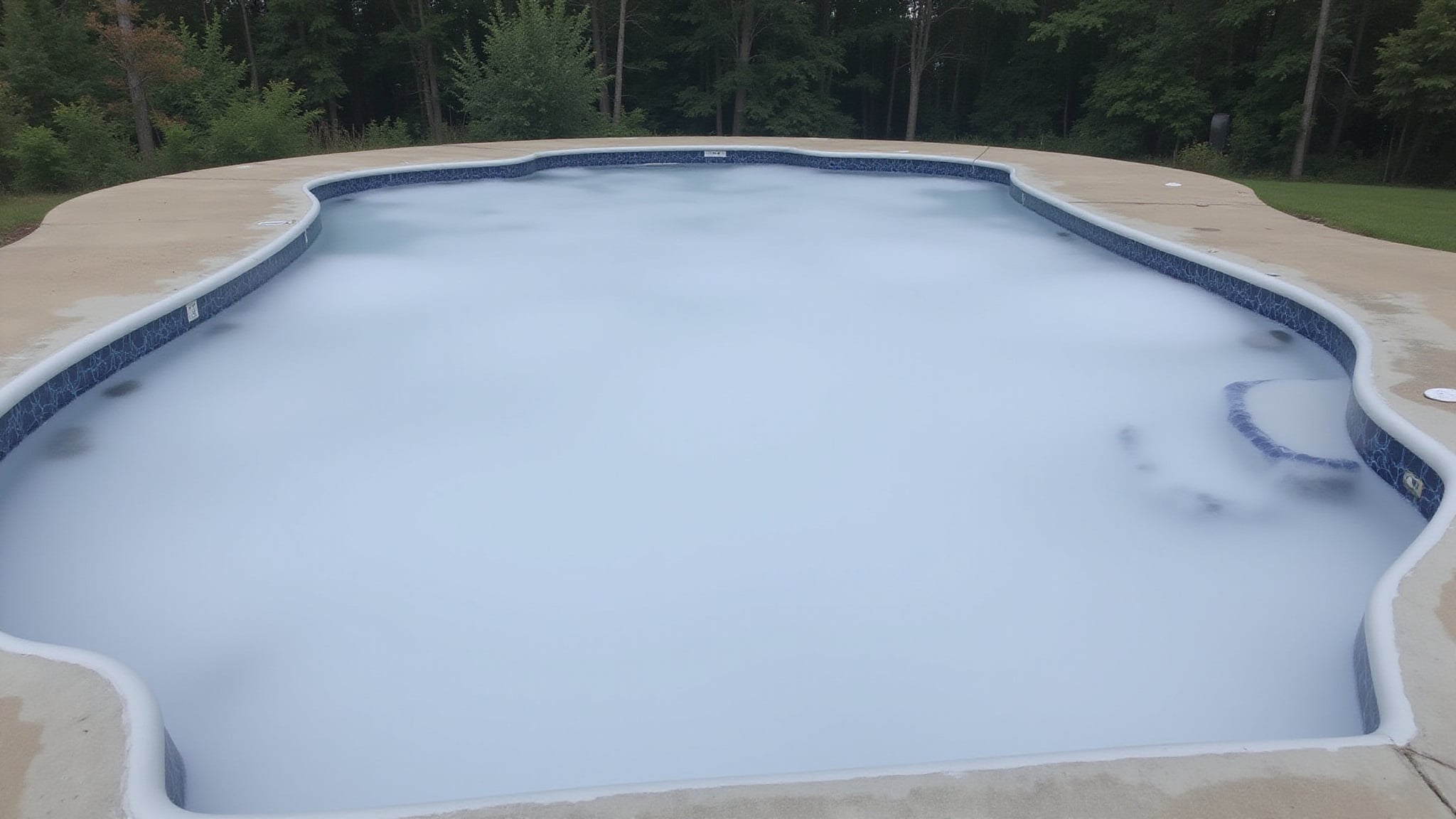
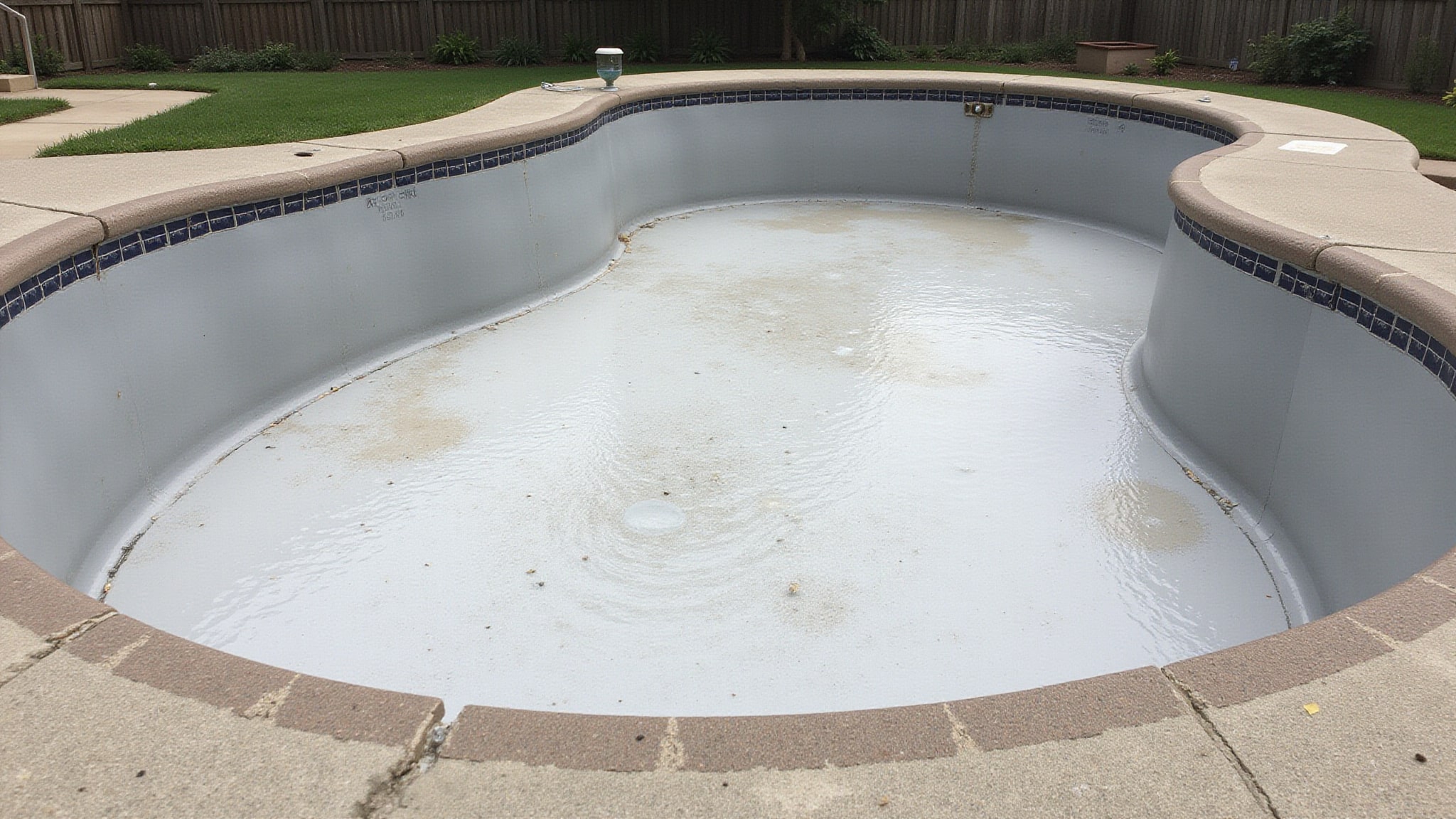
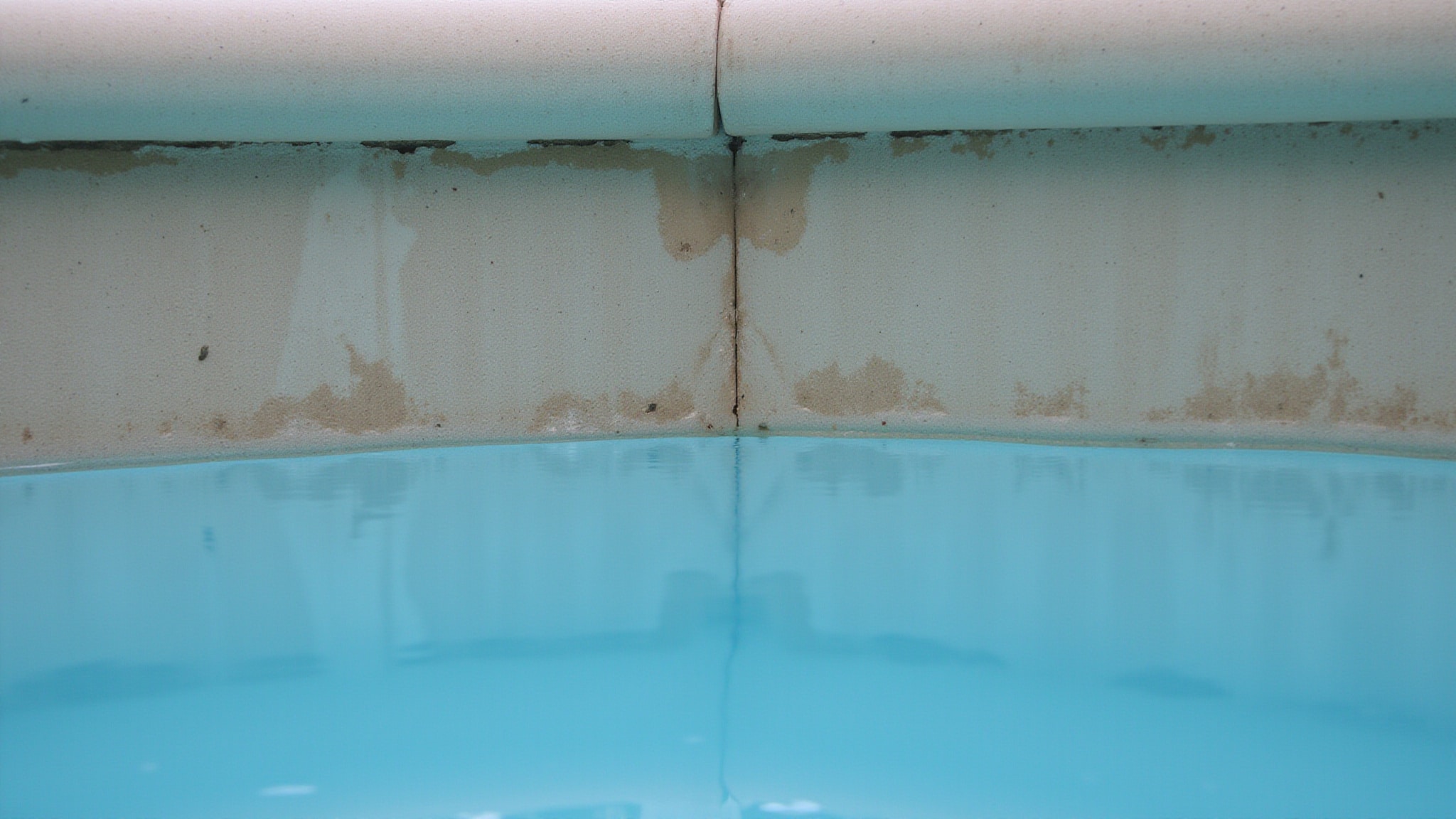
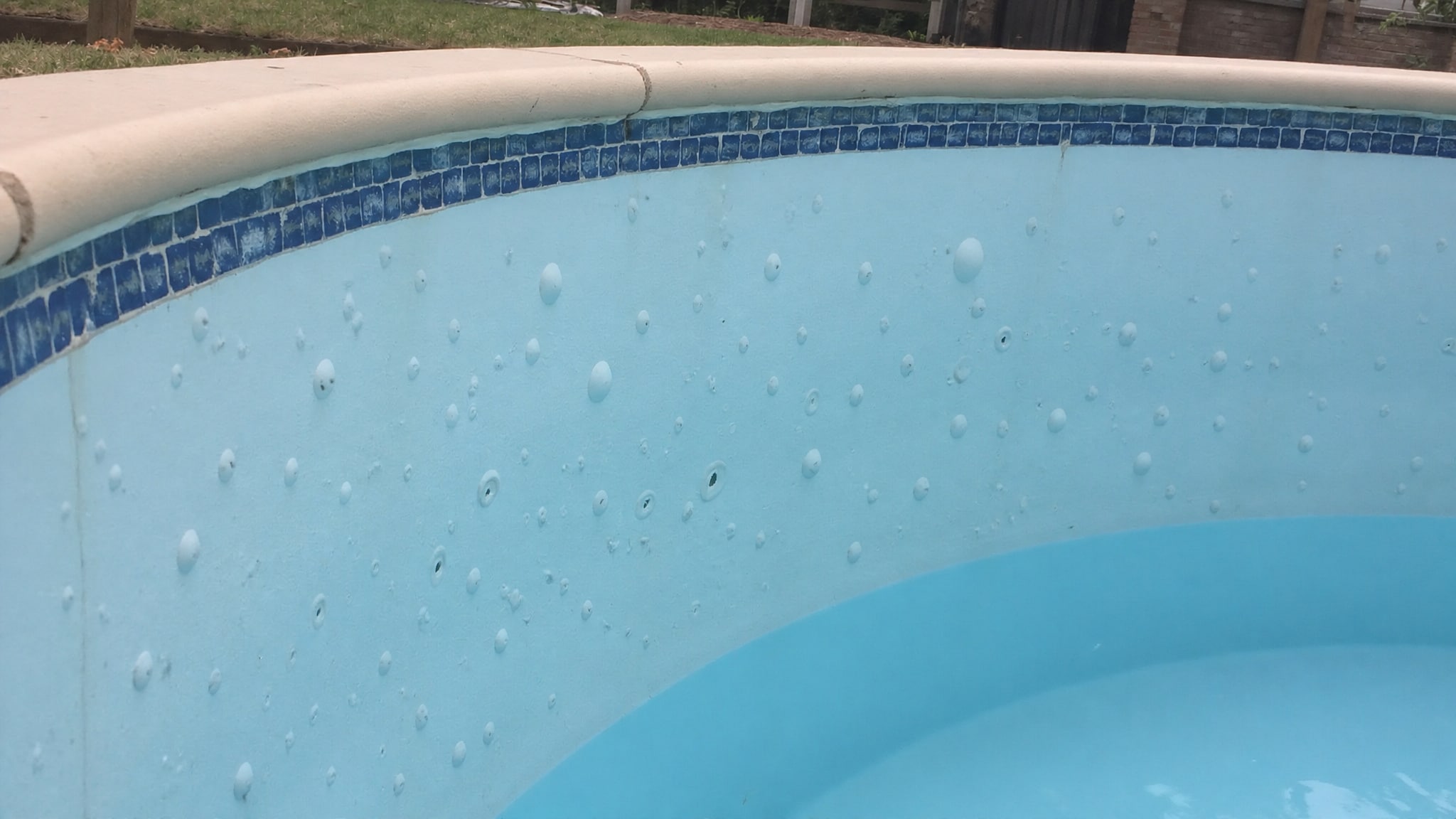
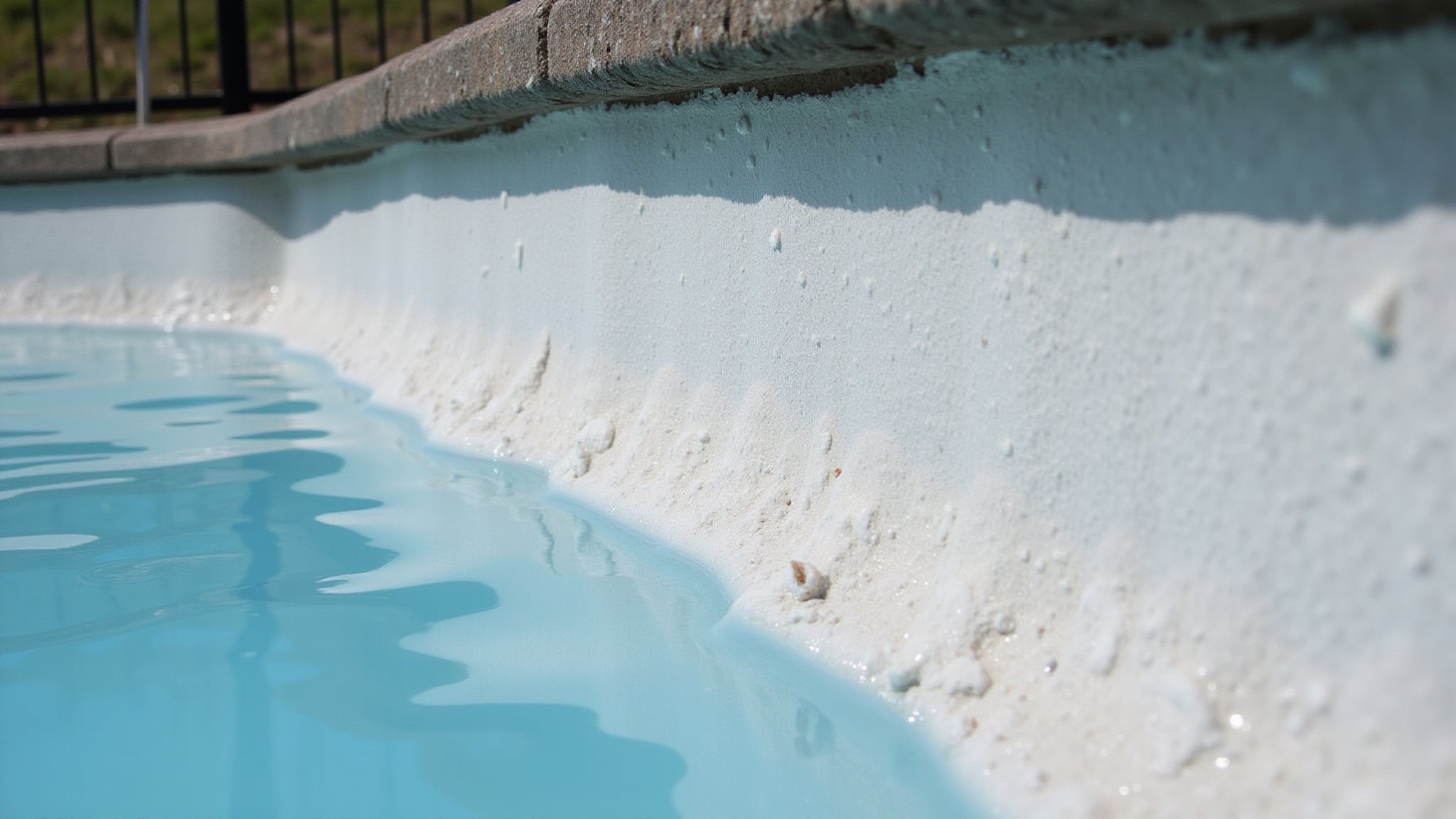
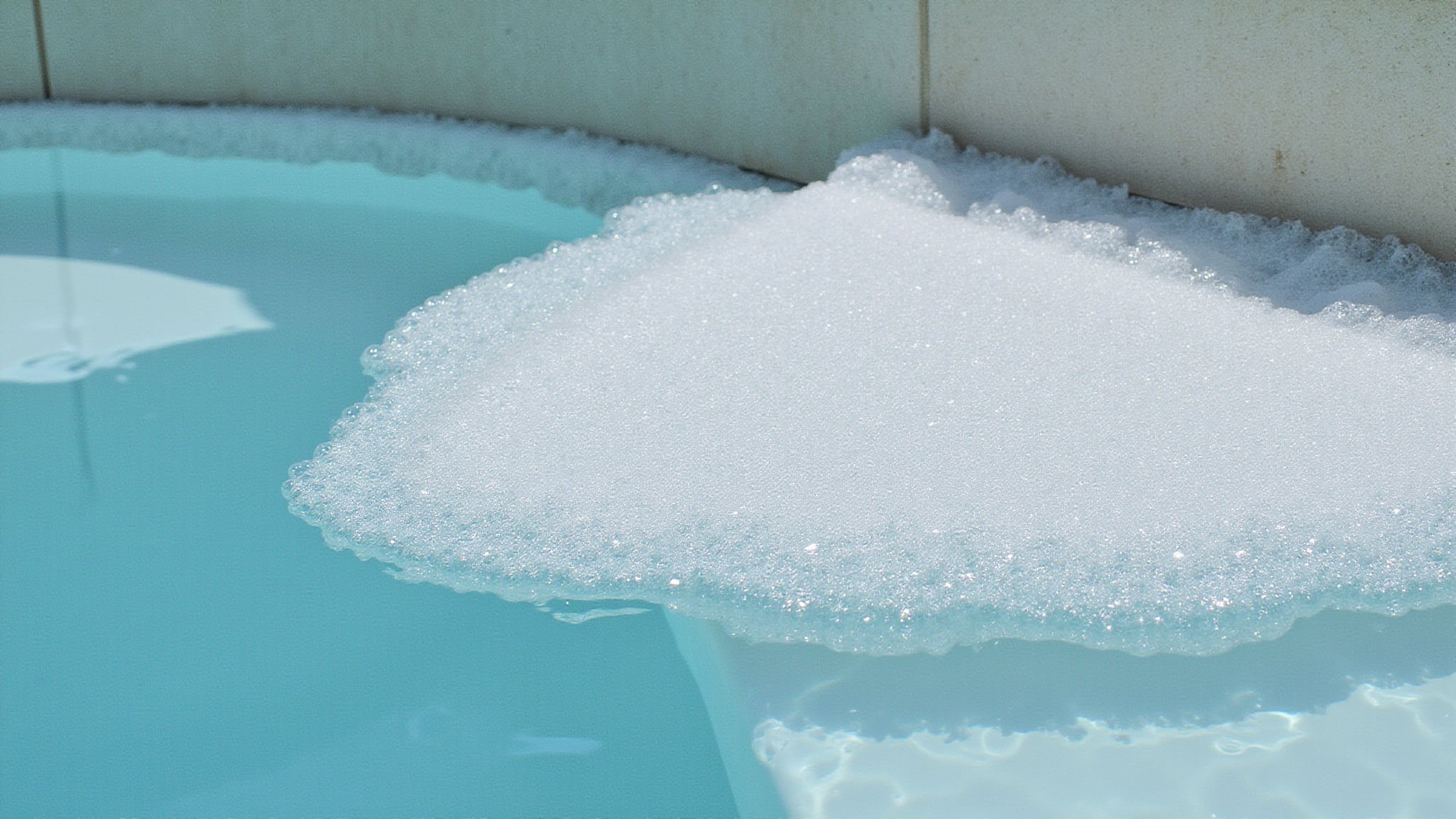
Yes, you can remodel almost any inground pool, concrete, gunite, or fiberglass shells all qualify for renovation work. You’re able to change finishes, replace tile and coping, alter depth and shape, add water features, and upgrade to energy-efficient equipment like variable speed pumps and heat pumps. However, aluminum shells aren’t permitted due to electrolysis risks, and metal pools require cathodic protection systems. Understanding your options helps you plan a remodel that fits your budget and goals.
Is Your Pool a Good Candidate for Remodeling?
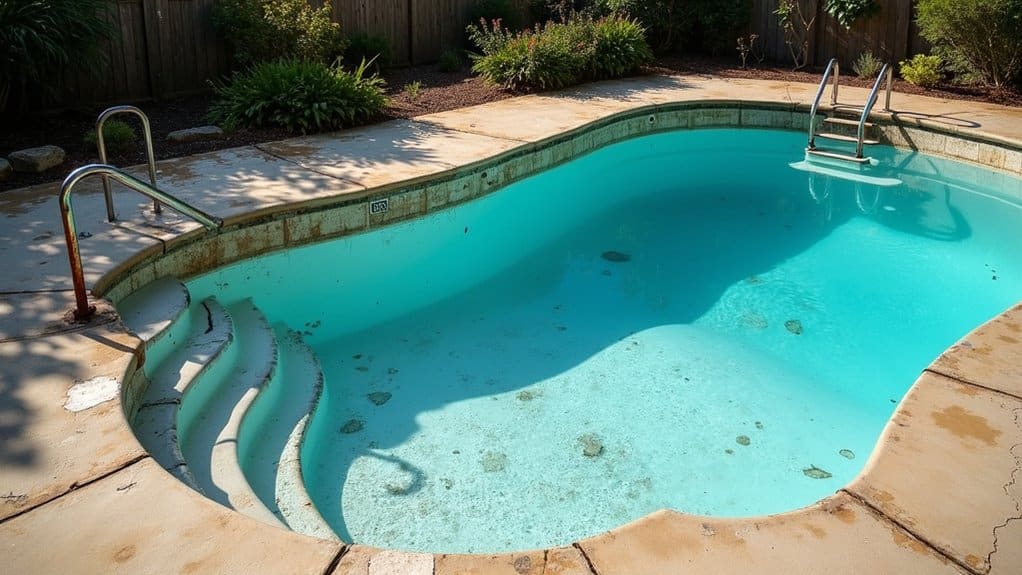
Whether your pool qualifies for remodeling depends largely on its structural integrity and current code compliance status. If you’re wondering can you remodel an inground pool, start by evaluating your concrete pool shell. Reinforced concrete structures typically qualify for resurfacing with plaster or equivalent waterproof finishes.
Your inground pool renovation feasibility hinges on specific structural requirements. The shell must have no gaps allowing a 4-inch diameter sphere to pass through. Metal pools need cathodic protection systems, and aluminum shells aren’t permitted for in-ground use due to electrolysis risks. Any renovation must also incorporate anti-entrapment covers and other required safety features to meet current building codes.
You’ll also need permits for any renovation work. Submit scaled drawings showing suction outlets and anti-entrapment grates to your health department. Approvals remain valid for one year, so plan your timeline accordingly. Keep in mind that structural modifications to existing pools may trigger additional upgrades to comply with new building codes.
Pool Remodel vs. Full Rebuild: What’s the Difference?
Once you’ve confirmed your pool’s structural soundness, you’ll need to decide between three distinct paths: renovation, remodeling, or a full rebuild.
Renovation restores your pool’s original condition through resurfacing, tile replacement, and equipment updates. Expect costs between $5,000, $50,000 with completion in 1, 8 weeks. This approach is generally the least expensive option compared to remodeling or new construction. Renovations can also increase home value by up to 8%, making them a smart investment for homeowners planning to sell.
Remodeling an inground pool involves structural changes, altering depth, adding spas, or modifying shape. This path costs more than renovation but works within existing pool structural limits. Remodeling is ideal when you’re dealing with persistent problems that simple repairs haven’t resolved or when you want enhanced safety features and eco-friendly upgrades.
Full rebuild means complete demolition and new construction, ranging from $30,000, $500,000+. You’ll gain total design freedom but face 8, 12 weeks of work.
Choose renovation for cosmetic refreshes, remodeling for outdated features, or rebuild for severe foundation damage. Your pool’s condition and desired changes determine the most practical path forward. One popular option for enhancing your outdoor space is to explore swimming pool remodeling ideas that focus on modern aesthetics and functionality. Incorporating features such as LED lighting, eco-friendly materials, and custom tiles can transform your pool into a stunning centerpiece.
Resurfacing Options That Transform Your Pool
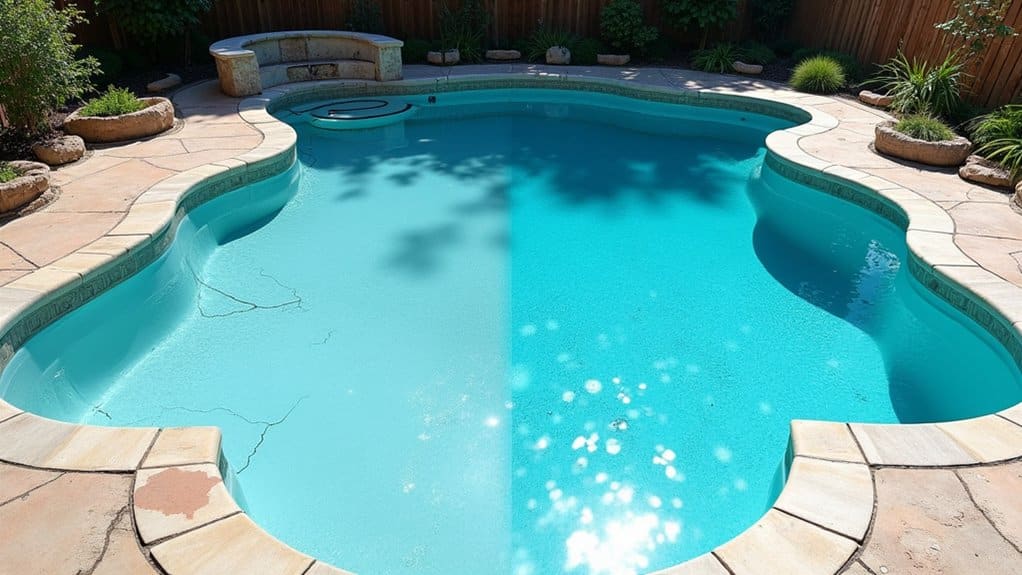
Because resurfacing directly impacts your pool’s longevity, comfort, and visual appeal, it’s often the most transformative element of any remodel.
Resurfacing is the single most transformative upgrade you can make, it touches every aspect of your pool experience.
Plaster (Marcite) delivers a smooth finish at around $5,500 per 1,000 square feet, though you’ll need resurfacing every 7-10 years. Quartz finishes combine crushed quartz with cement for superior chemical and UV resistance, lasting 15-20 years with minimal maintenance. White quartz specifically lasts around 10 years, making it a mid-range option for homeowners balancing cost and longevity. Blue quartz plaster offers a vibrant, natural blue color that creates a shimmering, premium aesthetic while maintaining the same durability benefits.
Pebble finishes create a natural aesthetic while hiding imperfections and providing slip-resistant safety, ideal for families with children. These surfaces resist wear and last 15+ years. Pebble pool finishes also offer exceptional durability against harsh chemicals and UV exposure, making them a practical long-term investment.
Fiberglass resurfacing averages $6,500 per 1,000 square feet and flexes with ground movement, reducing crack risk. For a premium look, glass tile offers unmatched reflective brilliance and design versatility, perfect for modern or resort-style pools.
Each option balances durability, aesthetics, and budget differently.
Tile, Coping, and Deck Upgrades That Add Value
While resurfacing renews your pool’s interior, tile, coping, and deck upgrades complete the transformation by addressing everything above the waterline. These improvements prevent water intrusion, enhance durability, and deliver immediate visual impact that boosts your property’s value.
Tile replacement runs $3,000, $5,000, with glass or custom designs increasing costs. Coping averages $40, $80 per linear foot, totaling $6,000, $10,000 for most pools. Deck replacements range from $15,000, $30,000 depending on materials and square footage. When combined with resurfacing and equipment updates, a full gunite pool remodel in California can range from $20,000 to $80,000+ depending on your vision and priorities.
- Tile upgrades protect the waterline and modernize aesthetics
- Cantilevered concrete coping offers budget-friendly durability at $6, $10 per linear foot
- Travertine coping delivers premium appeal but requires sealing
- Paver coping allows modular repairs when damage occurs
- Bundled upgrades minimize labor costs and project downtime
You’ll maximize ROI by combining these elements during one renovation phase. Bluestone coping is known for its exceptional durability, withstanding extreme weather conditions while developing a natural patina that adds character over time. For a sleek, modern aesthetic, consider Vanishing Edge pool coping using Marble or Travertine pavers to create a contemporary look that elevates your pool’s design.
Equipment and Features You Can Add to Any Pool
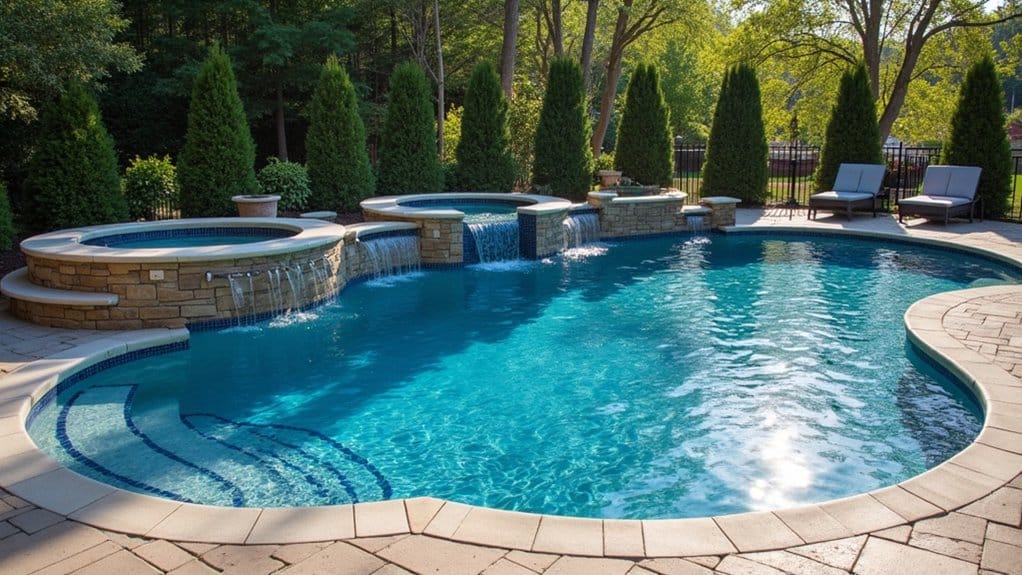
You can upgrade nearly any inground pool with modern equipment, variable speed pumps, advanced filtration systems, and energy-efficient heaters transform how your pool operates. Adding water features like waterfalls or integrating a spa section creates new focal points without altering the pool’s core structure. You can also install a standalone fountain that pours directly into the pool for an elegant visual effect. Automation systems tie everything together, giving you smart device control over lighting, cleaning, and sanitation from anywhere. Remote water chemistry monitoring systems connect to your home network and send notifications when your pool water needs attention, saving you time and preventing problems before they escalate. For households with children or frequent guests, automatic pool covers and anti-entrapment drain systems provide essential safety upgrades that also reduce liability concerns.
Pumps, Heaters, and Filters
Swapping out dated pool equipment ranks among the most impactful upgrades you can make to any inground pool, regardless of its age or construction type. Modern equipment delivers measurable improvements in efficiency, operating costs, and water quality. Another popular option is converting a pool to a natural pool, which can enhance the aesthetic appeal of your backyard while providing a safer swimming environment. This transformation often involves the use of aquatic plants and a filtration system that mimics natural ecosystems, leading to cleaner water without harsh chemicals. Embracing these innovative approaches can dramatically elevate the value and enjoyment of your outdoor space.
Here’s what you can upgrade:
- Variable speed pumps, Required since 2021 for motors over 1 hp, these cut energy consumption up to 90% and pay for themselves before warranty expiration
- Cartridge filters, Eliminate backwashing, reduce water waste, and pair seamlessly with variable speed pumps for 24-hour operation
- Heat pumps, Extend your swim season by months while using 70% less energy than conventional heaters
- Gas heaters, Essential for spas requiring rapid heating; combine with heat pumps for versatile temperature control
- Geothermal systems, Harvest ground and pool energy for maximum long-term savings
- Salt chlorine generators, These systems don’t add CYA to your pool, reducing the frequency of partial draining and refilling that chlorine tablet users face
- Automation systems, Upgrade from mechanical time clocks to smart controls that integrate with home automation and voice assistants
- Robotic pool cleaners, Units like the Aquabot Pool Rover operate independently from your filtration system and are available starting around $99.99, making automated cleaning accessible for any budget
Waterfalls and Spa Sections
Waterfalls and spa additions transform a basic pool into a backyard retreat, though each requires careful planning and structural integration. An inground pool increase home value, making it a wise investment for homeowners looking to enhance their property.
For waterfall installation, you’ll mark the area with stakes and excavate according to kit specifications. Notch the bond beam and offset steel rebar one inch on each side plus three and a half inches below. Your suction tube must reach pool water comfortably to prevent air sputtering during operation.
Plumbing involves gluing 1.5-inch schedule 40 PVC pipe into the waterfall back and connecting to your existing pump system. Run electrical through metallic tubing to wet location boxes with GFI protection.
Secure the unit by drilling through concrete blocks into the deck and fastening with expansion bolts. Fill gaps with concrete brown coat, install tile under the spillway lip, and adjust inlet sleeve openings to control spray height.
Automation System Upgrades
Modern automation systems let you control every pool function, heating, lighting, filtration, and chemical dosing, from your smartphone without walking to the equipment pad. You can integrate voice assistants like Alexa for hands-free operation and manage up to 32 functions simultaneously through intuitive color touchscreens.
Chemical automation eliminates manual balancing by continuously monitoring water chemistry and dispensing precise amounts automatically. Systems like Pentair IntelliChem maintain ideal pH and chlorine levels without your intervention.
Key automation upgrades you can add:
- Smart controllers with app-based remote operation and voice assistant integration
- Chemical automation for real-time pH and chlorine monitoring with automatic dispensing
- Variable-speed pump controls that optimize energy consumption remotely
- Robotic cleaner scheduling through smartphone apps for hands-free maintenance
- Energy management programs that coordinate equipment for peak efficiency
Pool Remodel Limitations: What You Can’t Change
Why do some pool renovation dreams hit a dead end? You’ll face hard limits when structural, regulatory, or site conditions block your plans. Changing your pool’s shape, size, or depth typically costs more than demolition and rebuild. Local zoning codes restrict placement and dimensions, while permit requirements can halt non-compliant projects entirely.
| Limitation Type | What You Can’t Easily Change | Why It’s Restricted |
|---|---|---|
| Structural | Shape, size, depth | Requires full excavation and rebuild |
| Regulatory | Pool placement, dimensions | Zoning codes and permit requirements |
| Site | Drainage patterns, deck grading | Existing infrastructure constraints |
| Material | Severely damaged shells | Structural integrity compromised |
| Equipment | Radical system redesigns | Incompatibility with existing setup |
Your existing footprint, drain locations, and backyard layout create boundaries you can’t cost-effectively overcome without starting fresh.
How Much Does an Inground Pool Remodel Cost?
If you’re planning an inground pool remodel, you’ll need to budget between $6,000 and $50,000 depending on the scope of work. Basic resurfacing typically runs $2,000 to $15,000, while full renovations with equipment upgrades and structural changes push costs toward the higher end. You should also set aside 10-20% for unexpected repairs that often surface once work begins.
Basic Resurfacing Price Range
When planning a pool resurfacing project, you’ll find costs typically range from $6,000 to $15,000 for most homeowners, with the average falling around $11,000 for a 1,000-square-foot pool. Basic resurfacing starts at $6.50 per square foot, though your final price depends on pool size and finish selection.
- 6-by-8 ft. pool: $320
- 12-by-20 ft. pool: $1,600
- 16-by-32 ft. pool: $3,400
- 18-by-36 ft. pool: $4,200
- 20-by-40 ft. pool: $5,200
Material costs vary greatly, ranging from $1 to $30 per square foot. You’ll also need to budget for labor at $45 to $65 per hour, plus draining, cleaning, and refilling services, which add $425 to $475 to your total.
Full Renovation Expenses
Full pool renovations extend well beyond surface-level work, and your budget needs to reflect that reality. Standard renovations typically run $12,000 to $25,000, covering equipment upgrades, deck repairs, and interior refinishing. Premium transformations exceed $25,000 to $50,000 when you’re adding features or making structural modifications.
| Renovation Level | Cost Range |
|---|---|
| Standard | $12,000, $25,000 |
| Premium | $25,000, $50,000 |
| Expansion | $20,000, $70,000 |
| Reshaping | $50,000, $100,000 |
Your final costs depend on project scope and pool size. Inground remodels average $65 per square foot, so larger pools require proportionally bigger budgets. Excavation-heavy projects like expansions or depth changes dramatically increase expenses. You’ll want detailed contractor quotes before committing to guarantee your renovation plans align with realistic spending expectations.
Unexpected Repair Costs
How often do hidden problems surface during a pool remodel? More frequently than you’d expect. Once contractors start work, they’ll uncover issues invisible during initial inspections. You should budget 15-20% above your quoted price for these surprises.
Common unexpected costs include:
- Leak repairs ranging from $350, $2,700, plus $180, $230 for draining and refilling
- Delamination remediation requiring labor-intensive removal when previous replastering was done over painted surfaces, potentially doubling costs
- Underground plumbing failures discovered only after excavation begins
- Skimmer replacement at $1,500, $3,000 when corrosion or cracks appear during resurfacing
- Electrical system upgrades needed to meet current codes once inspectors review exposed wiring
Address problems immediately when discovered. Delaying repairs escalates damage and substantially increases future costs. Build contingency funds into your remodel budget from day one.
The Pool Remodel Process From Start to Finish
Understanding exactly what happens during a pool remodel helps you prepare for the disruption and timeline ahead. The process begins with draining your pool completely using a submersible pump. If you have a high water table, crews install a de-watering pump that runs continuously throughout the project.
Next, workers remove your existing surface through sandblasting, chipping, or hydro blasting. They’ll pressure wash, acid wash, and cut out any delaminated areas. Tile work follows, requiring careful cuts around fittings and lights before installing new tile and coping.
After applying a bond coat, crews hand-trowel your chosen finish, plaster, pebble, or quartz. You’ll fill the pool immediately after plaster application, monitoring water levels to prevent rings. The final phase includes a 28-day startup procedure to balance chemistry and extend surface life. Expect 5-14 days total.
Will a Pool Remodel Increase Your Home’s Value?
A pool remodel can boost your home’s value, but the return depends on what you upgrade and where you live. Homeowners typically recoup about 56% of their inground pool investment, though updated pools in competitive markets recover 70-85% of renovation costs. Your ROI hinges on specific appraisal factors like feature quality, regional demand, and how well the improvements match buyer expectations in your area.
ROI on Pool Upgrades
ROI on pool upgrades varies dramatically, from as low as 5% to as high as 90% depending on your location, pool condition, and market timing. The NAR 2023 report caps maximum recoupment at 56%, while post-COVID demand pushed some returns to 90.1%.
Your upgrade choices directly impact returns. Consider these benchmarks:
- Average inground pool ROI: 7-8% for typical homeowners
- Cost vs. resale gap: $65,500 investment yields approximately $42,150 return
- High-impact features: Decks, lighting, and waterfalls boost ROI considerably
- Condition matters: Poor maintenance lowers returns due to buyer repair concerns
- Comparison point: Landscaping delivers 200-400% ROI, far exceeding pool upgrades
You’ll maximize returns by focusing on upgrades that enhance functionality and aesthetics while maintaining impeccable condition. Strategic improvements outperform costly overhauls in most markets.
Appraisal Impact Factors
Beyond raw return percentages, you need to understand how appraisers actually calculate pool value, and it’s rarely what homeowners expect.
Appraisers don’t credit pools at replacement cost. Instead, they compare recent sales of similar homes with and without pools, then apply market-derived adjustments. Your $50,000 renovation won’t translate to a $50,000 value increase. Age, condition, and maintenance risk all factor into their calculations, sometimes resulting in zero added value if comparable sales don’t support it.
Geography matters considerably. In warm climates like Florida and California, pool renovations can boost home value by 7-12%. Extended warm-season regions may see valuations up to 50% higher. Colder markets tell a different story, with lower increases and narrower buyer pools.
Strategic upgrades, resurfacing, modern equipment, safety features, improve appraisal impact more than basic pool presence alone.
Ready to Transform Your Backyard?
Your dream pool is closer than you think. At Schiller Pools, our experienced team brings over 40 years of expertise to every project, delivering stunning fiberglass pool installations and custom pool construction that turn ordinary backyards into extraordinary outdoor retreats. With flexible financing options and lifetime warranty backing, there has never been a better time to get started. Call (561) 475-5997 today for your free estimate.
Frequently Asked Questions
How Long Do Most Inground Pool Remodels Take to Complete?
Most inground pool remodels take 4-8 weeks from start to finish. If you’re doing simple replastering, you’ll complete it in 2-3 weeks. However, if you’re tackling structural changes or adding water features, expect 10-12 weeks or longer. Your timeline depends on project complexity, surface-only work moves quickly, while custom elements like waterfalls add several weeks. You should also factor in potential delays from permits, weather, and unexpected issues in older pools.
Can I Use My Pool During the Remodel Process?
No, you can’t use your pool during the remodel process. The work requires complete drainage as one of the first steps, and your pool must stay empty throughout preparation, surface application, and curing phases. Once the new finish is installed, you’ll need to wait for proper filling and a three-day startup period for water balancing and brushing before swimming. Plan for one to two weeks of total downtime.
Do Pool Remodels Require Permits in Every State?
No, permit requirements vary by state, county, and city. Minor work like tile repairs or pump replacements often doesn’t need permits, while structural changes, depth modifications, or equipment upgrades typically do. In California, cities like Pasadena and Los Angeles have specific requirements for replastering, drainage work, and coping replacement. You’ll need to check your local building department’s rules before starting any remodel to avoid penalties or project stoppages.
What Time of Year Is Best for Pool Remodeling?
Fall and winter offer the best timing for pool remodeling. You’ll benefit from greater contractor availability, potentially better pricing, and less disruption since you’re not using your pool anyway. Cooler temperatures also help concrete and plaster cure more evenly, reducing cracking risks. Starting your project during off-season months means you’ll have everything completed and ready to enjoy when warm weather returns, instead of watching construction crews work through your swimming season.
Will My Homeowner’s Insurance Cover Pool Remodel Damage?
Your homeowner’s insurance typically won’t cover pool remodel damage. Standard policies only reimburse sudden, accidental perils like storms or vandalism, not construction disruptions, hidden leaks, or workmanship failures. Issues uncovered during remodeling fall under maintenance exclusions.
You’ll want builder’s risk insurance for construction-phase protection and verify your contractor carries liability coverage. Review your policy’s pool endorsements before starting work, and budget 10-20% extra for potential uninsured structural surprises.