
To raise your pool’s total alkalinity, add 1.5 lb of baking soda per 10,000 gallons, which lifts alkalinity by about 10 ppm. Scale it to your pool size and target: a 20,000-gallon pool needing 40 ppm takes roughly 12 lb. Add it in stages, run your circulation system, and retest after full mixing. Aim for the 80, 120 ppm range. Below, you’ll find the exact formula, method, and timing details.
Key Takeaways
- About 1.5 lb of baking soda per 10,000 gallons raises total alkalinity by roughly 10 ppm.
- Calculate the dose using: (pool gallons ÷ 10,000) × (desired TA increase ÷ 10) × 1.5 lb.
- Doses scale linearly, so a 20,000-gallon pool needing 40 ppm requires about 12 lb.
- Add baking soda in stages, limiting each dose to 1.5 lb per 10,000 gallons.
- Retest after full circulation and aim for the target range of 80, 120 ppm to avoid overshooting.
How Much Baking Soda Do You Need to Raise Pool Alkalinity
You need 1.5 lb of baking soda per 10,000 gallons to raise total alkalinity by about 10 ppm. Baking soda, chemically known as sodium bicarbonate, is the standard product for this task. To calculate your dosage, use this formula: baking soda needed = (pool gallons ÷ 10,000) × (desired TA increase ÷ 10) × 1.5 lb. For a 10-ppm increase, a 5,000-gallon pool needs about 0.75 lb, while a 20,000-gallon pool needs about 3.0 lb. Scaling up for larger increases, a 10,000-gallon pool requires roughly 3.0 lb for 20 ppm, 4.5 lb for 30 ppm, and 6.0 lb for 40 ppm.
How Does Baking Soda Raise Alkalinity
Baking soda raises alkalinity because it’s sodium bicarbonate, a compound that adds bicarbonate ions to your pool water. When you add it to the water, it dissolves and releases bicarbonate ions, which raise your alkalinity in a measurable, predictable way. That’s why the standard rule holds: 1.5 pounds per 10,000 gallons lifts alkalinity by about 10 ppm. High alkalinity in swimming pools can help prevent issues such as corrosion and scale buildup on pool surfaces and equipment. Maintaining the right alkalinity level also stabilizes pH, making it more manageable for pool maintenance.
Alkalinity is your water’s capacity to buffer pH changes, so raising it stabilizes the whole system. Sodium bicarbonate targets this buffer directly, which is why it’s the reliable choice for correcting low readings. Is low pool alkalinity dangerous? It can lead to corrosion of metal equipment and surfaces, as well as irritate the skin and eyes of swimmers.
You’ll notice the effect on pH stays small, usually just a slight nudge. The primary change is alkalinity, giving you controlled, incremental adjustments when you dose in stages and retest after circulation.
How Do You Calculate the Amount for Your Pool Size
Use this formula to calculate the amount for your pool size: baking soda needed = (pool gallons ÷ 10,000) × (desired TA increase ÷ 10) × 1.5 lb. Plug in your pool’s volume and your target alkalinity increase, then multiply. The base ratio, 1.5 lb per 10,000 gallons, raises total alkalinity by roughly 10 ppm. Scale it linearly for your pool size using the chart below.
| Pool Size (gallons) | Dose for 10 ppm (lb) |
|---|---|
| 5,000 | 0.75 |
| 10,000 | 1.5 |
| 15,000 | 2.25 |
| 20,000 | 3.0 |
| 25,000 | 3.75 |
For larger increases, multiply proportionally: a 20-ppm bump doubles the dose, 40 ppm quadruples it. A 20,000-gallon pool needing 40 ppm requires about 12 lb. Verify your gallons first, accurate volume drives accurate dosing.
How Do You Add Baking Soda to the Pool Correctly
Add baking soda to the pool in stages rather than dumping the full amount at once. Limit each addition to no more than 1.5 lb per 10,000 gallons in a single dose. This staged approach prevents overshooting your target alkalinity, which forces corrective measures later.
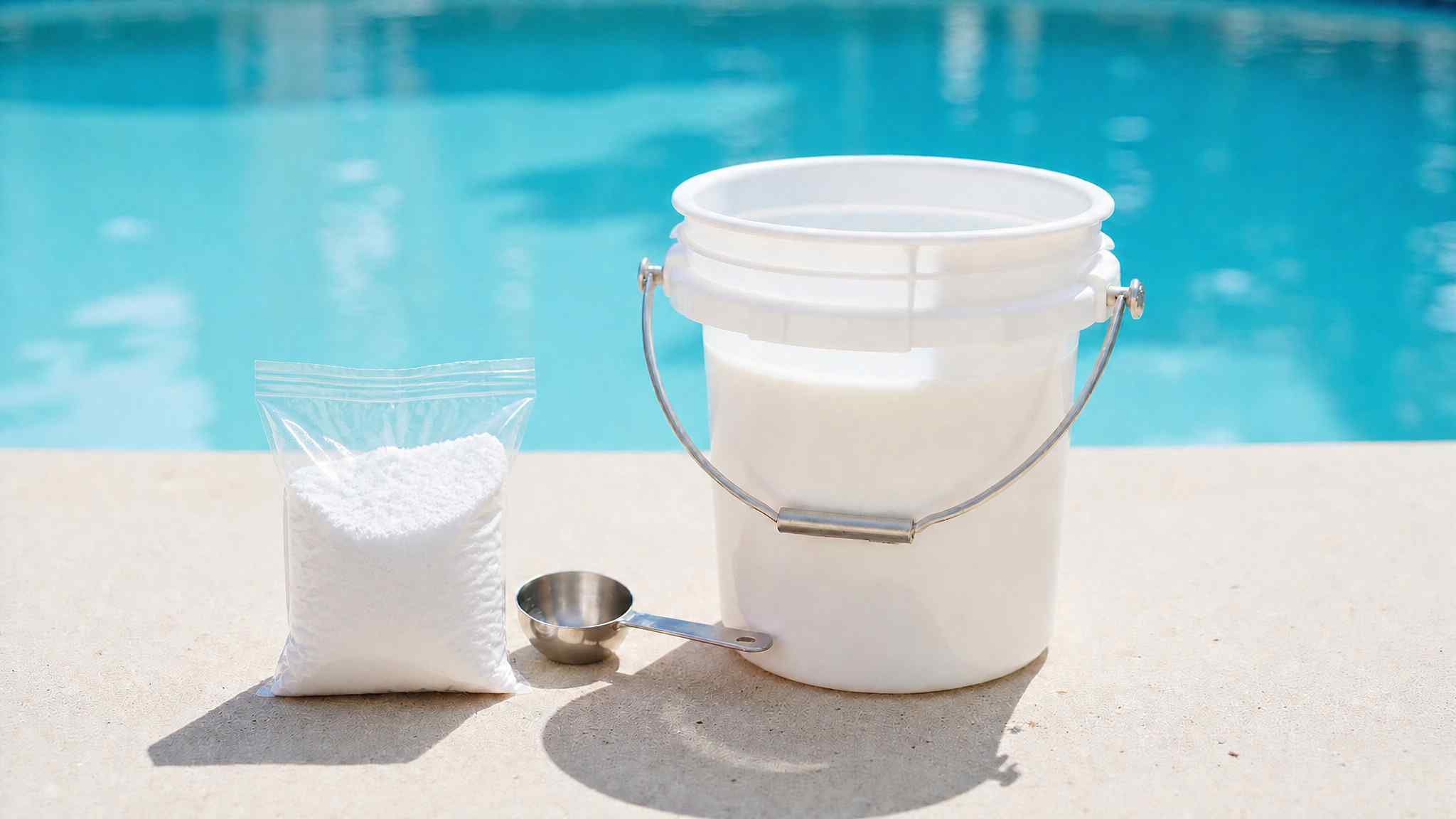
Broadcast the baking soda across the pool’s surface, or pre-dissolve it in a bucket of water first. Both methods appear consistently in pool-care instructions. After adding, run your circulation system to distribute the sodium bicarbonate evenly throughout the water.
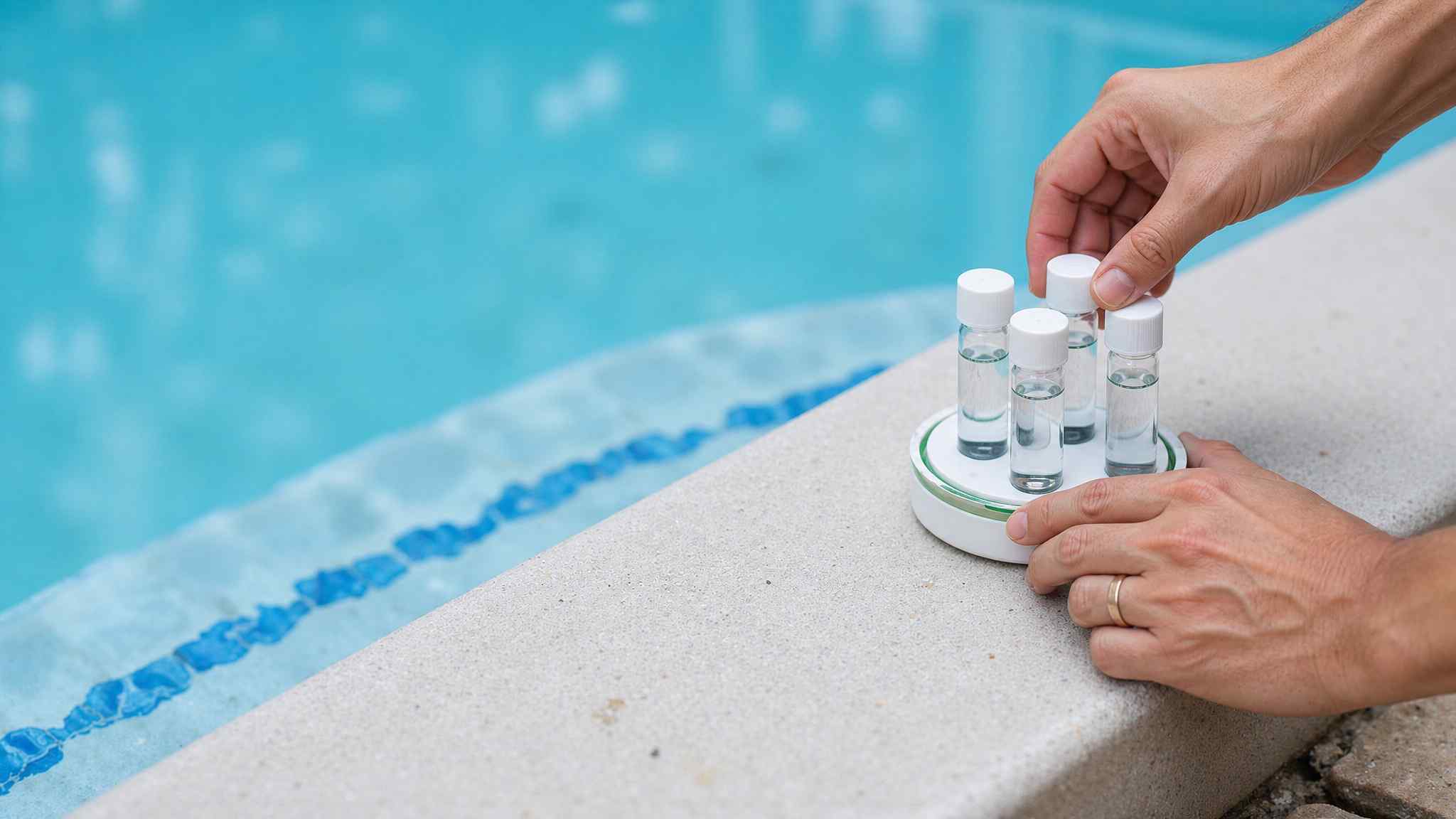
Retest alkalinity after each addition before adding more. Wait for full circulation, then measure. If you’re still below your target range of 80, 120 ppm, add the next staged dose and repeat the retesting process until you reach it.
How Long Before You Retest After Adding It
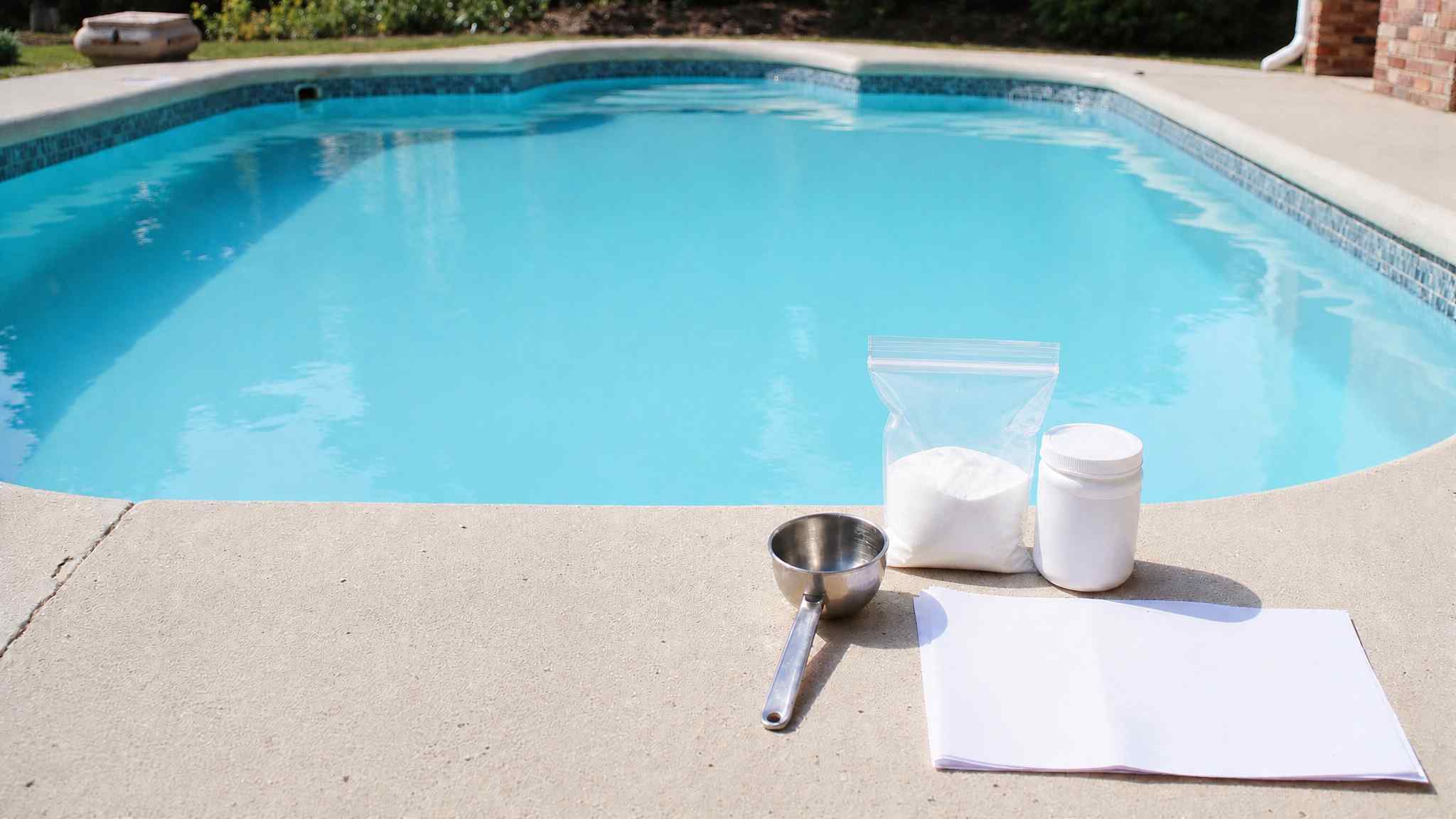
Wait until the pool water has fully circulated before you retest alkalinity. Adding baking soda without letting it disperse gives you inaccurate readings, since the product hasn’t fully dissolved or distributed throughout the water yet. Run your pump so circulation carries the sodium bicarbonate across the entire pool volume. Once the water has circulated adequately, you can proceed to test total alkalinity in a pool. This will provide you with a more accurate measure of the alkalinity levels present.
If you broadcast or pre-dissolved the dose, give the water time to homogenize before sampling. Testing too early shows a false alkalinity level, tempting you to overdose and overshoot your target range.
After you’ve retested and confirmed the reading, compare it against your target of 80, 120 ppm. If you’re still below range, add another staged dose, no more than 1.5 lb per 10,000 gallons, then circulate and retest again. This methodical cycle keeps you from overcorrecting your total alkalinity.
Can You Add Too Much Baking Soda
Yes, you can add too much baking soda. Overshooting your target alkalinity is easier than you’d think when you dose aggressively. Each 1.5 lb per 10,000 gallons raises total alkalinity by roughly 10 ppm, so a heavy-handed dose pushes you past your 80, 120 ppm target quickly. To avoid overshooting, cap any single addition at 1.5 lb per 10,000 gallons, then retest before adding more. Dose in stages rather than dumping the full calculated amount at once. If you overshoot, your alkalinity climbs too high, and you’ll need to lower it separately, which reverses your progress and wastes product. Staged dosing with retesting between additions keeps you in control. Measure carefully, add incrementally, and let circulation and testing confirm each step before proceeding.
How Do You Keep Alkalinity Stable Afterward
Keep alkalinity stable afterward by testing routinely and making small corrective doses. Test your total alkalinity weekly, aiming to hold it within the 80, 120 ppm range. When you see it drift downward, calculate the correction using the standard formula: pool gallons ÷ 10,000 × desired TA increase ÷ 10 × 1.5 lb. Apply that dose in stages, never exceeding 1.5 lb per 10,000 gallons in a single addition, then retest after circulation before adding more.
Watch your pH alongside alkalinity, since the two interact. If you’re consistently losing alkalinity, check for factors like heavy rain, high bather load, or acidic sanitizers driving it down. Address those inputs directly, and your corrective doses will stay small and predictable over time.
Conclusion
Raising your pool’s alkalinity with baking soda is refreshingly simple once you have the formula in hand: 1.5 lb of sodium bicarbonate per 10,000 gallons lifts total alkalinity by about 10 ppm, and you just scale that to your pool’s volume and target. The secret to doing it well is patience, add in stages, cap each dose at 1.5 lb per 10,000 gallons, pre-dissolve or broadcast it, run your circulation, and retest before the next pass so you land in the 80 to 120 ppm sweet spot without overshooting. Keep it there with routine weekly testing, small corrective doses, and an eye on pH and the inputs (rain, bather load, acidic sanitizers) that pull alkalinity down. Work this way and you’ll enjoy stable, well-buffered water that keeps your pH steady and your pool comfortable and clear.
Get a Pool Built for Balanced Water
Alkalinity issues become far easier to manage with a properly constructed pool from an experienced builder. At Schiller Pools in Palm City, FL, our experienced team provides trusted Pool Construction with expert water balance guidance and premium equipment. Call +1 (561) 475-5997 today and get your free estimate.
Frequently Asked Questions
Can I Use Baking Soda and Chlorine at the Same Time?
You can, but you shouldn’t add them simultaneously in the same spot. Instead, add baking soda in stages (no more than 1.5 lb per 10,000 gallons per dose), then let your pump circulate the water. Retest your alkalinity before adding more. Once circulation’s complete and levels are confirmed, you’re clear to add chlorine separately. Sequencing them this way prevents localized reactions and helps you avoid overshooting your target alkalinity range.
Does Baking Soda Expire or Lose Effectiveness in Storage?
Baking soda doesn’t truly expire, but it can lose potency if it absorbs moisture or clumps during storage. Keep it sealed in a dry, airtight container away from humidity, and it’ll stay effective for years. If you notice hardened clumps, the product’s absorbed water and may dose less predictably. When that happens, break it up or replace it, then measure your dose accurately before adding it to your pool.
Is Pool-Grade Alkalinity Increaser Different From Kitchen Baking Soda?
No, they’re chemically identical. Both are sodium bicarbonate, the standard compound for raising total alkalinity. You’ll find “pool-grade alkalinity increaser” is just baking soda relabeled and marketed for pool use, sometimes at a higher price. Kitchen baking soda works the same way, delivering the same alkalinity increase per pound. You can apply the standard dosing rule (1.5 lb per 10,000 gallons for a 10-ppm rise) with either product confidently.
Will Baking Soda Make My Pool Water Cloudy?
Baking soda can cloud your water temporarily, especially if you dump it in all at once. To prevent this, pre-dissolve it or broadcast it slowly, and never add more than 1.5 lb per 10,000 gallons in a single dose. Let your pump circulate the water, then retest before adding more. Staging your doses keeps alkalinity climbing steadily while minimizing cloudiness, so you’ll maintain clear, balanced water throughout the process.
Is Baking Soda Safe for Saltwater Pool Systems?
Yes, baking soda’s safe for saltwater pool systems. It’s sodium bicarbonate, the standard product for raising total alkalinity, and it won’t harm your salt chlorine generator. Apply the same dosing rule you’d use elsewhere: 1.5 lb per 10,000 gallons raises alkalinity by about 10 ppm. Add it in stages, then retest after circulation before dosing again. You’ll target a total alkalinity range around 80, 120 ppm, depending on your conditions.