When you shock your pool, you’re triggering superchlorination, a powerful oxidation process that rapidly elevates free chlorine levels to break apart chloramines, destroy algae cells, and eliminate pathogenic bacteria. This concentrated chlorine assault penetrates contaminants your regular sanitizer can’t touch, restoring water clarity and safety. The process works by raising free chlorine to 10-20 ppm, overwhelming organic waste and combined chlorine compounds. Below, you’ll find the exact procedures to shock effectively.
What Pool Shock Does to Your Water
When you add pool shock to your water, you’re initiating a powerful oxidation process called superchlorination. This pool oxidation reaction rapidly elevates free chlorine levels, breaking the molecular bonds of chloramines and organic contaminants that regular chlorination can’t eliminate.
The process delivers effective algae control by destroying algae cells through aggressive chemical action. For active blooms, you’ll need 10, 30 ppm chlorination levels, with severe cases requiring 3, 6x standard dosage.
Beyond algae control, shock treatment provides thorough water sanitation by eliminating pathogenic bacteria and oxidizing accumulated organic waste. The treatment breaks down dirt, body oils, and other micro-contaminants. This sanitization is crucial because it prevents the spread of skin infections and gastrointestinal diseases that can affect swimmers.
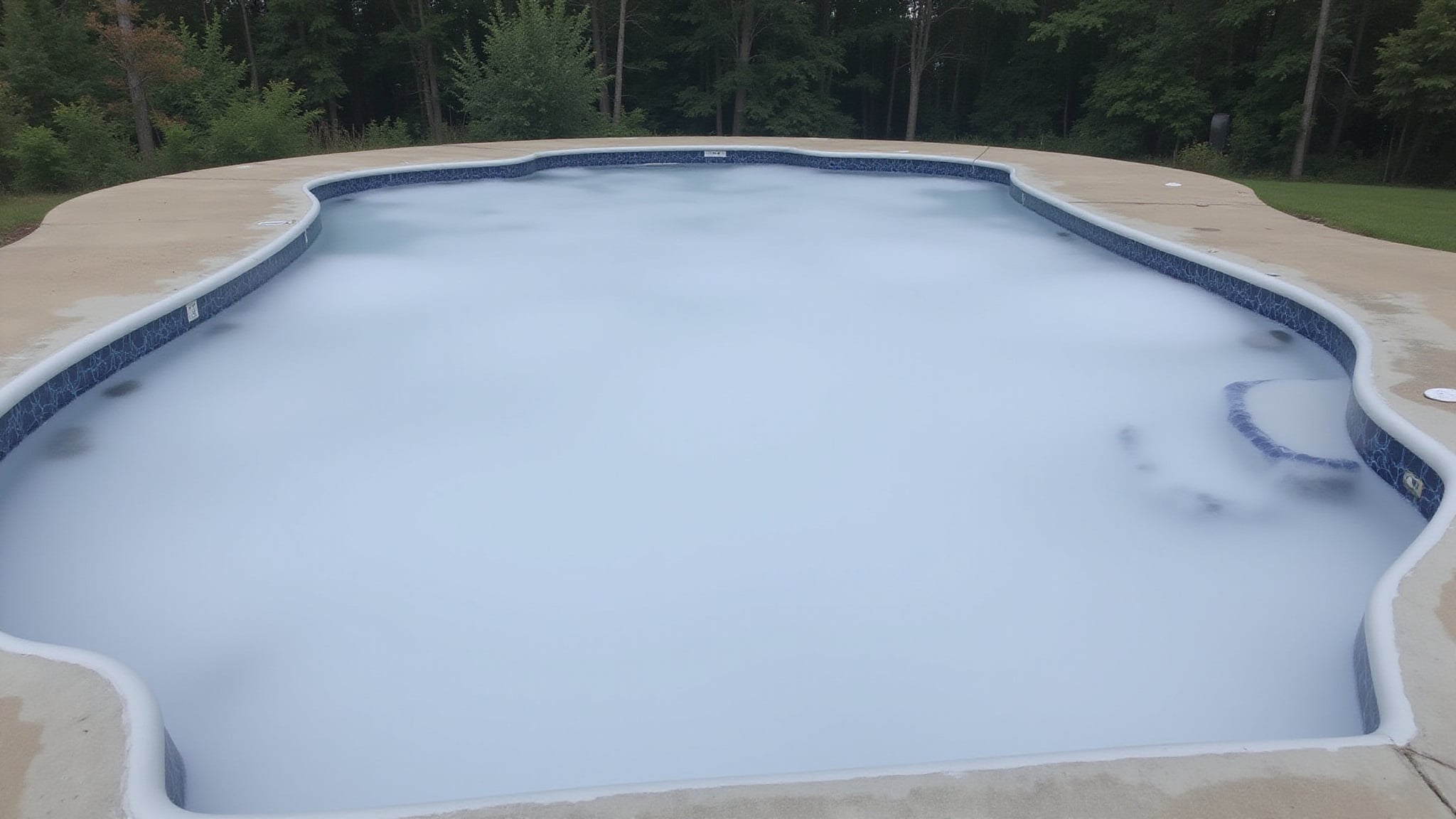
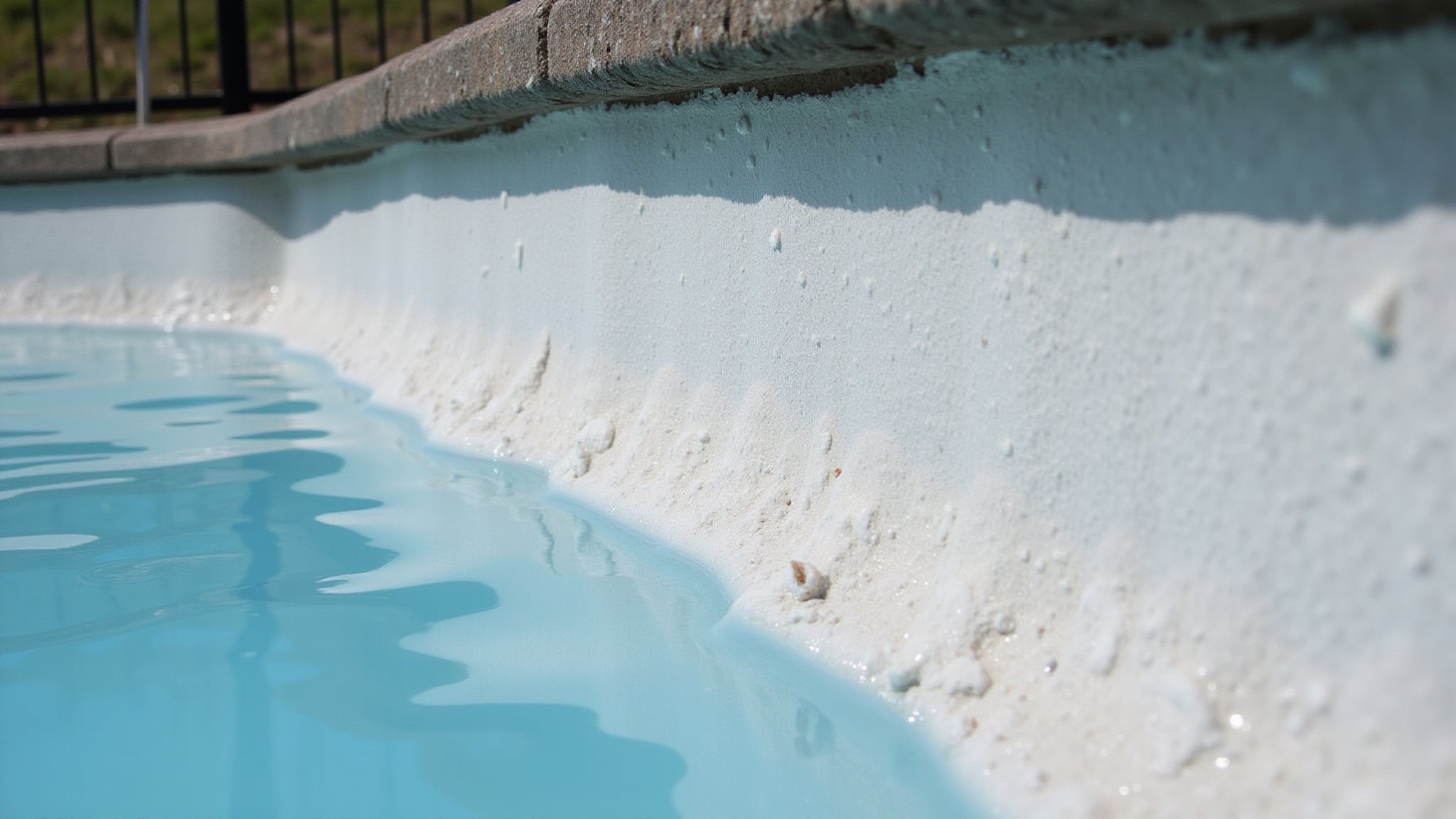
You’ll notice temporary cloudiness as dead algae and contaminants become suspended. Your filtration system removes these particles, restoring clarity while maintaining ideal chemical balance. For best results, apply shock after sunset to prevent UV rays from degrading the chlorine before it can fully sanitize your pool.
How Shock Brings Chlorine Back to Safe Levels
Although your pool’s chlorine levels may have dropped to zero due to heavy contamination, shock treatment resolves this chlorine demand by overwhelming contaminants with concentrated oxidizer. Understanding what does pool shock do explains why does shock raise chlorine so effectively, it breaks chloramine bonds and reactivates existing chlorine molecules. For saltwater pools specifically, low free chlorine levels may indicate you need to add more pool salt or clean or replace the salt cell.
To restore safe chlorine levels, follow this procedure:
- Triple shock with 3 pounds cal-hypo per 10,000 gallons to overcome high demand
- Maintain heightened levels for 24 hours, running filtration continuously
- Re-test after 24 hours to confirm free chlorine returns to 1-4 ppm
Balance pH and CYA before shocking to prevent fluctuations. Wait 8 hours post-treatment before swimming. Your pool reaches chemical equilibrium once contaminants are destroyed and debris removed. Shock treatment is particularly effective because it deals with chlorine-resistant germs and viruses that regular chlorination may not eliminate.
5 Signs Your Pool Needs Shock Treatment
Your pool communicates its need for shock treatment through several unmistakable warning signs. You’ll want to watch for visible algae growth turning surfaces green and slippery, cloudy or discolored water that lacks clarity, and paradoxically, a strong chlorine smell that actually indicates chloramine buildup rather than effective sanitization. Red, irritated eyes while swimming are another telltale sign that combined chlorine levels have become problematic. Recognizing these indicators early allows you to restore proper water chemistry before conditions worsen. You should also consider shocking your pool after heavy rainfall or periods of intense swimmer activity when contaminant levels typically increase. Pools with higher organic matter or frequent use may require more frequent shocking to maintain safe chlorine levels and prevent contamination from building up.
Visible Algae Growth
Visible algae growth provides the clearest indication that your pool requires immediate shock treatment. Different algae types demand specific shock dosages based on their severity and resistance levels.
- Green algae appears as a green tint in water or clinging to walls. You’ll need a double dose of shock for light green conditions, combined with thorough brushing to dislodge growth.
- Mustard algae looks like yellowish sand settling on your pool bottom and forms in low-flow areas. Apply a triple dose shock to eliminate this stubborn variety. This chlorine-resistant form of green algae requires adding Algaecide 60 after shocking for complete elimination.
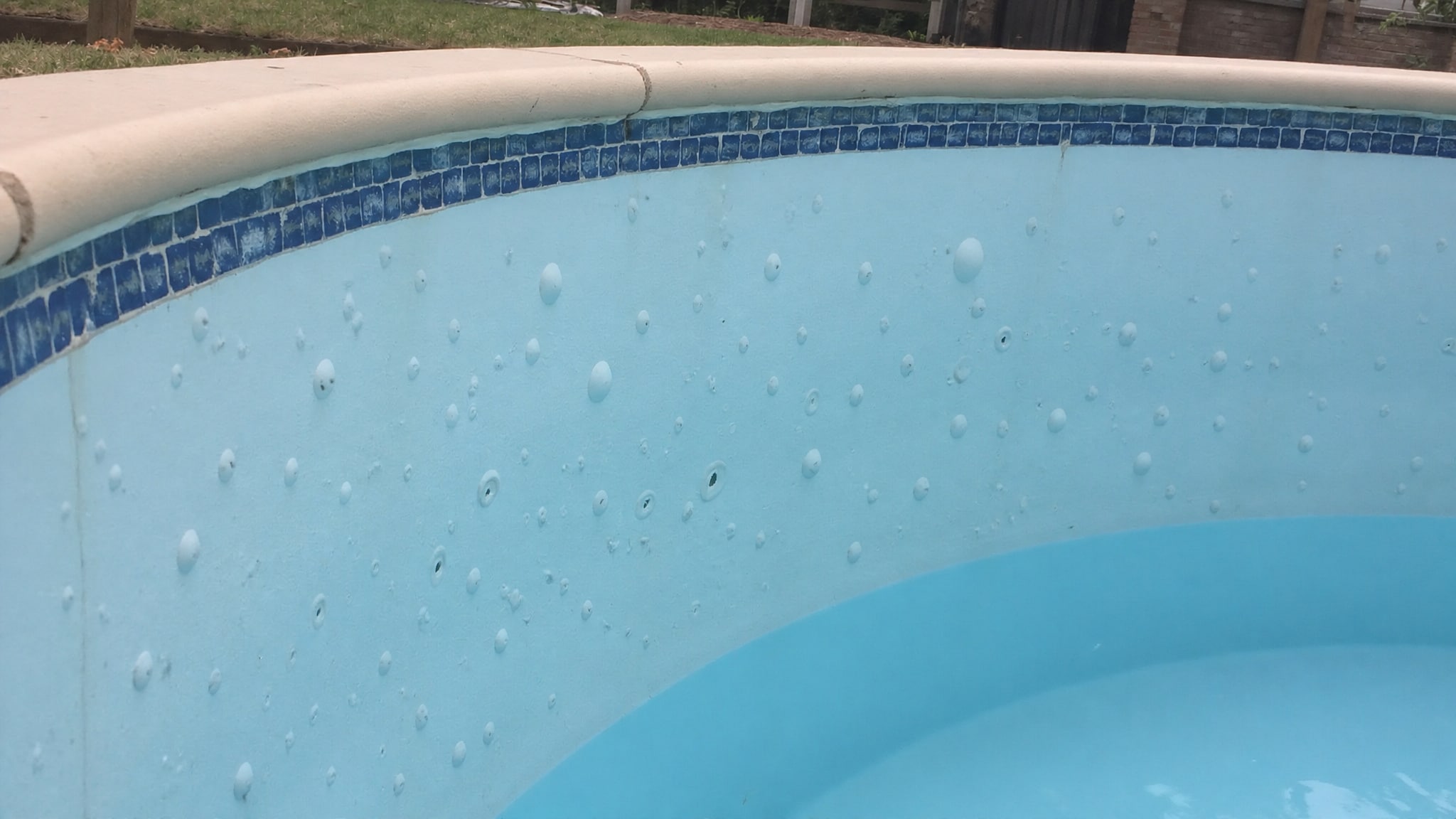
- Black algae presents as dark spots embedded in plaster with a slimy texture. You’ll require a quadruple dose shock and aggressive brushing to break through its protective slime layer. It is highly recommended to consult with a professional pool service when dealing with black algae due to its extreme resistance.
When free chlorine reads zero alongside visible growth, act immediately. Before adding shock, balance pH levels and prepare the shock treatment in a 5-gallon bucket with pool water for proper dilution.
When free chlorine reads zero alongside visible growth, act immediately. Knowing how to shock a pool with sand filter starts with balancing pH levels before treatment, then preparing the shock solution in a 5-gallon bucket filled with pool water for proper dilution to ensure even distribution and effective sanitization.
Cloudy or Discolored Water
Beyond visible algae, cloudy or discolored water serves as another clear signal that your pool needs shock treatment. When free chlorine drops below 3 ppm, combined chlorine and bacteria accumulate, reducing water clarity. Heavy rain, hot weather, and debris buildup accelerate this contamination process.
| Water Condition | Cause | Action Required |
|---|---|---|
| Murky/hazy | Combined chlorine buildup | Shock to 30 ppm |
| Green tint | Algae precursors | Immediate shock treatment |
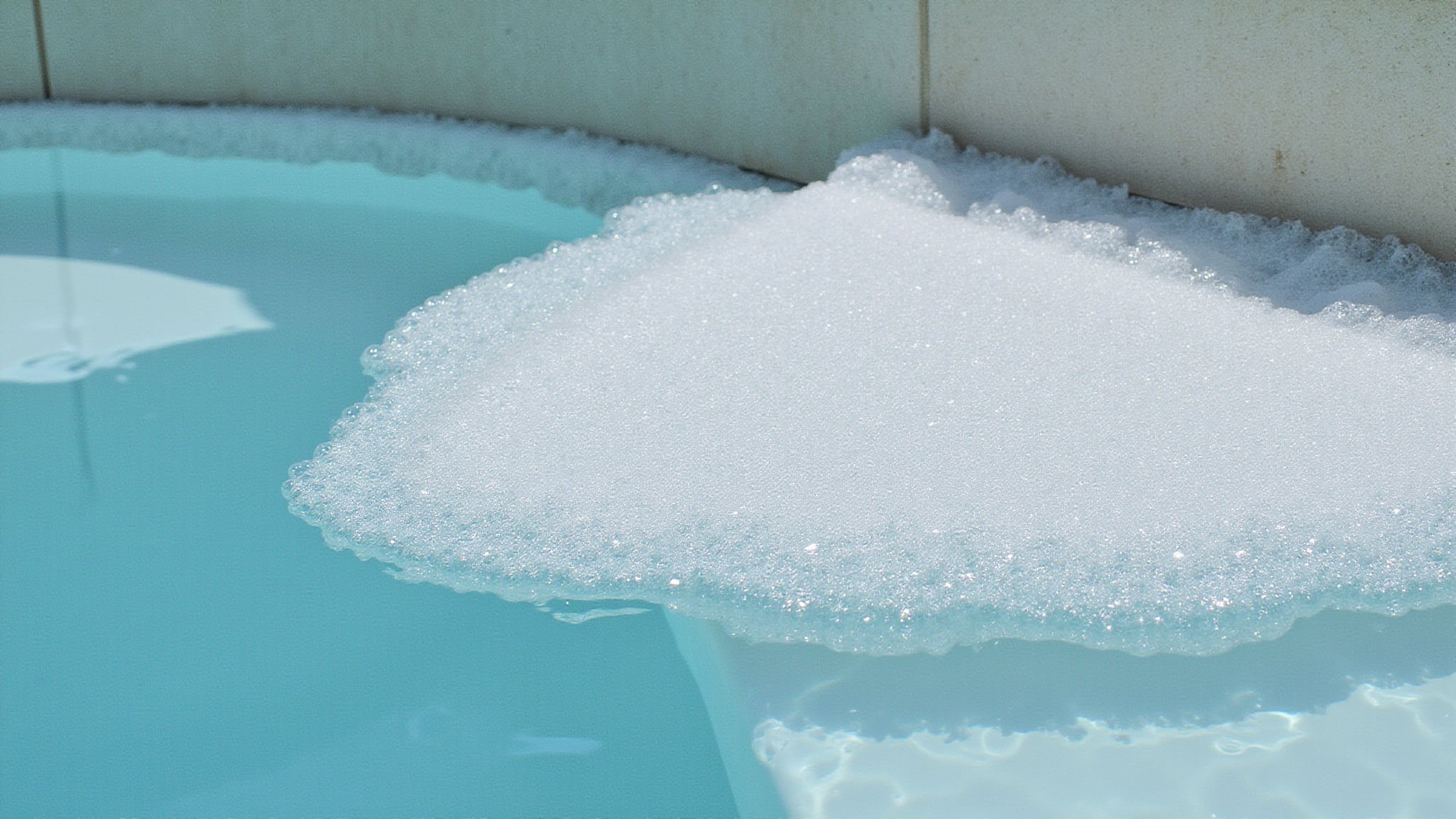
| Foamy surface | Organic contaminants | Test pH, then shock |
You’ll need to test your water before shocking. Verify pH sits between 7.2-7.6 for ideal shock effectiveness. Once you’ve achieved 30 ppm chlorine, contaminants oxidize and clarity returns. Wait until levels stabilize at 1-3 ppm before swimming resumes. Sweat, sunscreen, and body oils react with pool chemicals, creating unwanted buildup that also contributes to cloudy water and skin irritation.
Strong Chlorine Smell
A strong chlorine smell doesn’t indicate too much chlorine, it signals chloramine buildup that requires immediate shock treatment. Chloramines form when free chlorine reacts with nitrogen compounds from sweat, urine, and body oils. These combined chlorine compounds reduce your pool’s sanitizing power while producing that pungent odor. Dichloramine and trichloramine are the specific chloramines most responsible for creating that distinctive pool smell.
You’ll notice chloramine presence through these indicators:
- Sharp, musty smell that intensifies near the water surface
- Red, irritated eyes and skin after swimming
- Respiratory discomfort or persistent coughing
Prolonged exposure to chloramines can contribute to serious lung health problems like Lifeguard Lung and asthma. Indoor pools with poor ventilation tend to have more intense chloramine odors, making proper air circulation essential for swimmer health.
To eliminate chloramines, you’ll need to achieve breakpoint chlorination. This requires raising your free available chlorine to approximately ten times your combined available chlorine level. This concentration breaks the ammonia-chlorine bonds, converting chloramines into harmless nitrogen gas. Test your combined chlorine levels before shocking to determine the correct dosage.
How Pool Shock Kills Algae and Clears Blooms
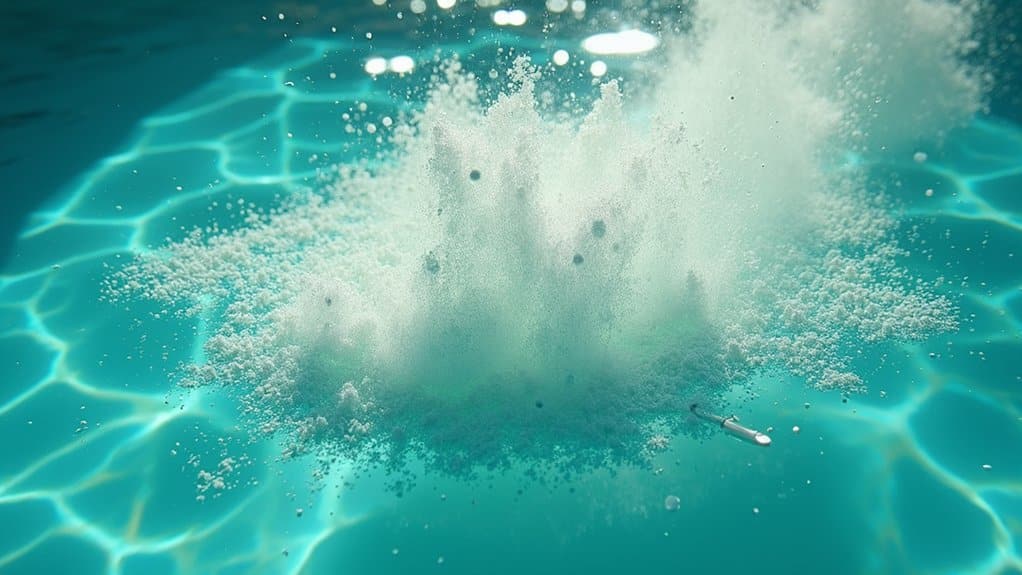
When algae blooms turn your pool green, pool shock delivers a concentrated chlorine assault that penetrates and destroys algae cell walls. Super-chlorination raises free chlorine to 10-20 ppm, overwhelming algae and breaking apart combined chlorine to reactivate its sanitizing power.
For effective treatment, lower your pH to 7.8 or below with hydrochloric acid, this maximizes chlorine’s killing potential. Use 1 pound of cal-hypo shock per 10,000 gallons, quadrupling the dose for heavy infestations. Apply shock at night to prevent UV degradation.
Before shocking, brush all pool surfaces to expose hidden algae. Run your pump continuously for 24-48 hours to guarantee complete circulation. Clean your filter daily during treatment to remove dead algae particles. Test water chemistry after 12-24 hours and rebalance as needed.
Chlorine Shock vs. Non-Chlorine Oxidizers
Though both chlorine shock and non-chlorine oxidizers treat pool water problems, they serve fundamentally different purposes in your maintenance arsenal. Chlorine shock super-sanitizes by spiking free chlorine levels to kill algae, bacteria, and pathogens directly. Non-chlorine shock oxidizes organic contaminants, sweat, oils, lotions, without raising chlorine concentrations.
Here’s when you’ll use each type:
- Chlorine shock: Apply for persistent algae blooms, cloudy water, or high pathogen loads requiring aggressive sanitization.
- Non-chlorine shock: Use for weekly maintenance, post-heavy bather loads, or when you need swim-ready water within 15-30 minutes.
- Combined approach: Deploy chlorine shock for corrections, then maintain clarity with routine non-chlorine treatments.
Non-chlorine oxidizers free up existing chlorine for better efficiency, while chlorine shock requires 8-12 hours before safe swimming resumes.
How to Shock Your Pool Step by Step
Before you add shock to your pool, test your water’s pH and adjust it to the 7.2, 7.4 range for maximum shock effectiveness. You’ll also want to remove debris and guarantee your pump and filter system are operational. Plan to shock at dusk or evening hours, which allows the pump to run overnight and prevents UV light from degrading the chlorine before it can sanitize your water.
Test Water Before Shocking
Testing your pool water before shocking guarantees you’re addressing the actual chemical imbalances present. Collect your sample 18 inches below the surface, away from skimmers and return jets, to get an accurate reading of your pool’s chemistry.
Use these three testing methods for pre-shock assessment:
- Test strips, Dip for 2 seconds, wait 15 seconds, then match colors for chlorine (ideal 1.0-3.0 ppm) and pH (7.4-7.6 ideal).
- Liquid kits, Add OTO drops to the chlorine vial and phenol red to the pH vial, comparing colors against the chart.
- Digital testers, Provide precise readings with minimal error across all parameters.
If your pH reads above 8.0, adjust it first, high pH prevents effective shocking and wastes your chemicals.
Add Shock at Dusk
Once you’ve tested and balanced your water chemistry, timing your shock treatment correctly becomes the next critical factor for success. Add shock at dusk or nighttime to maximize chlorine effectiveness. UV rays rapidly degrade unstabilized chlorine during daylight hours, greatly reducing your treatment’s potency before it can eliminate contaminants.
Night application provides approximately 8 hours of uninterrupted circulation and chemical processing. This timing also prevents swimming interruption since you’ll need to wait at least 8 hours before re-entering the pool.
Before adding shock, turn on your pool pump to confirm proper distribution. Avoid windy evenings, as gusts can cause chemical splashback onto skin or surrounding surfaces. This strategic dusk timing allows the shock to work overnight, breaking down algae, bacteria, and organic waste while you sleep. When seeking the best pool shock options, many homeowners turn to pool shock bunnings for reliable products. It’s essential to choose a formula suited for your pool type, ensuring effective treatment and maintenance. Regular use can prolong the life of your pool and keep the water crystal clear.
How Often Should You Shock Your Pool?
Most pool owners should shock their pools weekly during peak swimming season to maintain ideal water clarity and prevent bacterial buildup. You can extend this interval to every 1-2 weeks for pools with moderate or irregular use, but you’ll need to test chlorine levels regularly to confirm adequacy.
Shock your pool weekly during peak season, or every 1-2 weeks for lighter use, just test chlorine levels regularly.
Certain conditions require immediate shocking regardless of your regular schedule:
- After heavy rain, windstorms, or extreme heat, these events introduce contaminants or deplete chlorine rapidly
- Following pool parties or heavy bather loads, sweat, lotions, and body oils create heightened contamination
- When water appears cloudy or emits strong chlorine odors, these indicate chloramine buildup requiring treatment
Monitor your free chlorine levels consistently. When readings drop below 1 ppm or combined chlorine exceeds 0.3 ppm, shock immediately.
How Long to Wait Before Swimming After Shock
The wait time between shocking your pool and swimming safely depends primarily on the type of shock product you’ve used. Chlorine-based shocks require 8-24 hours, while non-chlorine alternatives allow re-entry within 15-30 minutes.
The wait time between shocking your pool and swimming safely depends primarily on the type of shock product you’ve used, which is why many pool owners ask how long after can you swim after shocking pool. Chlorine-based shocks typically require 8, 24 hours before levels return to a safe range, while non-chlorine alternatives often allow re-entry within 15, 30 minutes.
| Shock Type | Wait Time | Safe Chlorine Level |
|---|---|---|
| Calcium Hypochlorite | 8-24 hours | 1-5 ppm |
| Dichlor/Trichlor | 12-24 hours | 1-5 ppm |
| Potassium Monopersulfate | 15-30 minutes | N/A |
Run your pump for at least 8 hours after application to guarantee complete chemical distribution. For heavy algae treatment, extend circulation to 24 hours and wait up to 48 hours before swimming.
Always test your water before entering. Verify free chlorine reads 5 ppm or below and pH remains at 7.6 or lower.
Frequently Asked Questions
Can You Shock a Pool That Uses Bromine Instead of Chlorine?
Yes, you can shock a bromine pool effectively. You’ll use either non-chlorine shock (MPS) or standard chlorine shock to oxidize contaminants. Non-chlorine shock is your preferred option because it reactivates bromamines back into active bromine without mixing complications. When you add oxidizing shock, you’re regenerating your bromine residual, which reduces your need for additional bromine tablets. Follow standard shock dosing instructions for proper application.
Does Pool Shock Raise or Lower pH Levels?
Pool shock’s pH effect depends on the product you’re using. Calcium hypochlorite (cal-hypo) raises pH considerably because it’s alkaline. Liquid chlorine also increases pH slightly. Stabilized dichlor shock maintains near-neutral pH, causing negligible disruption. You’ll need to test your water after shocking and adjust accordingly. For ideal shock effectiveness, lower your pH to 7.2, 7.4 before treatment, this optimizes chlorine’s sanitizing power against bacteria and algae.
Why Should You Add Pool Shock at Dusk Instead of Daytime?
You should add pool shock at dusk because ultraviolet rays from sunlight rapidly degrade chlorine, reducing its effectiveness. When you shock during daytime, UV exposure breaks down hypochlorite ions within hours, preventing breakpoint chlorination. By applying shock after sunset, you’ll preserve free chlorine levels overnight, allowing the 8-hour filtration cycle to complete without solar interference. This timing also aligns pool closure with non-use hours, letting chlorine normalize before morning swimming.
What Is Breakpoint Chlorination and Why Does It Matter?
Breakpoint chlorination is the threshold where your free chlorine level completely oxidizes all chloramines (combined chlorine) in your water. You’ll achieve it by adding 10 times your tested combined chlorine reading, for example, 0.5 ppm CC requires 5.0 ppm free chlorine. This matters because it eliminates the “chlorine smell” and eye irritation caused by chloramines, allowing a true free chlorine residual to form for ongoing sanitization.
How Much Shock Do You Need per 10,000 Gallons of Water?
For algae treatment, you’ll adjust accordingly:
- Light green algae: 2 pounds
- Darker green algae: 3 pounds
- Black algae: 4 pounds
Always verify the manufacturer’s label and retest chlorine levels after 8, 12 hours.