The best time to shock your pool is after sunset, when UV radiation won’t degrade your chlorine before it works. Direct sunlight can destroy up to 90% of free available chlorine within just two hours, rendering your shock treatment ineffective. Evening application allows calcium hypochlorite or your preferred oxidizer to circulate uninterrupted overnight, breaking down chloramines and eliminating contaminants. Understanding the science behind proper timing helps you maximize every treatment’s effectiveness.
Why Evening Is the Best Time to Shock Your Pool
When you shock your pool during daylight hours, UV radiation actively degrades chlorine molecules, substantially reducing sanitization efficacy before the treatment cycle completes. Chlorine sunlight breakdown can eliminate up to 90% of free available chlorine within hours, rendering your treatment ineffective.
The best time to shock a pool is after sunset. Nighttime application eliminates UV interference, allowing hypochlorite compounds to maintain potency throughout the oxidation process. When you shock pool at night, you’ll achieve maximum contaminant destruction and pathogen elimination. This timing also helps eliminate chlorine lock by breaking up chloramines, restoring the sanitizing power of your pool’s chlorine.
Proper pool shock timing also enables complete circulation through your filtration system. The pump distributes chemicals evenly during uninterrupted overnight processing. By morning, chlorine levels stabilize within the 1-4 ppm range, and your pool’s ready for safe recreational use. For best results, use calcium hypochlorite as your shock treatment since it dissolves quickly and works effectively overnight. Always check chlorine levels the next morning before allowing anyone to swim to ensure the water is safe.
Why Sunlight Destroys Pool Shock Before It Works
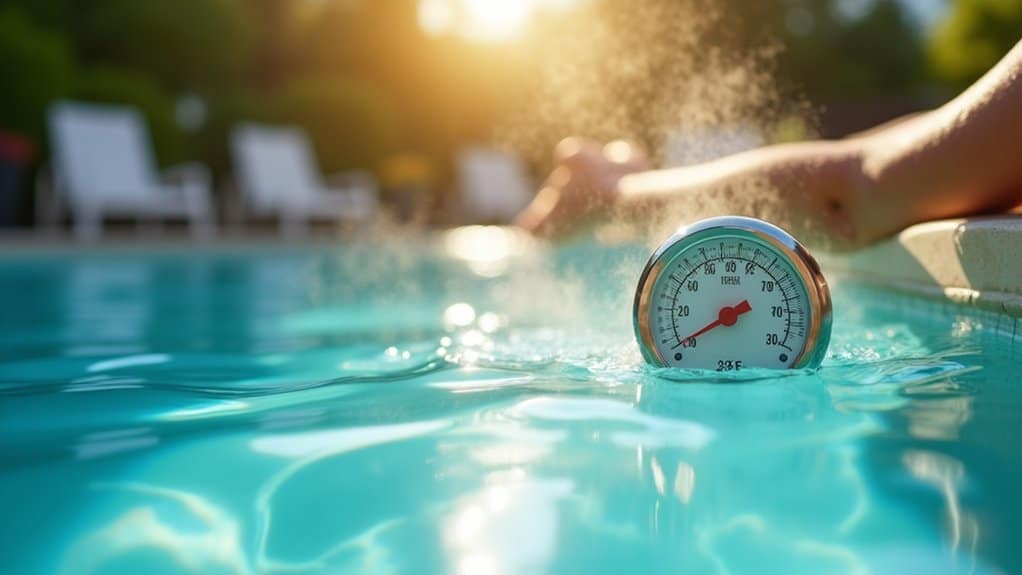
Ultraviolet radiation destroys up to 90% of free available chlorine within two hours of direct sun exposure, making daytime shock treatments largely ineffective. UV rays split the chemical bonds in hypochlorite ions, converting your dissolved chlorine into gas that escapes into the atmosphere. Without protection, chlorine’s half-life drops to 20-45 minutes depending on pool depth.
Heat compounds this problem. When water temperatures exceed 28°C, chlorine degradation accelerates considerably. You’ll need double the dosage for every 6°C above 27°C just to maintain adequate sanitization levels. Higher temperatures also promote bacterial growth, which consumes free chlorine and increases combined chlorine levels. These imbalances weaken chlorine’s effectiveness and make pH control more challenging.
Your outdoor pool requires up to three times more chlorine than indoor facilities due to these combined factors. Cyanuric acid stabilizers can enhance chlorine’s UV resistance up to eight times, but they can’t fully compensate for shocking during peak sunlight hours. For maximum effectiveness, adding chlorine during evening or early morning hours allows the treatment to work before UV exposure begins.
Signs Your Pool Needs Shocking Right Now
Several telltale indicators signal your pool requires immediate shock treatment, and recognizing them early prevents costly chemical corrections down the line. Cloudy water indicates contaminant buildup or depleted free chlorine levels. A strong chlorine smell actually signals chloramine formation, not excess sanitizer, when combined chlorine exceeds 0.5 ppm. Shocking the pool breaks down chloramines and restores proper water balance while eliminating unpleasant odors. Red, irritated eyes while swimming are another clear sign that combined chlorine levels have become problematic for swimmers.
| Indicator | Action Threshold |
|---|---|
| Cloudy/murky water | Immediate shock required |
| Chloramine odor | CC levels >0.5 ppm |
| Visible algae growth | Cal-hypo shock treatment |
| Post heavy usage | Test confirms low FC |
You’ll also need to shock after heavy bather loads introduce oils, sweat, and organic compounds. Post-storm treatment prevents algae blooms from debris and diluted sanitizer levels. After shocking, keep your pool pump running for at least 8 hours to ensure proper chemical distribution throughout the water. Test your water chemistry to confirm intervention necessity.
How Often Should You Shock Your Pool?
How Often Should You Shock Your Pool?
Establishing a consistent shock schedule depends on your pool’s usage patterns, environmental exposure, and chemical demand. For standard maintenance, you’ll want to shock every one to two weeks to maintain proper free chlorine levels between 1-3 ppm and prevent algae growth.
Increase frequency to weekly during heavy bather loads, hot weather, or after rain events that introduce debris and lower pH. High UV exposure and severe heat waves accelerate chlorine dissipation, requiring additional treatment. Post-party shocking is essential, sweat, oils, and cosmetics drastically reduce sanitizer effectiveness. Humans introduce contaminants like lotions and body oils that overwhelm your sanitizer, making shock treatment a minimum requirement after heavy pool use.
Increase shock frequency to weekly during periods of heavy bather load, hot weather, or after rain events that introduce debris and lower pH. In these conditions, using pool shock liquid can be especially effective, as high UV exposure and severe heat waves accelerate chlorine dissipation and demand faster sanitizer replenishment. Post-party shocking is essential, sweat, oils, and cosmetics drastically reduce sanitizer effectiveness. Human-introduced contaminants like lotions and body oils can quickly overwhelm your sanitizer, making shock treatment a minimum requirement after heavy pool use.
Monitor your combined chlorine levels; readings above 0.3 ppm indicate it’s time to superchlorinate. Don’t forget seasonal requirements: spring opening and fall closing shocks address off-season contamination and prepare your pool for extended periods of use or dormancy. If you notice algae growth, shock your pool immediately to prevent the problem from spreading and posing a health hazard to swimmers.
Can You Shock Your Pool During the Day?
Daytime pool shocking presents a significant challenge: UV rays degrade free chlorine at rates up to 90% within two hours of direct sun exposure. The sun’s photolytic action breaks down hypochlorous acid before it neutralizes contaminants, wasting chemicals and compromising sanitation. This is why experts recommend shocking your pool in the evening or at night for optimal results.
UV rays can destroy up to 90% of your pool’s free chlorine within just two hours of sun exposure.
If you must shock during daylight hours, implement these mitigation strategies:
- Add cyanuric acid (stabilizer) at 30-50 ppm to shield chlorine molecules from UV degradation
- Increase shock dosage by 25-50% to compensate for accelerated chlorine loss
- Monitor free available chlorine levels hourly and re-dose as needed
While daytime shocking remains viable with proper protectants, you’ll achieve superior oxidation efficiency by waiting until post-sunset application when UV interference ceases entirely. Remember that a strong chlorine smell actually indicates the presence of chloramines and contaminants rather than a clean, properly sanitized pool. After shocking, ensure your filtration runs for 24 hours and recheck your water chemistry the following day to confirm proper sanitation levels.
How Long After Shocking Can You Swim?
After shocking your pool, you’ll need to wait until free available chlorine (FAC) drops to safe swimming levels, typically 5 ppm or less, with 1-3 ppm being the ideal range.
Chlorine-Based Shock
Calcium hypochlorite requires 24-48 hours before re-entry. Sodium dichlor needs 12-24 hours minimum. Always verify FAC levels with test strips or a DPD kit before allowing swimmers in.
Non-Chlorine Shock
Potassium monopersulfate (MPS) allows re-entry within 15-20 minutes since it doesn’t elevate chlorine levels considerably. You can swim shortly after using this type of shock, making it ideal for routine maintenance.
Potassium monopersulfate (MPS) allows re-entry within 15, 20 minutes because it doesn’t elevate chlorine levels significantly, which helps clarify how long after pool shock can you go swimming when using non-chlorine treatments. You can swim shortly after application, making this type of shock ideal for routine maintenance without extended downtime.
Critical Factors
Heavy dosing extends wait times up to 48 hours. Run your filtration system continuously for at least 8 hours post-treatment, 24 hours for algae remediation. Retest pH levels alongside chlorine; maintain readings at or below 7.6. Always defer to manufacturer specifications over general guidelines.
Frequently Asked Questions
Does Pool Shock Work Better in Hot or Cold Water Temperatures?
Pool shock works more efficiently in cold water temperatures. You’ll get 2-3 times higher chlorine efficacy at 50°F compared to typical summer conditions because hypochlorous acid strength increases in cooler water. However, there’s a trade-off, warmer water accelerates reaction speed, oxidizing contaminants and eliminating algae faster. Cold water slows these chemical reactions. You’ll need to shock when water reaches at least 60°F and maintain proper circulation for even distribution.
Should I Clean My Pool Filter Before or After Shocking?
Clean your filter both before and after shocking for ideal results. Pre-shock, rinse your cartridge or backwash your DE/sand filter to guarantee proper flow distribution of the chlorine. After shocking, run your pump 24 hours, then clean again, shocking kills algae and bacteria, releasing dead organics that’ll clog your media. Monitor your pressure gauge; if it rises 8-10 PSI post-treatment, you’ll require immediate backwashing or cartridge rinsing.
Can I Use Pool Shock if I Have a Saltwater Pool System?
Yes, you can shock your saltwater pool using compatible products. Dichlor shock dissolves quickly without residue buildup on salt cells. MPS (non-chlorine) oxidizer clears organic contaminants without disrupting your system’s chemistry. If you’re using cal-hypo, pre-dissolve it in a bucket first to prevent scale damage to your chlorinator. Sodium hypochlorite works well since your salt cell naturally produces this compound. Avoid undissolved granules that shorten cell lifespan.
Will Shocking My Pool Affect the pH Balance of the Water?
Yes, shocking your pool will temporarily lower your pH levels. Chlorine-based shock treatments, especially calcium hypochlorite and trichlor, create an immediate pH drop when FAC spikes during sanitation. You’ll need to monitor pH throughout the process since chlorine’s efficacy depends directly on maintaining proper pH ranges. Once stabilization occurs, test your water and use sodium carbonate to raise pH if levels fall outside ideal parameters.
Is Non-Chlorinated Shock as Effective as Chlorine-Based Shock Treatments?
Non-chlorine shock isn’t as effective as chlorine-based treatments for severe contamination. You’ll find MPS-based oxidizers work well for routine maintenance, breaking down organic contaminants and chloramines, but they can’t kill algae or pathogens. You should use non-chlorine shock for weekly oxidation and quick swimmer re-entry (15-20 minutes), but you’ll still need chlorine shock when tackling algae blooms or serious sanitation issues requiring powerful disinfection.