Before cleaning your pool filter, turn off the pump and disconnect power at the circuit breaker for safety. You’ll need chemical-resistant gloves, goggles, and a dust mask. For cartridge filters, remove and soak elements in a TSP solution, then rinse thoroughly. With DE filters, backwash the system and clean grids manually. For sand filters, simply backwash until water runs clear. Monitor pressure readings and clean when they’re 8-10 PSI above normal. These basic steps set the foundation for mastering more advanced maintenance techniques.
Understanding Different Pool Filter Types
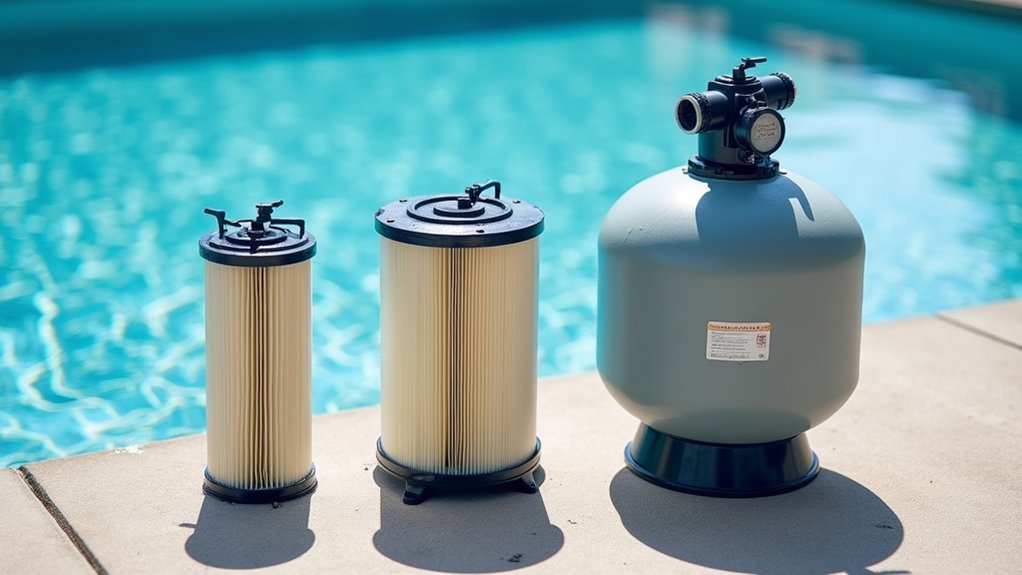
Before diving into pool filter maintenance, it is critical to understand the three main types of pool filters: sand filters, cartridge filters, and diatomaceous earth (DE) filters.
If you’re starting your DIY pool filter cleaning journey, you’ll find that sand filters capture particles between 20-40 microns and require backwashing, making them ideal for basic pool maintenance. Cartridge filters offer enhanced filtration at 10-20 microns using pleated materials that need regular rinsing but no backwashing. For the finest filtration, DE filters trap particles as small as 1-5 microns, though they demand more complex maintenance with powder replenishment. The simple design and parts of sand filters make them a reliable choice for beginners. All filter types require cleaning when pressure readings are 10 psi over normal.
Your pool maintenance guide should factor in that each filter type requires specific rinse methods and cleaning frequencies. Sand filters need minimal upkeep, cartridges require regular rinsing, and DE systems need both backwashing and powder replacement. Additionally, it’s important to monitor the pressure gauge on your filter to determine when maintenance is needed. If you find it difficult to keep up with the cleaning requirements, consider hiring professional pool filter cleaning services to ensure optimal performance. Moreover, a comprehensive pool filter cleaning guide can help you understand the nuances of each filter type, ensuring you follow best practices for maintenance. By adhering to this guide, you can prolong the lifespan of your pool equipment and maintain crystal-clear water.
Essential Safety Precautions Before Cleaning
Now that you’ve identified your filter type, implementing proper safety measures can mean the difference between a smooth maintenance routine and potential hazards.
Start by turning off your pool pump and disconnecting power at the circuit breaker to prevent electrical accidents. Proper filter maintenance helps prevent inefficient chemical consumption and system problems. Don your protective gear, including chemical-resistant gloves, safety goggles, and a dust mask if you’re working with DE filters. Guarantee your workspace is clean, dry, and well-ventilated. Regular cleaning at least once per month during peak season ensures optimal filter performance.
When handling cleaning chemicals, follow manufacturer instructions precisely and never mix different products. Keep all chemicals away from direct sunlight and store them separately. Before opening the filter housing, release system pressure completely. A thorough water chemistry check should be performed before maintenance to ensure safe chemical levels for handling. Remember to inspect your filter components for damage before starting the cleaning process. To simplify your maintenance routine, consider researching easy cleaning methods for pool filters that can be effective and efficient. Utilizing these methods can help maintain optimal filter performance while minimizing the risk of damage to components.
Step-by-Step Cartridge Filter Cleaning Guide
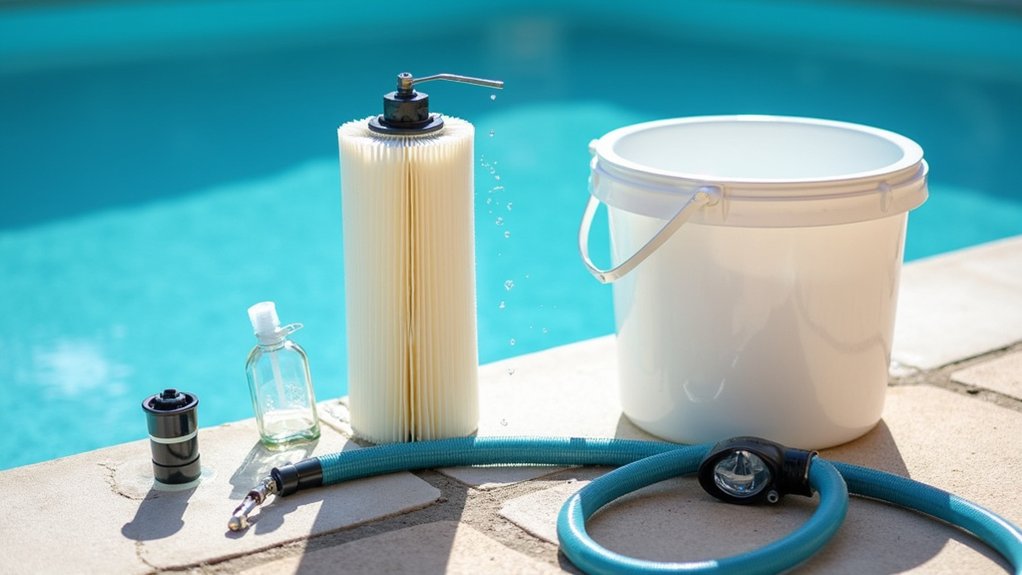
A thorough cartridge filter cleaning requires systematic disassembly and preparation before any actual cleaning can begin. You’ll need to shut off your pump, relieve system pressure, and carefully remove the cartridges while noting their orientation. Once removed, inspect each element for damage before proceeding with the cleaning process. Simple Green All-Purpose Cleaner offers a safer alternative to harsh chemicals for cleaning pool filters. The total cleaning process typically takes an afternoon to weekend depending on soaking time. Regular cleaning helps maintain crystal-clear water and optimal pool performance.
- Direct your garden hose at a 45° angle, working from top to bottom while cleaning between pleats
- Soak cartridges in a TSP solution (1 cup per 5 gallons) for at least 3 hours or overnight
- For mineral deposits, use a 1:20 ratio muriatic acid solution after removing all oils
- Rinse thoroughly until water runs clear, ensuring all cleaning agents are removed
- Reinstall cartridges in their original orientation, checking O-rings and housing integrity before restarting
Diatomaceous Earth (DE) Filter Maintenance Process
While cartridge filters offer straightforward maintenance, DE filter systems require a more methodical approach due to their specialized filtration media. The fine powder coating ensures superior particle removal. You’ll need to monitor your pressure gauge regularly, initiating maintenance when readings exceed 8-10 psi above baseline. The system uses a multiport valve to control various water flow operations.
Start by turning off your pump and relieving pressure through the air relief valve. Then, backwash the system by reversing water flow until discharge runs clear. Remove the drain plug and empty the tank completely. Next, disassemble the grid assembly for manual cleaning with a garden hose, inspecting for tears or damage.
Mix fresh DE powder into a slurry using manufacturer-specified amounts (typically 4-6 pounds). Pour this mixture into your skimmer while the pump runs to guarantee even coating across the grids. Monitor pressure readings to affirm proper system restoration.
Signs Your Pool Filter Needs Cleaning
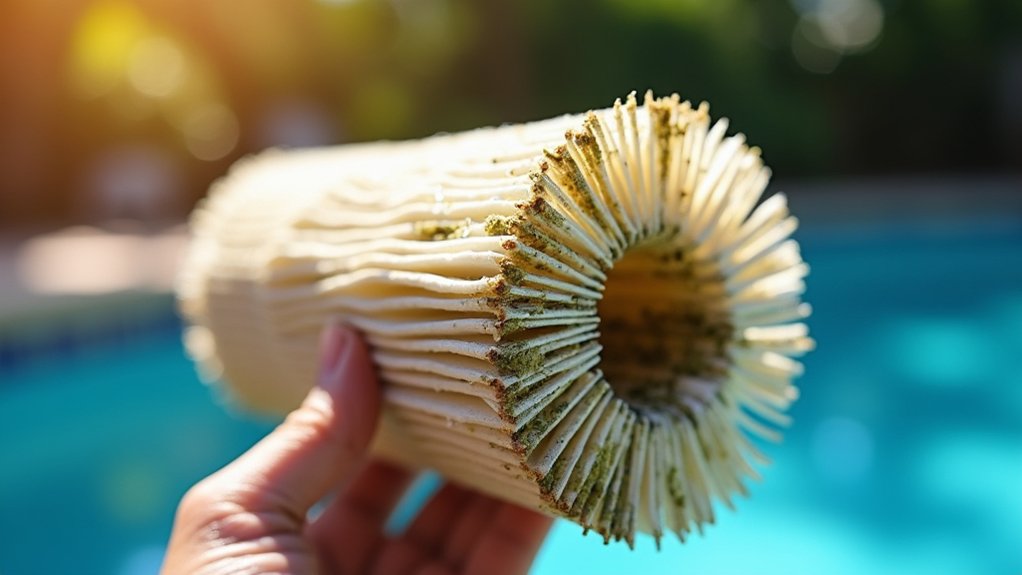
Identifying the right time to clean your pool filter requires careful attention to several key indicators that signal diminished filtration performance. Your filter’s efficiency directly impacts water quality, circulation, and equipment longevity, making it essential to recognize these warning signs early. Regular maintenance helps enhance chemical effectiveness throughout your pool water. When running your filter, be sure to check that the pressure gauge shows expected readings. Experts recommend cleaning your cartridge at least every six months to maintain optimal performance.
Regular monitoring of filter performance is crucial for pool maintenance, as efficiency losses can quickly cascade into major water quality issues.
- Your pool water appears cloudy or murky, with visible suspended particles that don’t clear up even after chemical treatments
- The pressure gauge reading rises 8-10 PSI above your filter’s normal starting pressure
- Water flow from jets and returns becomes noticeably weaker, affecting circulation patterns
- You’re experiencing more frequent algae blooms despite maintaining proper sanitizer levels
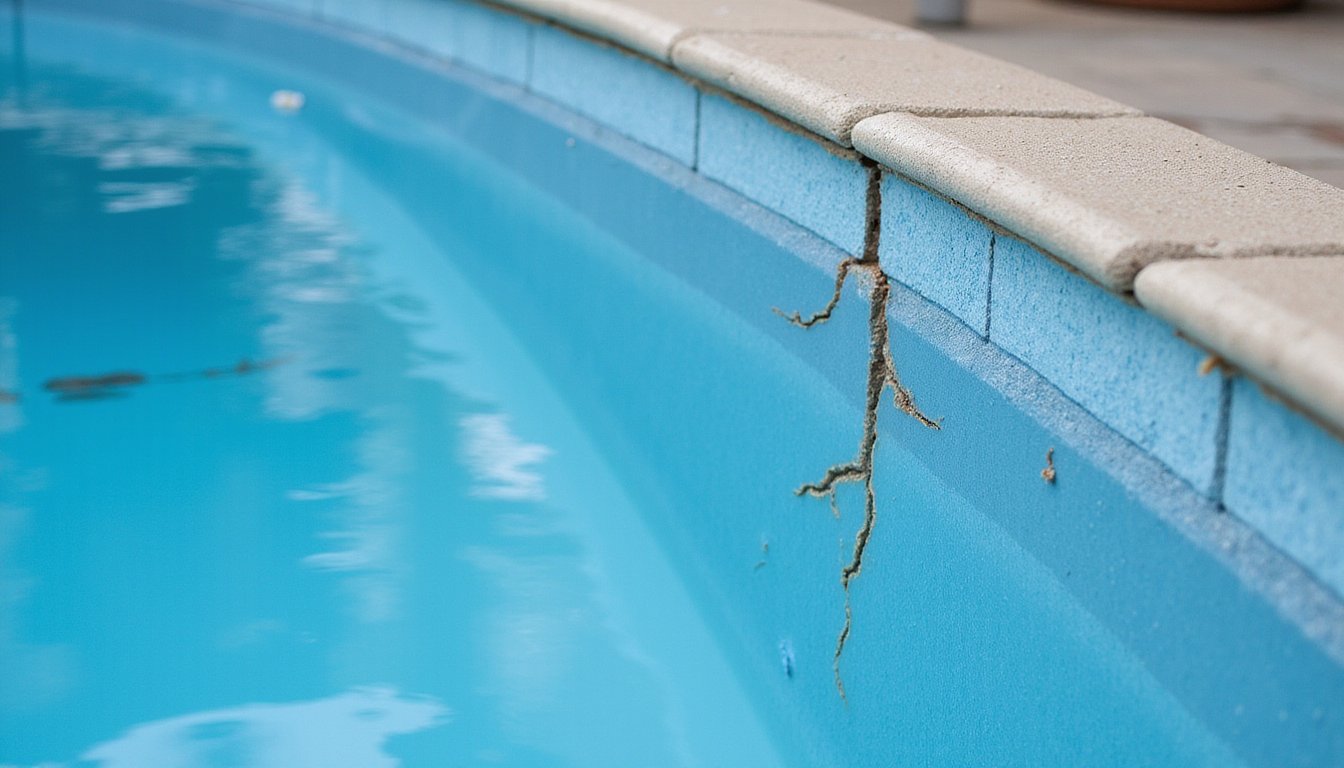
- Filter components show physical issues like leaks at the clamp band, cartridge damage, or unusual noises during operation
Address these signs promptly to prevent system strain and maintain ideal filtration performance.
Frequently Asked Questions
Can I Use a Pressure Washer to Clean My Pool Filter?
No, you shouldn’t use a pressure washer on your pool filter cartridge. High-pressure washing can permanently damage the polyester fibers, create holes in the pleated media, and drastically reduce your filter’s debris-trapping ability. Instead, use a garden hose with specialized filter attachments or manufacturer-approved cleaning tools. These gentler methods will effectively clean between pleats while maintaining your filter’s structural integrity and extending its lifespan.
How Long Will My Pool Filter Typically Last Before Needing Replacement?
Your pool filter’s lifespan varies by type: sand filters typically last 3-7 years with sand replacement at 5 years, cartridge filters need replacement every 1-3 years, DE filters require new grids every 1-2 years, and glass media can last up to 10 years. You’ll know it’s time to replace when you notice consistently high pressure readings (8-10 psi above normal), visible damage, reduced flow, or persistent cloudy water despite proper chemistry.
What Happens if I Add Too Much DE Powder?
If you add too much DE powder, you’ll face several significant issues. You’ll notice clogged filters, decreased flow rates, and higher pressure gauge readings. Excess DE can blow back into your pool, leaving tan-colored residue and creating cloudy water. It’ll also accelerate wear on filter grids and manifolds, potentially causing component damage. There’s a health risk too; the powder can become an inhalation hazard and is toxic if ingested.
Can I Clean My Pool Filter With Bleach?
While you technically can use bleach to clean your pool filter, it’s not recommended. Bleach’s harsh chemicals can degrade filter materials, reduce cartridge lifespan, and potentially contaminate your pool water. Instead, you’ll want to use manufacturer-approved filter cleaners or a 50/50 vinegar-water solution. If you’re determined to use bleach, guarantee thorough rinsing and neutralization afterward, but be aware that you’re risking premature filter deterioration.
Should I Run My Pool Filter 24/7 During Swimming Season?
You don’t need to run your pool filter 24/7 during swimming season. Instead, operate it for 8-12 hours daily, which provides sufficient turnover while minimizing energy costs. You’ll get ideal results by running your filter during peak swimming hours and sunny periods when algae is most active. If you’re using a variable-speed pump, you can split the runtime into intervals throughout the day for better efficiency.