To maximize your pool filter’s lifespan, clean it at least four times annually and monitor the pressure gauge for spikes of 8-10 psi above baseline. For cartridge filters, remove and spray between pleats with a filter wand. With sand filters, backwash until water runs clear, while DE filters need backwashing followed by fresh powder. Regular maintenance, including proper chemical balance and professional inspections, will keep your system running efficiently. Discover more expert tips to extend your filter’s performance below.
Understanding Different Pool Filter Types and Their Cleaning Needs
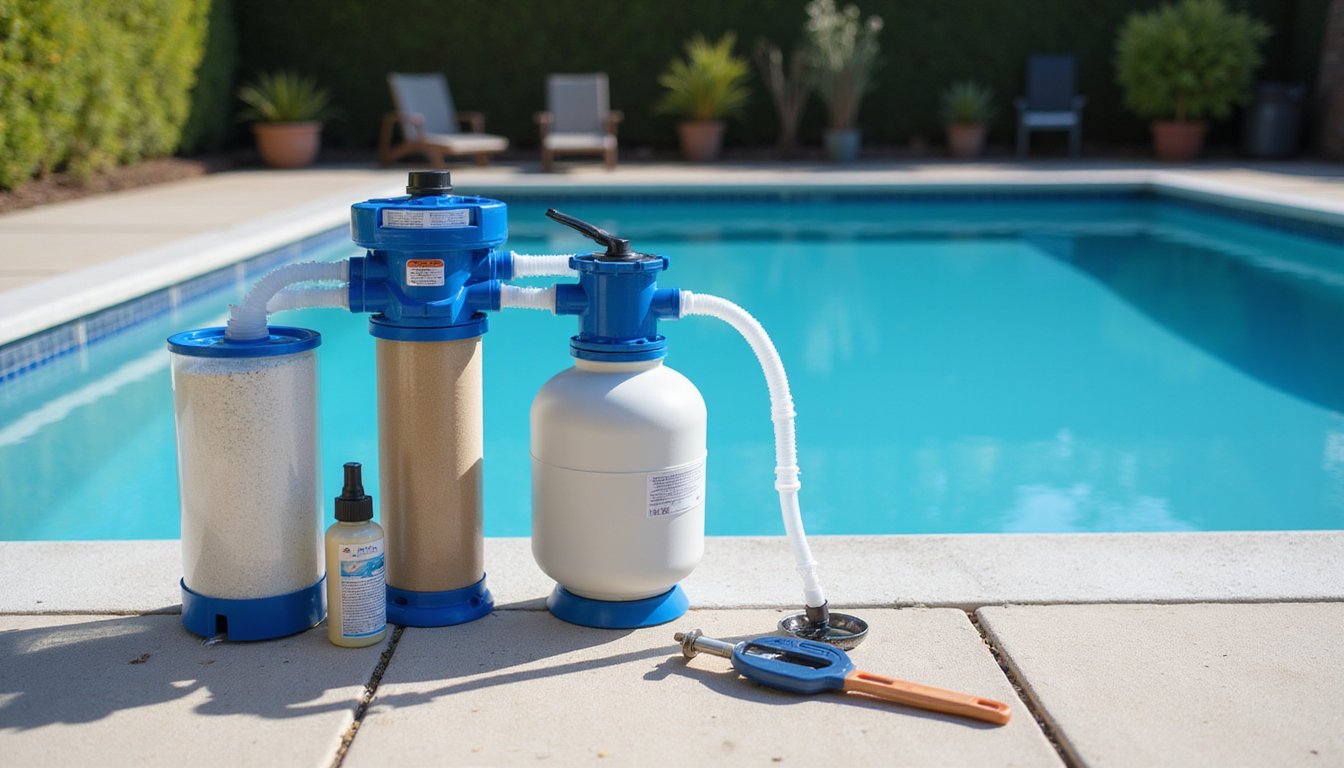
The success of your pool maintenance routine hinges on understanding the three main types of pool filters: sand, cartridge, and diatomaceous earth (DE). Your filter’s cleaning power varies significantly by type, with DE filters offering the highest level of water polishing.
For effective filter cleaning, you’ll need to match your maintenance approach to your specific filter type. Sand filters, while requiring minimal upkeep, need backwashing when pressure rises 8-10 psi and sand replacement every 3-5 years. Deep cleaning pool filters is especially vital for cartridge systems, which need regular hosing off of their pleated elements to maintain ideal 10-20 micron filtration. Among pool filter care hacks, DE systems offer the finest filtration at 1-5 microns but demand more attention; you’ll need to backwash and replenish DE powder regularly. Each system signals cleaning needs through pressure gauge readings, reduced water flow, or cloudy pool conditions. Cartridge filters are designed with fewer internal parts making them less prone to mechanical issues and easier to maintain.
Essential Tools and Products for Effective Filter Cleaning
Setting up a proper filter cleaning station starts with gathering the right tools and products for your specific pool system. You’ll need manual cleaning tools like filter wands and non-abrasive brushes, plus chemical solutions designed for your filter type. Consider investing in automatic cleaners or pressure-aided attachments to make the job easier and more thorough. Regular maintenance helps prevent costly repairs and equipment damage down the line. The Aqua Comb tool provides specialized cleaning between filter pleats for maximum debris removal. Using Poolife Filter Cleaner effectively breaks down tough dirt and oil buildup that can compromise water quality.
| Essential Tool | Primary Benefit |
|---|---|
| Filter Wands | Deep-cleans cartridge pleats effectively |
| Chemical Soaks | Dissolves stubborn organics and scale |
| Pre-filters | Reduces sediment buildup and maintenance |
| Pressure Gauges | Monitors when cleaning is needed |
Don’t forget to install pre-filter systems to capture sediment before it reaches your main filter. This proactive approach, combined with proper maintenance tools and monitoring accessories, will considerably extend your filter’s life and maintain excellent performance.
Step-by-Step Guide to Cleaning Each Filter Type
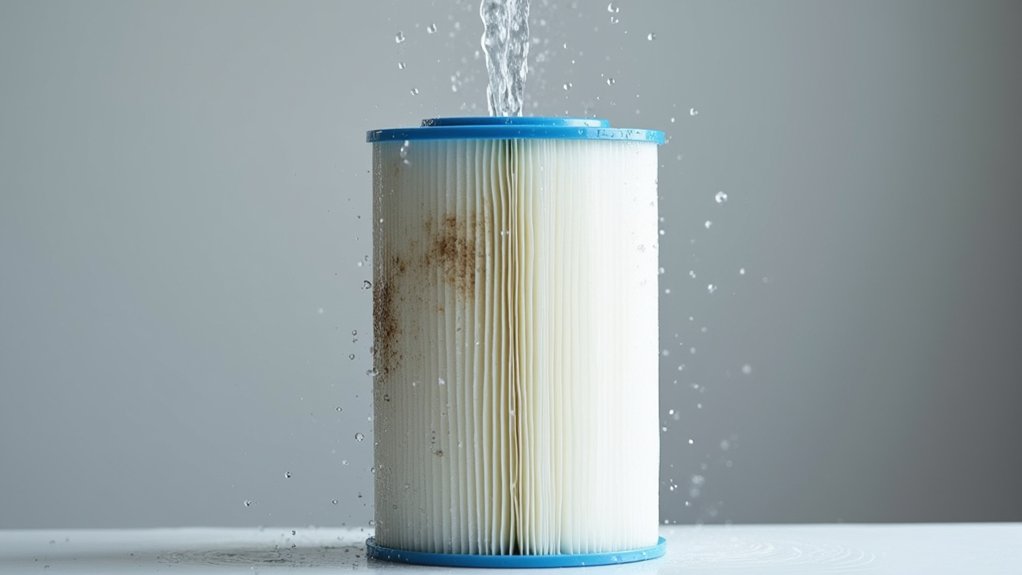
While each pool filter type requires specific maintenance procedures, understanding the proper cleaning steps for your system will guarantee ideal performance and longevity. Regularly replace worn parts and follow beginner tips for pool maintenance, like checking water chemistry and keeping debris out, to keep your filter system running smoothly.
For sand filters, turn off the pump, set to “backwash” until water runs clear, then “rinse” to resettle the sand bed. Clean when pressure rises 8-10 psi above normal. Crystal clear water is best achieved with diatomaceous earth filters due to their superior filtration. With cartridge filters, remove the cartridge, spray between pleats with a garden hose, and soak in cleaning solution for tough debris.
D.E. filters need backwashing followed by fresh D.E. powder addition through the skimmer. Sand filters typically hold 50 to 300 pounds of filtering media, depending on pool size. If you’re using alternative media like zeolite, glass, or FilterBalls, follow the same backwash process but expect different cycle durations. Remember to always release pressure before maintenance and monitor your pressure gauge regularly to determine when cleaning’s needed. Additionally, investing in professional pool maintenance services can help ensure your filtration system operates efficiently and extends its lifespan. These experts can perform thorough inspections and cleanings that may be difficult for homeowners to achieve on their own.
Warning Signs Your Pool Filter Needs Cleaning
Several unmistakable warning signs indicate when your pool filter needs immediate attention. Watch for cloudy or discolored water that doesn’t clear up after chemical treatments, as this often signals trapped debris and poor filtration. You’ll notice reduced water flow from return jets, poor circulation, and weak suction in skimmer baskets. Frequent backwashing becomes necessary when filter media gets excessively dirty, especially with sand or DE filters. Visible debris constantly floating in the pool despite regular cleaning often indicates your filter needs maintenance. Pay attention to your pressure gauge – if it remains high after backwashing or shows sudden spikes, your filter likely needs cleaning. You might also find yourself using more chemicals than usual to maintain water balance, or battling frequent algae blooms despite proper chemical levels. Physical signs include damaged filter media, flattened cartridge pleats, or unusual sand texture. Superior cartridge filters offer easier maintenance and better filtration quality compared to other types. When you spot these indicators, don’t delay – proper filter cleaning will restore your pool’s efficiency and prevent costly repairs.
Expert Tips for Maintaining Filter Performance Year-Round
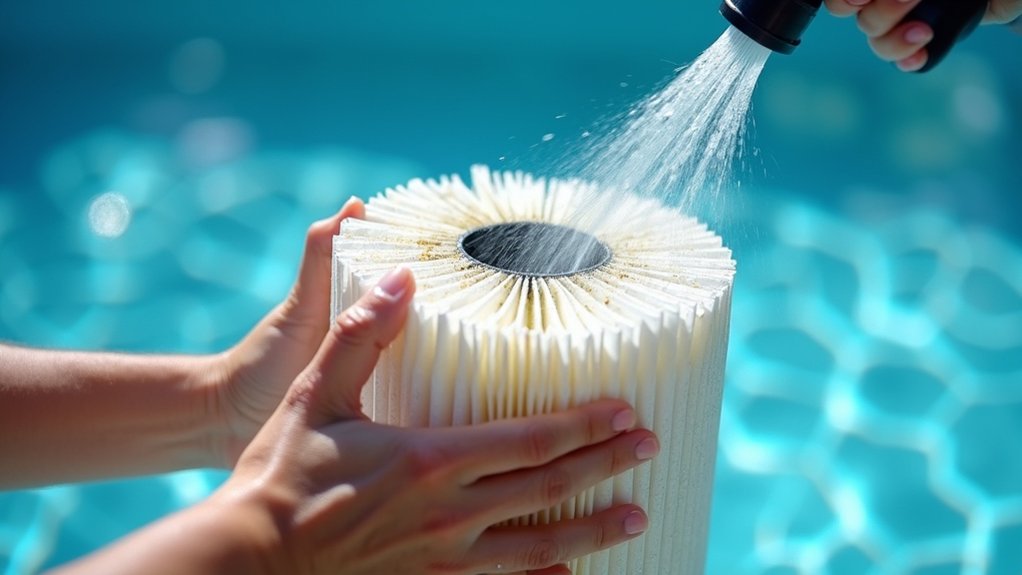
Once you’ve identified the warning signs of a dirty filter, maintaining ideal performance throughout the year requires a systematic approach. Start by monitoring your water chemistry monthly in winter and more frequently during peak season to prevent scale buildup and filter fouling. The corrugated material in cartridge filters makes them especially effective for spas and smaller pools. Additionally, ensure that you regularly clean or replace your filter media as needed to maintain optimal filtration efficiency. Incorporating regular maintenance routines into your schedule can serve as a guide for crystalclear pool water. By staying proactive, you can enjoy a sparkling pool that is inviting and safe for all swimmers.
Follow a strict cleaning schedule based on pressure readings, clean cartridge filters when pressure rises 8-10 psi above baseline, and backwash sand or D.E. filters at similar thresholds. Using glass media filters can reduce your backwashing frequency by 30% compared to traditional sand filters. Don’t skip seasonal deep cleaning: soak cartridges overnight in professional solution, chemically clean sand filters twice yearly, and service D.E. filters up to four times annually for year-round pools.
Remember to lubricate O-rings, check pressure gauges, and store components properly during winter. Consider investing in advanced media options and schedule annual professional inspections to catch potential issues early.
Frequently Asked Questions
Can I Use Household Cleaners Instead of Specialized Pool Filter Cleaners?
No, you shouldn’t use household cleaners on your pool filters. They can damage filter materials, leave harmful residues, and won’t effectively remove pool-specific contaminants like calcium and sunscreen buildup. You’ll risk voiding your warranty and potentially creating unsafe chemical reactions in your pool water. Instead, invest in specialized pool filter cleaners that are specifically tested and formulated for your type of filter system.
How Do I Clean My Filter During Freezing Winter Temperatures?
Don’t clean your filter outdoors during freezing temperatures. Instead, move filter components indoors to a heated, well-ventilated space before cleaning. You’ll need to shut off all power, drain the filter completely, and remove parts carefully once any ice has melted. For cartridge filters, soak them in approved cleaner for 24 hours. For sand or DE filters, perform backwash cycles only when temperatures are above freezing.
Will Running My Filter Longer Reduce the Frequency of Cleaning?
No, running your filter longer won’t reduce how often you need to clean it. While extended run times help remove more debris in real-time and improve water clarity, your filter will still collect the same total amount of contaminants. You’ll need to clean based on specific indicators like pressure increases (8 PSI above baseline), visible debris buildup, or declining water clarity, not just runtime hours.
Can Algae Permanently Damage My Filter if Not Cleaned Promptly?
Yes, algae can permanently damage your filter if left unchecked. You’ll face several risks: biofilm coatings that are hard to remove, degradation of filter media (especially in cartridges and DE grids), and mineral scaling that creates irreversible blockages. To protect your filter, don’t wait; clean it as soon as you notice algae growth. This prevents material breakdown, reduces strain on your pump, and helps maintain proper water circulation and filtration efficiency.
Should I Clean My Filter Immediately After Adding Pool Chemicals?
No, you shouldn’t clean your filter immediately after adding pool chemicals. Wait at least one full filtration cycle (typically several hours) to allow chemicals to properly dilute throughout your system. Cleaning too soon exposes you to concentrated chemicals and can damage your filter media, potentially causing bleaching or fiber breakdown. You’ll also risk voiding your filter’s warranty and creating chemical imbalances in your pool.