You’ll reduce heat loss in your fiberglass pool by leveraging its inherent low thermal conductivity and high-density foam backing, which together create a natural insulation barrier against surrounding soil. Adding spray polyurethane foam to the outer shell cuts energy costs by 60-70%, while thermal covers prevent 95% of evaporative heat loss. These combined strategies deliver approximately 30% energy savings over concrete or vinyl alternatives, and the sections below break down each method’s specific efficiency gains.
Why Fiberglass Pools Retain Heat Better Than Concrete or Vinyl?

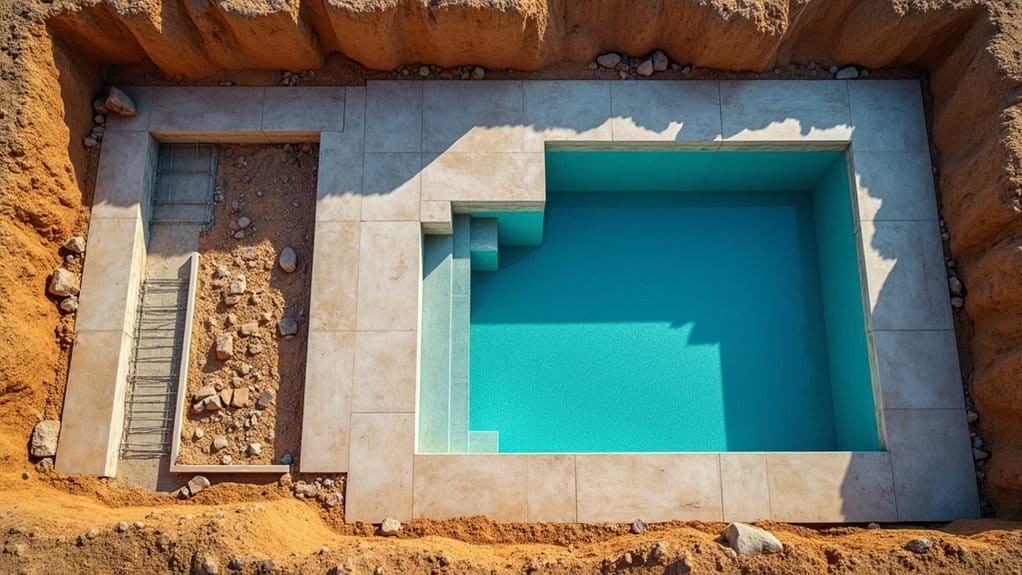
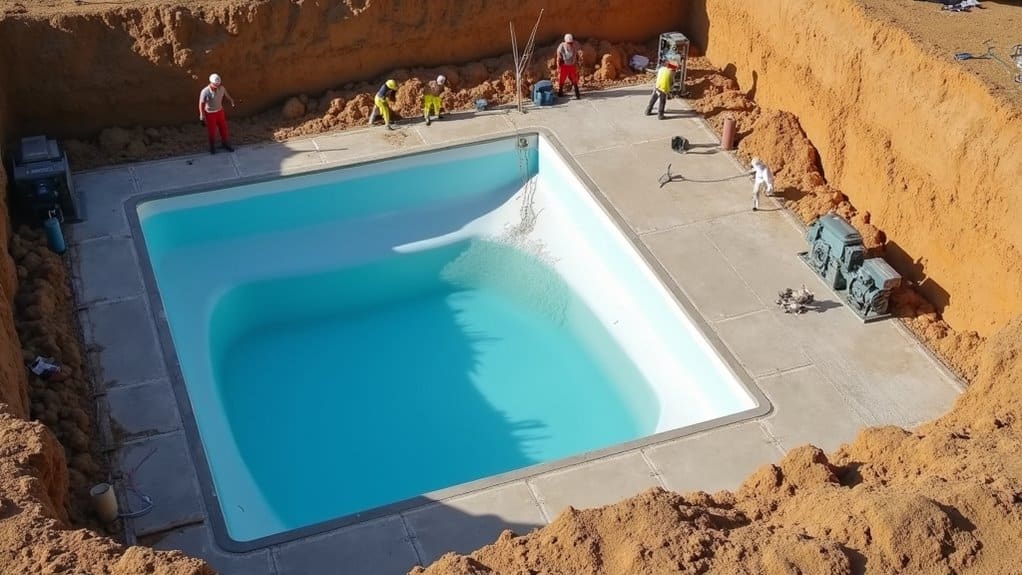
When you’re evaluating pool materials for energy efficiency, fiberglass stands out due to its inherent insulating properties. The material’s low thermal conductivity prevents heat transfer to surrounding soil, unlike concrete which acts as a thermal bridge to the ground. Your fiberglass shell includes a high-density foam backing that creates an additional insulation barrier, minimizing conductive losses.
The non porous surface of fiberglass gelcoat reduces evaporative heat loss considerably. Concrete’s rough, porous texture accelerates water evaporation, draining thermal energy from your pool. Vinyl liners offer zero insulation value, transferring heat directly to underlying soil through conduction. The smooth surface texture of fiberglass also reduces the rate of heat loss compared to rougher pool materials.
Fiberglass pools require less energy to maintain temperature, extending your swimming season while reducing operational costs compared to both concrete and vinyl alternatives. This improved heat retention also means reduced chemical demand for water maintenance, as stable temperatures help preserve water balance more effectively. The smooth, non-porous surface allows water to flow more efficiently through filtration, resulting in lower electricity bills from reduced pumping energy requirements.
How Much Energy Will You Actually Save With Fiberglass?
Fiberglass pools deliver approximately 30% energy savings for temperature maintenance compared to concrete and vinyl alternatives. You’ll heat a fiberglass pool in just 8 hours using a 150,000 BTU heater, while vinyl requires 72 hours with a 450,000 BTU unit. This translates to 1/27th the energy consumption for equivalent heating cycles. Fiberglass pools have superior heat retention properties, resulting in lower energy consumption for heating, reduced operational costs, and more consistent swimming temperatures.
| Pool Type | Propane Cost (65-83°F) | Gallons Used |
|---|---|---|
| Fiberglass | $30.42 | 13 |
| Vinyl | $828.36 | 354 |
| Vinyl (Size-Adjusted) | $547.56 | 234 |
Your energy savings vs pool size remain consistent due to fiberglass’s superior insulation properties. The payback period for insulation investment accelerates through reduced pump runtime of 4-6 hours daily and smaller heater requirements. The non-porous surface of fiberglass also means fewer chemicals are needed, which reduces both maintenance time and ongoing costs. Additionally, fiberglass pools require less chemical usage, which further reduces your overall operational expenses and environmental impact.
Solar, Heat Pump, or Gas: Which Heater Works Best?
Three primary heating technologies compete for your fiberglass pool: solar collectors, electric heat pumps, and gas heaters. Solar systems convert 70, 80% of radiation into usable heat, yielding 1,000, 1,200 BTU per square foot daily, ideal when you’re maximizing heat retention performance in sunny climates. Installation costs for solar systems typically range from $3,000 to $7,000 in Florida, depending on pool size and roof configuration. Major solar pool heating products are tested and certified through the SRCC OG-100 program, which measures thermal efficiency, durability, and performance across various conditions.
Solar collectors transform up to 80% of sunlight into pool heat, making them the efficiency champions for sun-drenched backyards.
Heat pumps deliver COP ratings of 5.0, 7.0 above 50°F, generating 5, 7 kWh of heat per kWh consumed. Your comparative energy costs favor this option in moderate climates where temperatures stay above 50°F. Fiberglass pools require 2-3 fewer hours of heating compared to concrete pools due to their non-porous surface that retains heat longer.
Gas heaters output 100,000, 400,000 BTU hourly with 80, 95% combustion efficiency, providing rapid heating regardless of weather conditions.
Fiberglass pools reduce heating costs by 15, 20% across all systems. For net-zero potential, consider hybrid solar-electric configurations that balance production with consumption while leveraging your pool’s superior insulation properties.
Add Extra Insulation to Cut Heat Loss Further
Even the best-insulated fiberglass shell loses heat through its exterior walls, but spray polyurethane foam applied to the pool’s outer surface cuts energy costs by 60, 70%. This ideal insulation material achieves thermal conductivity of 0.022 W/mK, maintaining water temperatures up to 8°F warmer than non-insulated pools.
Proper installation techniques matter greatly. Apply spray foam to create a hermetically sealed unit, ensuring complete seam coverage across all cracks and joints. A 5 cm PUR foam layer reduces thermal conductivity to 0.6 W/m²K with virtually zero heat loss through walls. The pool’s construction includes multiple layers of fiberglass-reinforced resin that provide strength and flexibility to support these insulation additions. Before application, ensure the surface is dry, dust-free, and grease-free for optimal adhesion.
For existing pools, add 2, 4 inches of rigid polystyrene insulation to dramatically increase R-value. You’ll achieve R-values of 3, 4.5 per inch without compression, extending your swimming season while minimizing heating requirements. When measuring and cutting insulation panels, allow 1/4 inch for snug friction fit to eliminate gaps that would compromise thermal performance.
Why Pool Covers Matter Even More for Fiberglass
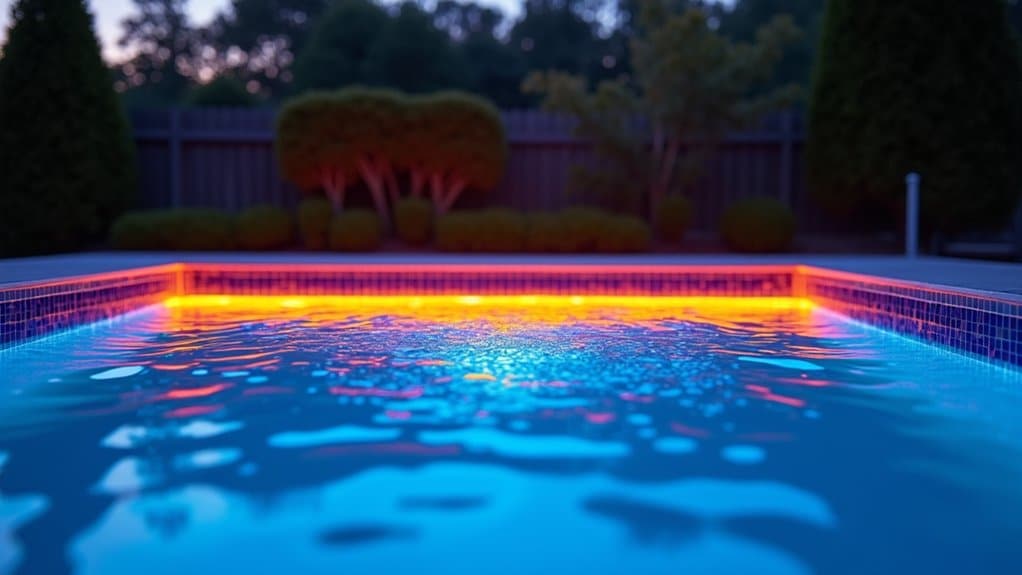
While spray foam insulation dramatically reduces heat loss through your pool’s walls, up to 70% of a pool’s total heat escapes from the water’s surface, making covers your most impactful energy-saving investment.
Fiberglass pools paired with thermal covers achieve exceptional results. The U.S. Department of Energy confirms 50-70% savings on heating costs, while fiberglass-specific systems reduce consumption by 18%. You’ll prevent 95% of evaporation, saving approximately 20,000 gallons annually.
Quality covers designed for fiberglass installations offer superior UV resistance, protecting both the cover material and your pool’s gel coat finish. Their improved structural integrity guarantees years of reliable performance without sagging or tearing. Both automatic and manual models are available, allowing you to choose the option that best fits your budget and lifestyle.
Beyond energy savings, you’ll reduce chemical usage by 35-60% and extend equipment life through decreased filtration strain. Thermal covers also raise water temperature up to 4.4°C using passive solar energy. The smooth, non-porous surface of fiberglass pools also means less algae buildup under your cover, further reducing maintenance demands between uses. Pool covers work by creating a physical barrier that shields water from sunlight, wind, and temperature fluctuations that would otherwise accelerate evaporation.
Frequently Asked Questions
Can Fiberglass Pools Be Used Year-Round in Extremely Cold Northern Climates?
Yes, you can use fiberglass pools year-round in extremely cold northern climates. Their natural insulating properties retain heat efficiently, reducing energy costs by minimizing thermal transfer. You’ll need to implement proper insulation techniques around the pool shell and follow strict winterizing procedures for your plumbing system. The flexible construction withstands freeze-thaw cycles without cracking, and data from harsh Canadian winters confirms their durability when you maintain correct winterization protocols.
How Does Fiberglass Insulation Affect Chemical Usage and Water Treatment Costs?
Fiberglass insulation directly enhances your chemical efficiency by maintaining stable water temperatures, reducing the fluctuations that demand frequent chemical adjustments. You’ll achieve water treatment optimization through the smooth gelcoat surface that resists algae growth, requiring fewer sanitizing chemicals. The consistent thermal properties lower evaporation rates, preserving your chemical balance longer. Data shows you can reduce overall operational costs by 20-30% compared to concrete or vinyl alternatives, delivering measurable long-term savings.
Do Variable Speed Pumps Provide Additional Energy Savings With Fiberglass Pools?
Yes, variable speed pumps deliver substantial additional energy savings with fiberglass pools. You’ll achieve up to 90% pump efficiency gains by switching from single-speed models, cutting electricity usage by 80-85%. The Pump Affinity Law means slower speeds dramatically reduce power consumption, you’re looking at 2.2 kWh versus 12.6 kWh for daily turnover. Combined with fiberglass’s insulating properties, this energy optimization can save you $1,300 annually while extending equipment lifespan.
Will a Fiberglass Pool Increase My Property Value Compared to Other Types?
Yes, fiberglass pools typically deliver stronger resale value increase compared to concrete or vinyl alternatives. Their lower maintenance requirements and 25+ year durability make them “resale gold” with buyers. You’ll see long term property appreciation of 5-8% nationally, with warm-climate markets like Arizona commanding 8-15% premiums. Since fiberglass avoids costly acid washing and liner replacements, buyers perceive greater value, translating directly to higher offers when you sell.
How Long Until Energy Savings Offset the Initial Fiberglass Pool Installation Cost?
Your payback period calculation depends on your specific setup, but you’ll typically offset initial costs within 5-7 years through combined energy savings. When conducting an energy efficiency comparison, fiberglass pools save $200-$500 annually on heating due to superior heat retention, plus $150-$300 yearly with variable speed pumps. Adding a pool cover accelerates your payback to under 1.5 years, while solar heating systems achieve full offset in approximately 5.5 years.