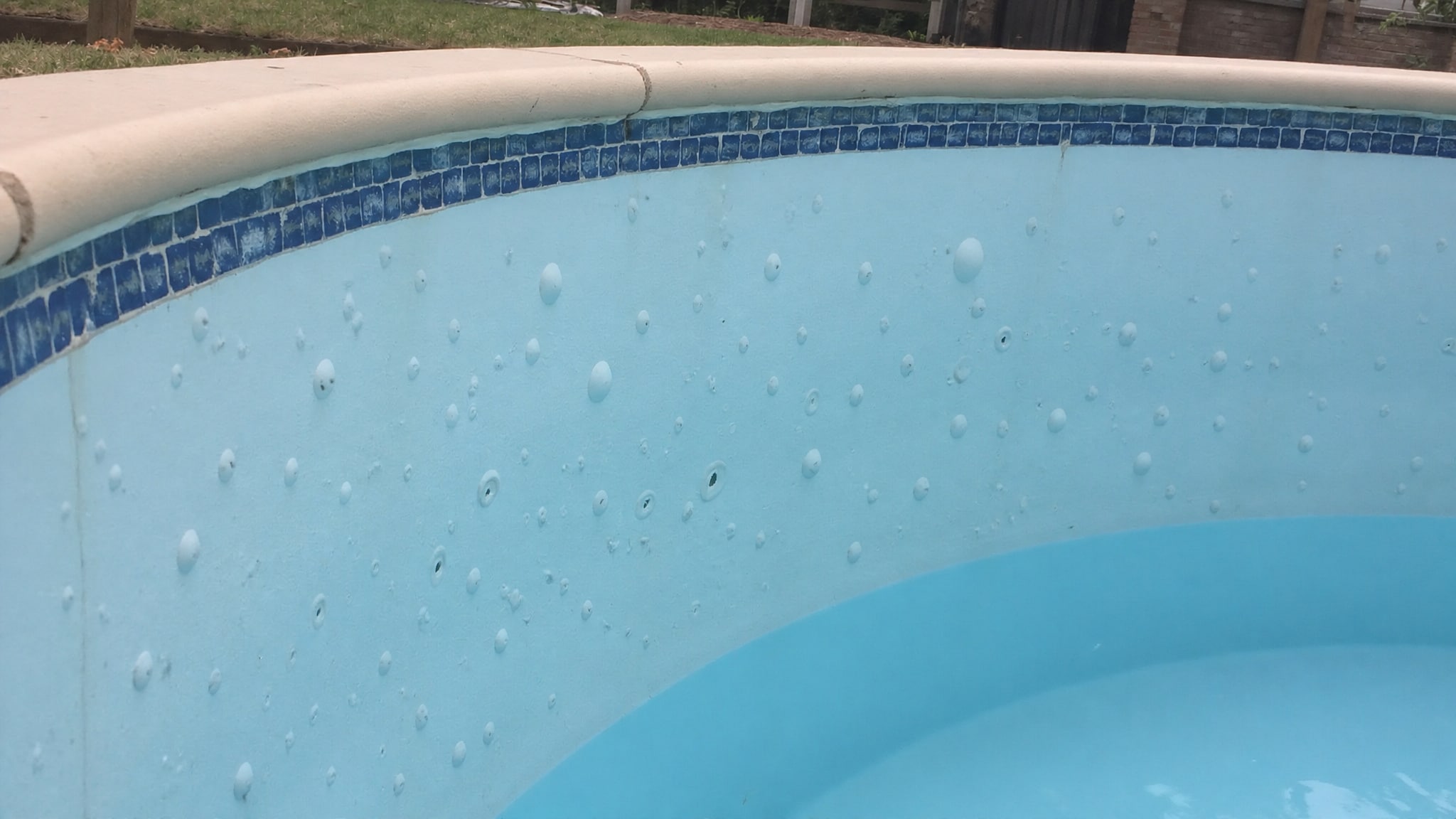
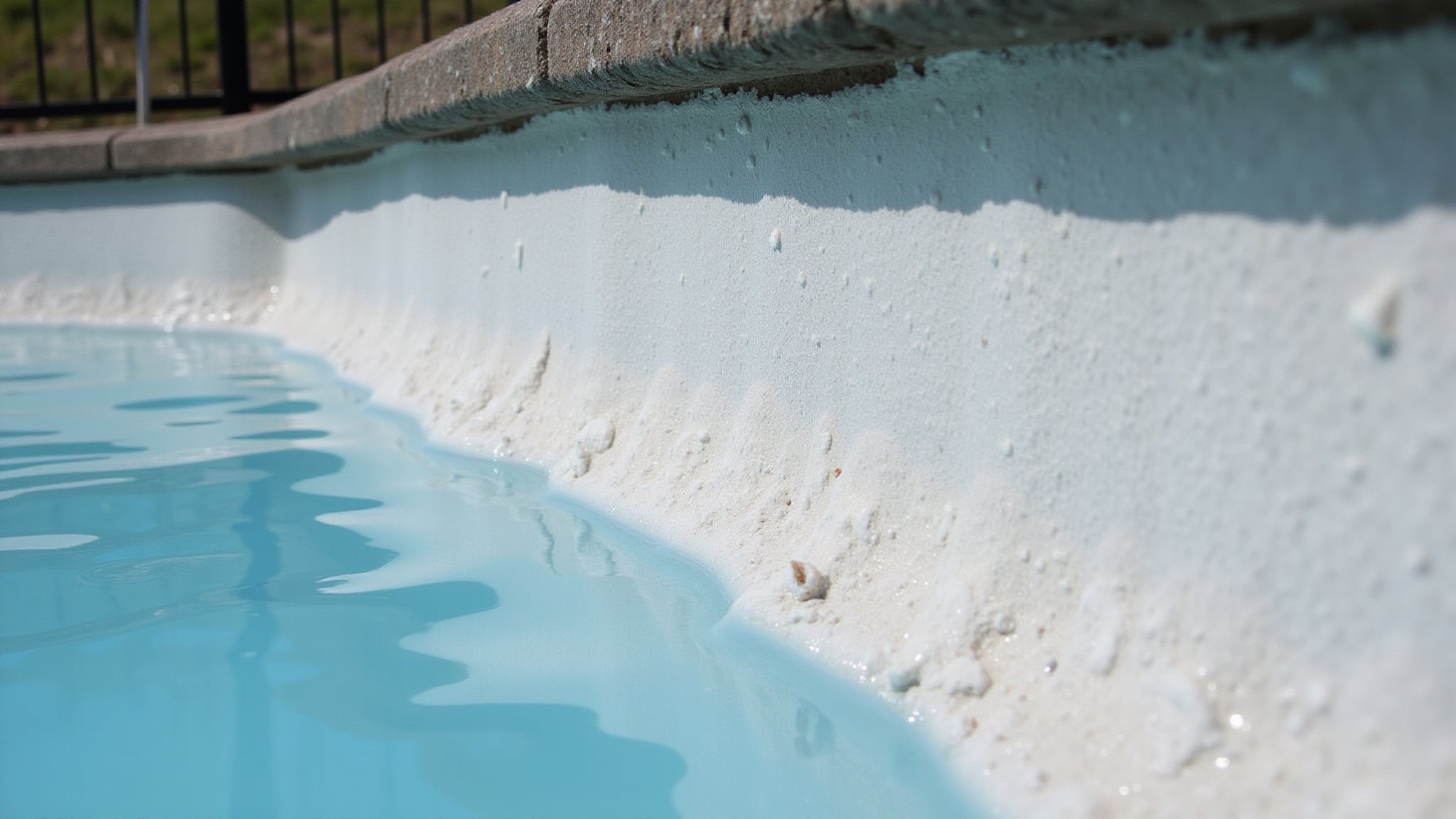
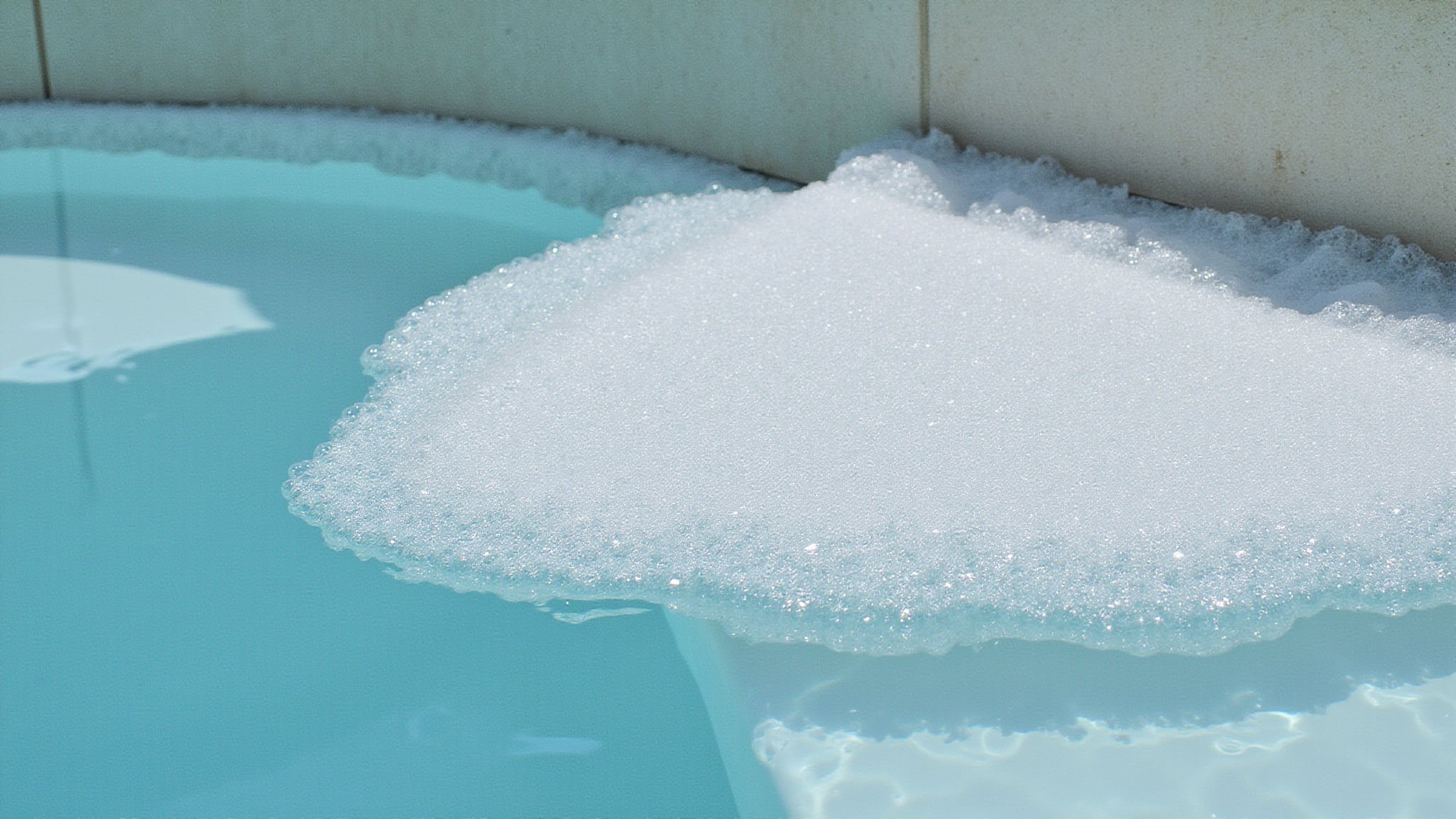
Yes, you can absolutely use salt water in a fiberglass pool, it’s actually the best pool type for it. The non-porous gelcoat surface resists corrosion at salt levels of 3,000, 4,000 ppm, while concrete erodes up to 5x faster under the same conditions. You’ll target around 3,200 ppm for ideal chlorine generation, which matches human tear salinity for noticeably softer water. Below, you’ll find the exact salt calculations, cost advantages, and equipment protection specs you need.
Yes, Salt Water Works Great in Fiberglass Pools
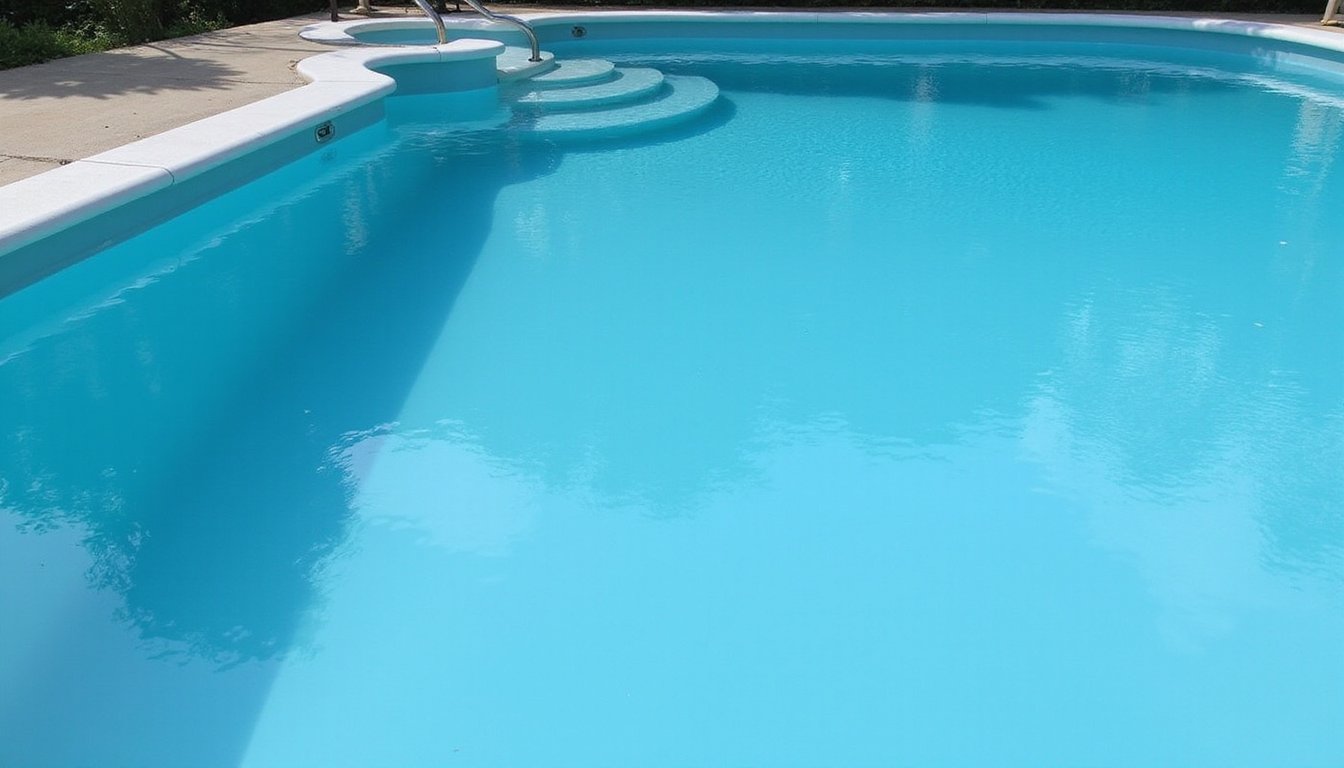
Saltwater sanitation systems deliver reliable, efficient chlorine generation in fiberglass pools, and the data backs it up. Fiberglass pool compatibility with salt systems stems from the non-porous gelcoat surface, which provides exceptional fiberglass pool corrosion resistance against salt concentrations of 3,000, 4,000 ppm. You’ll find that saltwater fiberglass pool systems generate hypochlorous acid continuously, destroying algae, bacteria, and organic waste without manual chlorine dosing.
Your saltwater pool maintenance methods should target these specifications: pH between 7.2, 7.6, total alkalinity at 80, 110 ppm, and free chlorine at 1.0, 2.5 ppm. In Australia, 80% of pools already run saltwater systems with minimal reported issues. American and Canadian homeowners are converting at increasing rates, confirming long-term viability across diverse climates. Many families also report that salt water provides a cleaner swimming experience with no eye burning or unpleasant chemical odors commonly associated with traditional chlorine pools.
Why Fiberglass Handles Salt Better Than Other Pool Types
Because fiberglass pools feature a non-porous gelcoat surface bonded to vinyl ester resin construction, they resist salt corrosion at a structural level that concrete and vinyl-liner pools can’t match. Salt proves 5× more abrasive on concrete surfaces, accelerating erosion and demanding costly resurfacing. Metal components in vinyl-liner pools corrode rapidly under salt exposure, compromising structural integrity.
Your fiberglass pool shell durability salt systems advantage stems from an impermeable surface that won’t absorb chemicals. This directly simplifies your saltwater pool maintenance routine and stabilizes saltwater pool chemistry balance over time. With salt chlorine generator pools, fiberglass surfaces show no degradation from long-term exposure, a performance standard confirmed by decades of marine industry data. You’ll spend less on repairs and resurfacing across the pool’s lifespan. It’s worth noting that saltwater systems still sanitize through chlorine produced via electrolysis, so fiberglass’s chemical resistance remains essential even in pools marketed as “salt-only.”
How Much Salt Does Your Fiberglass Pool Need?
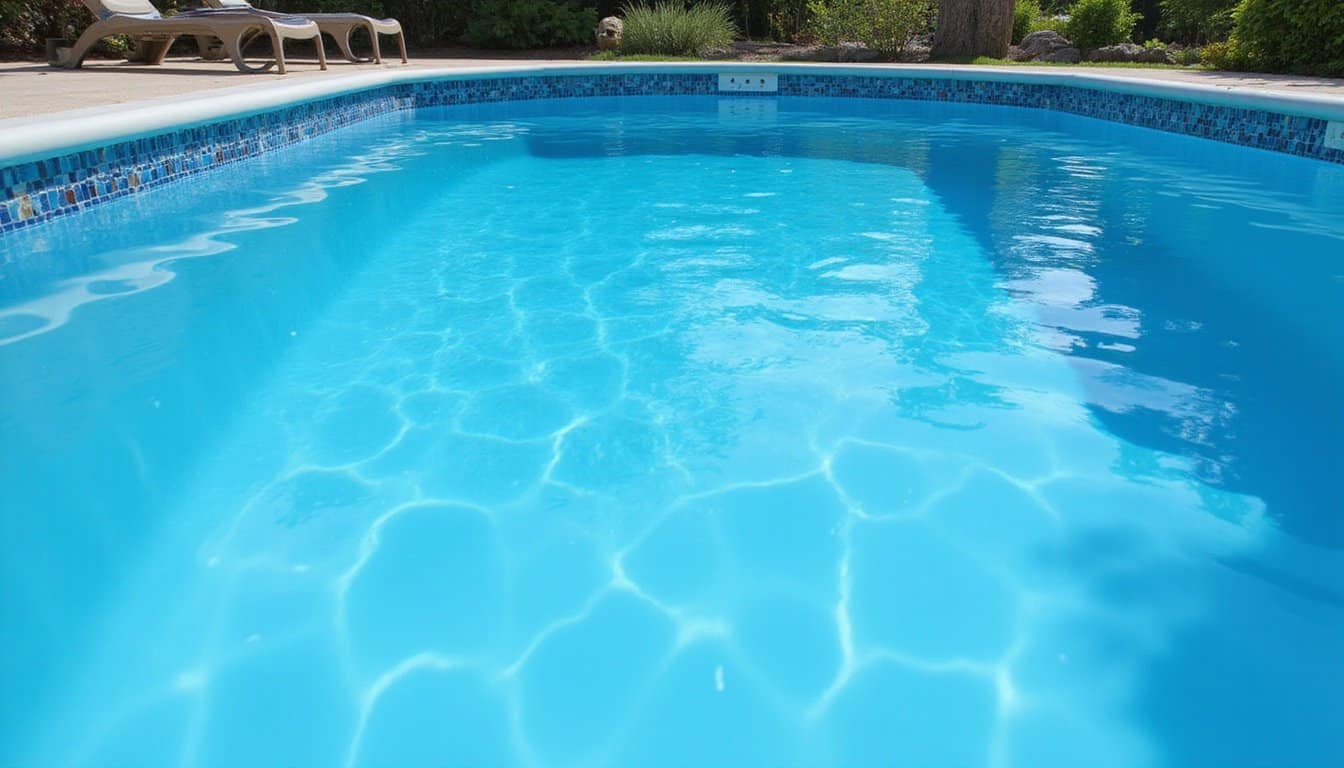
How precisely you calculate your initial salt charge determines whether your chlorine generator operates at peak efficiency or struggles to produce adequate sanitizer. For residential saltwater fiberglass pools using saltwater chlorination technology, you’ll target 3,200 ppm as your ideal concentration.
Use this formula for pool salt level management with sodium chloride pool sanitation systems:
- Measure current salinity, test before adding any salt
- Calculate required addition, multiply 8.375 × desired ppm increase ÷ 100 for pounds per 10,000 gallons
- Add salt gradually, approximately 213 pounds per 10,000 gallons reaches 3,200 ppm from zero
- Retest after 24 hours, confirm levels between 2,700, 3,400 ppm
Annual booster additions remain minimal since salt recycles through electrolysis and doesn’t evaporate. Expect 20, 40 pounds every other year to compensate for splash-out and backwashing losses.
Softer Water, Lower Costs, and Less Maintenance
Beyond the sanitation mechanics, switching your fiberglass pool to a salt chlorine generator delivers three measurable advantages: softer water, lower operating costs, and reduced maintenance demands.
Swimming pool salt chlorination systems maintain approximately 3,000 PPM salt concentration, matching human tear salinity, so you’ll experience zero chemical sting and noticeably silkier water against your skin.
You’ll see lower costs over time because bulk salt purchases replace frequent chlorine product buys. Saltwater pool filtration systems self-regulate chlorine output, eliminating manual dosing schedules. Fiberglass’s non-porous gel coat resists algae adhesion, which means less maintenance scrubbing and fewer chemical adjustments.
The result: your equipment lasts longer, your chemical inventory shrinks, and your pool stays balanced for weeks with minimal intervention. These three advantages compound annually, reducing both your workload and total ownership expenses.
How to Protect Your Equipment From Salt Corrosion
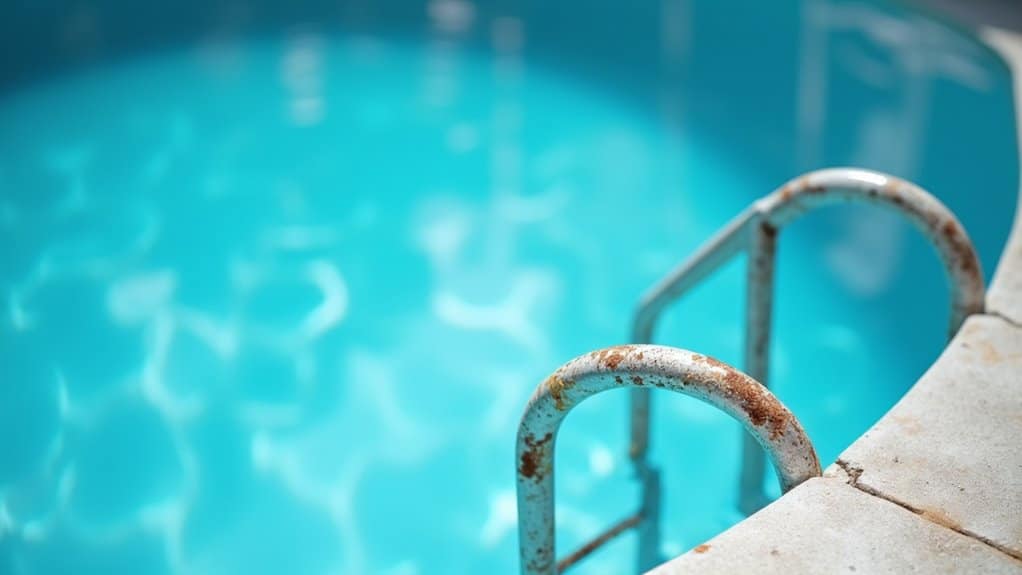
While saltwater systems protect your fiberglass shell from chemical damage, the dissolved salt still poses a direct corrosion risk to every metal component in and around your pool. Modern fiberglass pool sanitation technology demands proactive defense strategies. Understanding fiberglass pool maintenance tips can help you extend the life of your pool and its components. Keeping the pool clean regularly and checking the metal parts for signs of wear can significantly reduce corrosion risk.
- Select corrosion-resistant materials, Install stainless steel or powder-coated ladders, handrails, and guards rated for 3,000, 4,000 ppm salt exposure.
- Install protective devices, Mount zinc anodes in your plumbing to attract corrosive ions away from metal fixtures.
- Maintain salt cell chlorine generators, Clean cells every 3, 6 months to remove calcium scale that reduces electrolysis efficiency.
- Rinse metal components daily, Use fresh water on stainless steel equipment to prevent salt deposit accumulation.
Replace any rusting components immediately to prevent the spread.
Ready to Transform Your Backyard?
Your dream pool is closer than you think. At Schiller Pools, our experienced team brings over 40 years of expertise to every project, delivering stunning fiberglass pool installations and custom pool construction that turn ordinary backyards into extraordinary outdoor retreats. With flexible financing options and lifetime warranty backing, there has never been a better time to get started. Call (561) 475-5997 today for your free estimate.
Frequently Asked Questions
How Often Should You Clean the Salt Chlorine Generator Cell?
You should clean your salt chlorine generator cell every 3, 6 months, depending on usage and water hardness. If your calcium hardness exceeds 200 ppm or pH stays above 7.6, you’ll need quarterly cleanings. During peak summer months, perform monthly visual inspections and shorten intervals to every 2 months in high-demand conditions. Heavy bather loads may require monthly cleaning. Always monitor chlorine output, reduced production signals it’s time to clean.
Does Salt Water Affect the pH Balance Over Time?
Yes, saltwater systems gradually raise your pool’s pH over time through the electrolysis process. As your salt chlorine generator converts chloride ions into chlorine, it naturally pushes pH upward beyond the recommended 7.2, 7.8 range. You’ll need to add sodium carbonate or pH-lowering chemicals periodically to counterbalance this drift. Your fiberglass pool’s non-porous gel coat resists pH-related surface damage better than plaster, but you should still monitor levels weekly.
What Calcium Hardness Level Is Best for Fiberglass Saltwater Pools?
You’ll want to keep calcium hardness between 0, 75 ppm in your fiberglass saltwater pool, staying below 120 ppm to prevent scaling and discoloration. Unlike concrete pools requiring 200, 400 ppm, fiberglass gelcoat doesn’t depend on calcium saturation for surface integrity. Target an LSI range of -0.30 to +0.30, and if your source water runs high, you’ll need a chelating agent like SC-1000 to manage calcium fallout.
Can Salt Water Damage Pool Decking, Stone Copings, or Nearby Plants?
Yes, salt water can damage all three. Salt crystals form during evaporation, microscopically abrading concrete sealers and pitting softer stones like limestone, travertine, and bluestone. You’ll notice accelerated erosion on porous copings with constant saltwater contact. Splashed salt water also kills nearby plants and grass through deposit accumulation. You should rinse your deck with fresh water after heavy use, apply full-strength vinegar to dissolve deposits, and seal vulnerable stone surfaces regularly.
Will Converting to Salt Water Void Your Fiberglass Pool Warranty?
Converting to saltwater typically won’t void your fiberglass pool warranty. Manufacturers like Imagine Pools and Leisure Pools confirm their non-porous composite shells resist salt without structural damage, keeping warranty terms intact. However, salt corrodes metal components, nickel, copper, galvanized steel, through galvanic corrosion, voiding equipment warranties regardless of pool type. You’ll need to consult your specific dealer to verify coverage details and maintain salt concentrations between 3,000, 4,000 ppm to stay within recommended specifications.