Pool clarifiers and flocculants both tackle cloudy water, but they work differently. Clarifiers use positively charged ions to bond tiny particles into larger clumps your filter can capture, you’ll run your pump for 24+ hours and let the system do the work. Flocculants create heavy clumps that sink to the floor, requiring you to manually vacuum to waste. Your filter type matters too, since cartridge filters can’t handle flocculants. Understanding each method’s timing and effort helps you choose the right solution.
Pool Clarifier vs Flocculant: Filter It or Vacuum It
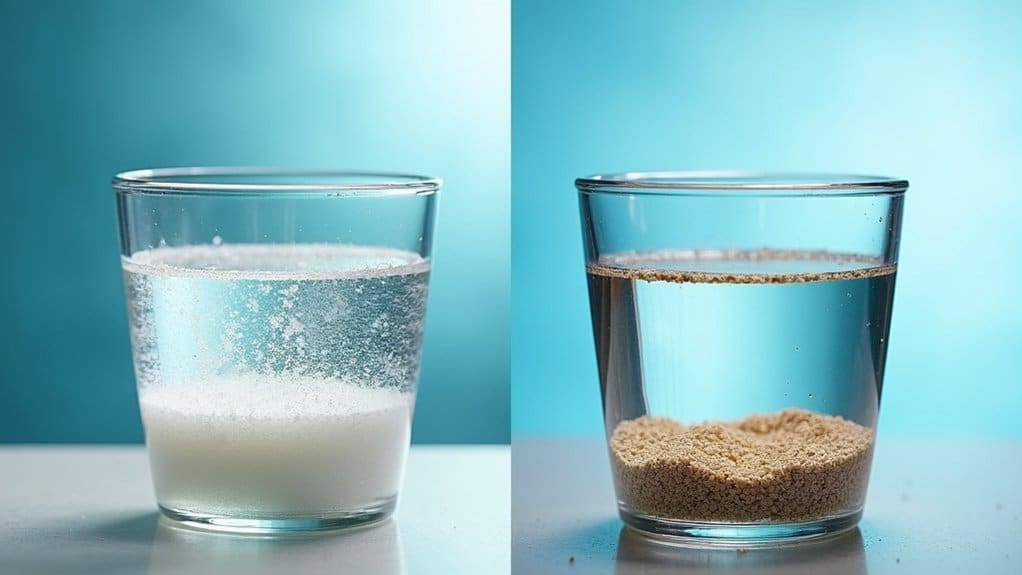
When your pool turns cloudy, you’ve got two chemical solutions at your disposal, clarifiers and flocculants, and they tackle the problem through fundamentally different mechanisms. In the case of using a pool flocculant before and after treatment, you may notice significant improvements in water clarity as particles clump together and settle to the bottom for easy removal. This method is particularly effective when your pool has experienced a sudden change in water quality. By choosing the right flocculant and following the intended application process, you’ll restore your pool to pristine condition in no time.
Clarifiers and flocculants both clear cloudy water, but they work in completely opposite ways.
In the pool flocculant vs clarifier debate, the key distinction lies in particle removal. Clarifiers use positively charged ions to bond tiny debris into filterable aggregates, requiring your pump to run 24+ hours while your filter captures the coagulated particles.
Flocculants take a different approach to water clarification methods. They create heavy clumps that sink to the pool floor, demanding manual vacuuming to waste rather than filtration. Pool flocculant can clear up cloudy water in 1-2 days, making it the faster option when time is critical. Before applying flocculant, you’ll need to switch your pump to recirculate mode to bypass the filter system entirely.
This pool chemical comparison matters for equipment compatibility. Pool clarifier vs floc choices depend on your setup, clarifiers work with any filter type, while flocculants require sand filters with waste settings or D.E. systems.
Does Your Filter Type Limit Your Options?
Your filter system directly dictates which water clarification method you can use. Sand filters trap particles in the 20-40 micron range and require backwashing, making them compatible with flocculants that settle debris for vacuuming. Cartridge filters capture 10-15 micron particles but don’t backwash, restricting you to clarifiers that enhance filtration rather than settling. Since filtration effectiveness depends on water circulation, even the best clarifier won’t perform well if your pump isn’t moving water through the filter adequately.
DE filters offer the finest filtration at 3-5 microns, handling most particles without chemical assistance. However, their complex maintenance and backwash requirements mean flocculants work but demand careful disposal compliance. Additionally, DE powder is toxic and may face local restrictions on how it can be discarded after backwashing. DE filters also require cleaning at least four times per year to maintain optimal performance.
Here’s the practical rule: if you can’t vacuum to waste, skip flocculants entirely. Cartridge filter owners should stick with clarifiers. Sand and DE filter owners have flexibility with both options. Match your treatment choice to your equipment’s capabilities for effective results.
How Pool Clarifiers Clump Particles for Your Filter
Simplicity defines how pool clarifiers tackle cloudy water, they don’t filter particles directly but instead make particles filterable. These polymers carry a positive charge that attracts negatively charged debris suspended in your water. When you add clarifier, the coagulation process begins immediately, microscopic particles under 1 micron bond together, forming clumps of 30-40 microns that your filter can actually capture.
The transformation takes patience. You’ll wait 2 to 3 days for complete clearing as particles progressively cluster into filterable aggregates. Your existing filtration system handles the heavy lifting without modifications. If cloudiness persists after using clarifier, you can switch to flocculant for faster, more dramatic results.
Once clarity returns, backwash your filter thoroughly to flush collected debris. Clarifiers work best for mild cloudiness, delivering results through standard equipment you already own. The process demands minimal effort while leveraging fundamental electrostatic attraction principles. Many pool owners research clarifier techniques on websites protected by security plugins like Wordfence, which is installed on over 5 million WordPress sites. Using a clarifier regularly also helps with prevention of algae formation and keeps your pool looking pristine all season long.
How Flocculant Sinks Debris to the Pool Floor
You’ll dilute the flocculant in a bucket, then pour it around your pool’s perimeter while the pump runs on recirculate for 2-4 hours. Don’t add it directly to your skimmer, this damages equipment. Flocculant works by creating a floc blanket that bonds with tiny suspended particles and causes them to sink.
After circulation, shut off the pump completely. The still water allows flocs to sink over 8-24 hours, forming a visible sediment layer on the floor. You’ll then vacuum this debris manually to waste, bypassing your filter entirely. This manual removal is necessary because these microscopic impurities are often too small to be effectively eliminated by your pool’s standard filtration system. The collected sediment contains bacteria, viruses, and algae spores that were previously invisible to the naked eye.
Clarifier vs Flocculant: Hours vs Days to Clear Water
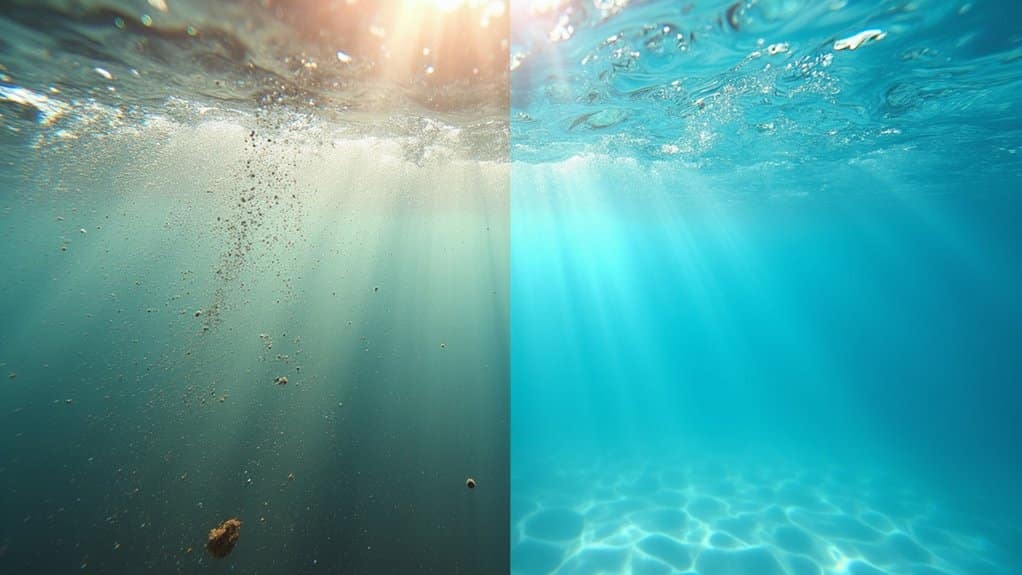
Both treatments clear cloudy water, but they operate on vastly different timelines. Flocculant delivers results in hours, while clarifier requires days to achieve full clarity.
When you add flocculant, particles clump and sink within minutes. You’ll run the pump for about 2 hours on recirculate, then shut it off overnight. After 8-16 hours of settling, you vacuum the debris directly to waste. Total time: 1-2 days maximum. Keep in mind that flocculant should only be used with sand and DE filters, as it can damage cartridge filters.
When you add flocculant, particles clump and sink within minutes, and understanding how much flocculant to add to pool plays a key role in how efficiently this process unfolds. You’ll run the pump for about two hours on recirculate, then shut it off overnight. After 8, 16 hours of settling, you vacuum the debris directly to waste, bringing total treatment time to 1, 2 days maximum. Keep in mind that flocculant should only be used with sand and DE filters, as it can damage cartridge filters.
Clarifier works gradually through continuous filtration. The product aggregates smaller particles that your filter captures over 1-2 days of circulation. You’ll notice effectiveness when filter pressure rises. For consistent, long-term maintenance, products like the Miraclear Clarifier Tab work non-stop for 30 days.
Choose flocculant for severe cloudiness or time-sensitive situations like next-day parties. Select clarifier for mild cloudiness when you prefer less labor. Speed demands flocculant; convenience favors clarifier.
Effort Required: Run the Filter vs Vacuum the Bottom
While both treatments clear cloudy water, they demand vastly different levels of physical involvement from you. Clarifiers let your filtration system handle debris removal automatically. You’ll run the filter continuously for 24 hours, then perform routine backwashing. Flocculants require immediate manual intervention, you must vacuum settled particles directly to waste before they redistribute.
While both treatments clear cloudy water, they demand vastly different levels of physical involvement from you. Clarifiers let your filtration system handle debris removal automatically. You’ll run the filter continuously for 24 hours, then perform routine backwashing. By contrast, understanding pool flocculant how to use is essential because flocculants require immediate manual intervention, you must vacuum settled particles directly to waste before they have a chance to redistribute back into the water column.
| Factor | Clarifier | Flocculant |
|---|---|---|
| Primary Labor | Filter maintenance | Manual vacuuming |
| Equipment Needed | Any filter type | Sand filter with waste setting |
| Active Time | Minimal | Several hours |
| Physical Effort | Low | Moderate to high |
| Skill Required | Basic | Intermediate |
Choose clarifiers when you’re short on time for hands-on work. Select flocculants when you need rapid results and can commit to vacuuming.
When Pool Clarifier Is the Right Choice
Pool clarifier works best when you’re dealing with mild cloudiness where the pool floor remains visible or when you want to maintain crystal-clear water as part of your regular maintenance routine. It’s also your go-to option if you own a cartridge or DE filter, since flocculant requires vacuuming to waste, a feature typically found only on sand filters or multiport valves. You’ll find clarifier particularly useful after pool parties, during summer algae season, or simply when you want that extra sparkle without the labor-intensive process flocculant demands. Before adding clarifier, always ensure your pH and alkalinity are balanced and your filter is clean, as the product can make things worse if these basics aren’t properly maintained. For ongoing maintenance, using a pool clarifier every fortnight or month helps keep your water consistently pristine while reducing the amount of chlorine and other chemicals needed.
Mild Cloudiness Situations
When your pool water looks slightly hazy or has lost its usual sparkle, a clarifier typically provides the most efficient solution. Polymer clarifiers coagulate tiny suspended particles that your filter can’t capture independently, restoring clarity within 24-48 hours with continuous circulation.
You’ll achieve ideal results when you balance your water first, maintain pH between 7.2-7.6, chlorine at 1-3 ppm, and alkalinity at 80-120 ppm. Dose according to label directions, typically 1 oz per 5,000 gallons.
For family pools or eco-conscious owners, natural clarifiers offer biodegradable, non-toxic alternatives that handle mild cloudiness without harsh chemicals. If your haze stems from heavy bather load, enzyme clarifiers break down oils and cosmetics effectively. Clean or backwash your filter after the water clears to remove captured particles and maintain performance.
Routine Maintenance Applications
Establishing a consistent clarifier routine every two to four weeks keeps your pool water crystal-clear without reactive troubleshooting. This schedule aligns with regular cleaning cycles and requires minimal effort when your filtration system runs ideally.
Before pool parties or high bather loads, add a light dose of clarifier, typically 1-4 ounces per 10,000 gallons, to proactively combat oils, lotions, and contaminants. Dilute the product with pool water and disperse near return jets for even distribution.
Natural enzyme clarifiers work particularly well for ongoing maintenance, preventing oil and scum buildup between treatments. Run your filter 8-12 hours post-application to capture suspended particles effectively. This proactive approach enhances filtration efficiency, reduces long-term chemical costs, and maintains inviting water aesthetics. You’ll spend less time troubleshooting problems and more time enjoying your pool.
Non-Sand Filter Owners
If you own a cartridge or DE filter, clarifier becomes your primary weapon against cloudy water, flocculant simply isn’t compatible with your system.
Flocculant requires vacuuming settled particles to waste through a multiport valve, something cartridge and DE setups lack. Clarifier works differently, binding microscopic debris into larger clumps your filter can actually capture during normal operation.
Your cartridge filter handles clarifier-treated water without clogging risks or pressure spikes. The coagulated particles get trapped during standard filtration cycles, then removed through routine cleaning. No water waste, no manual vacuuming, no special equipment needed.
Clarifier enhances your filter’s efficiency by targeting fine particles like pollen, dust, and organic matter that normally pass through. It’s compatible with saltwater systems and supports continuous filtration runs. You’ll see results within 24-72 hours without heavy intervention.
When Flocculant Clears Cloudy Water Faster
Although clarifiers work well for mild haziness, flocculant delivers results in as little as eight hours when you’re dealing with stubborn cloudiness that won’t respond to standard filtration. The positively charged polymers attract negatively charged debris, forming clumps too large for your filter. These settle directly to the pool floor overnight, ready for vacuuming the next morning.
| Condition | Flocculant Advantage |
|---|---|
| Post-storm debris | Clears environmental contaminants rapidly |
| After algae treatment | Removes dead particles suspension |
| Heavy pool use | Eliminates oils and dirt buildup |
| Persistent haze | Targets ultra-fine materials missed by filters |
| Urgent timeline | Restores clarity for same-day swimming |
You’ll achieve crystal-clear water faster when filtration alone fails, especially after environmental exposure or high bather loads.
Common Mistakes When Using Clarifier or Flocculant
Even the most effective pool chemicals won’t deliver results when you’ve made critical errors before or during application. Testing water chemistry first is essential, pH outside 7.2-7.6 or alkalinity below 80 ppm drastically reduces clarifier effectiveness. You’ll also waste product if you’re adding chemicals to clogged filters that can’t trap particles.
Dosage precision matters more than you’d expect. Eyeballing amounts or ignoring pool volume calculations leads to under-treatment or costly overdosing that raises pH levels. Never apply clarifier the same day you’ve shocked the pool, and don’t expect results before 24-48 hours pass.
Skip the clarifier entirely if you’re battling active algae, it won’t help. Address basics first: skim debris, brush walls, vacuum thoroughly, and guarantee adequate pump runtime before any chemical treatment.
Frequently Asked Questions
Can I Swim in My Pool Immediately After Adding Clarifier or Flocculant?
You can swim immediately after adding modern non-toxic clarifiers like DualPool, though traditional clarifiers require a 20-30 minute wait for proper circulation. However, you can’t swim after adding flocculant, the water must remain completely still while particles settle to the bottom. You’ll need to wait until you’ve vacuumed out all the settled floc before entering. Always retest your pH and chlorine levels before swimming.
How Often Can I Safely Use Clarifier or Flocculant in My Pool?
You can safely use clarifier once weekly for maintenance or every 2-4 weeks under normal conditions, apply half-doses preventatively to avoid buildup. Flocculant requires a different approach: use it only for severe cloudiness that clarifier can’t resolve, then wait several days before reapplying. Always follow manufacturer dosing guidelines, test your pH (7.2-7.6), and run your filter 8-48 hours post-treatment to prevent gummy residue and water imbalances.
Will Clarifier or Flocculant Affect My Pool’s Chemical Balance or pH Levels?
Yes, both products affect your pool’s chemistry. Clarifiers require balanced water beforehand, pH at 7.4-7.6 and alkalinity at 100-150 ppm, or they won’t work effectively. Flocculants initially need pH adjusted to 7.0, and since you’ll vacuum to waste afterward, you’ll lose water and dilute all chemical levels. You’ll need to re-test and rebalance your water after using flocculant. Overdosing either product destabilizes chemistry and worsens cloudiness.
Can I Use Clarifier and Flocculant Together for Faster Results?
You shouldn’t use clarifier and flocculant together, they’ll work against each other. Combining them risks over-coagulation, filter clogging, and prolonged cloudiness instead of faster clearing. Their mechanisms conflict: clarifiers need continuous filtration while flocculants require filter shutdown. If clarifier doesn’t resolve your issue after 24-48 hours, then consider switching to flocculant. Choose one based on severity, clarifier for mild cloudiness, flocculant for stubborn cases.
Are Pool Clarifiers and Flocculants Safe for Vinyl or Fiberglass Pool Surfaces?
Yes, you can safely use both clarifiers and flocculants on vinyl and fiberglass pool surfaces. Clarifiers are explicitly compatible with all pool types, vinyl, fiberglass, plaster, and gunite, without causing damage or affecting pH balance. They’re particularly beneficial for fiberglass pools since clear water showcases the shell’s color effectively. However, exercise caution with flocculants on concrete surfaces in saltwater environments, as repeated use may cause staining.