Yes, you can resurface a concrete pool with fiberglass by bonding a composite lining directly to the existing shell. The process involves grinding the surface, filling cracks with resin-based putty, applying a resin primer, laying fiberglass mat, and finishing with gelcoat. When done correctly, this overlay lasts 25, 50 years and cuts annual maintenance costs considerably. You’ll want to understand the prep requirements, cost factors, and key risks before starting your project.
How Fiberglass Resurfacing Works on a Concrete Pool
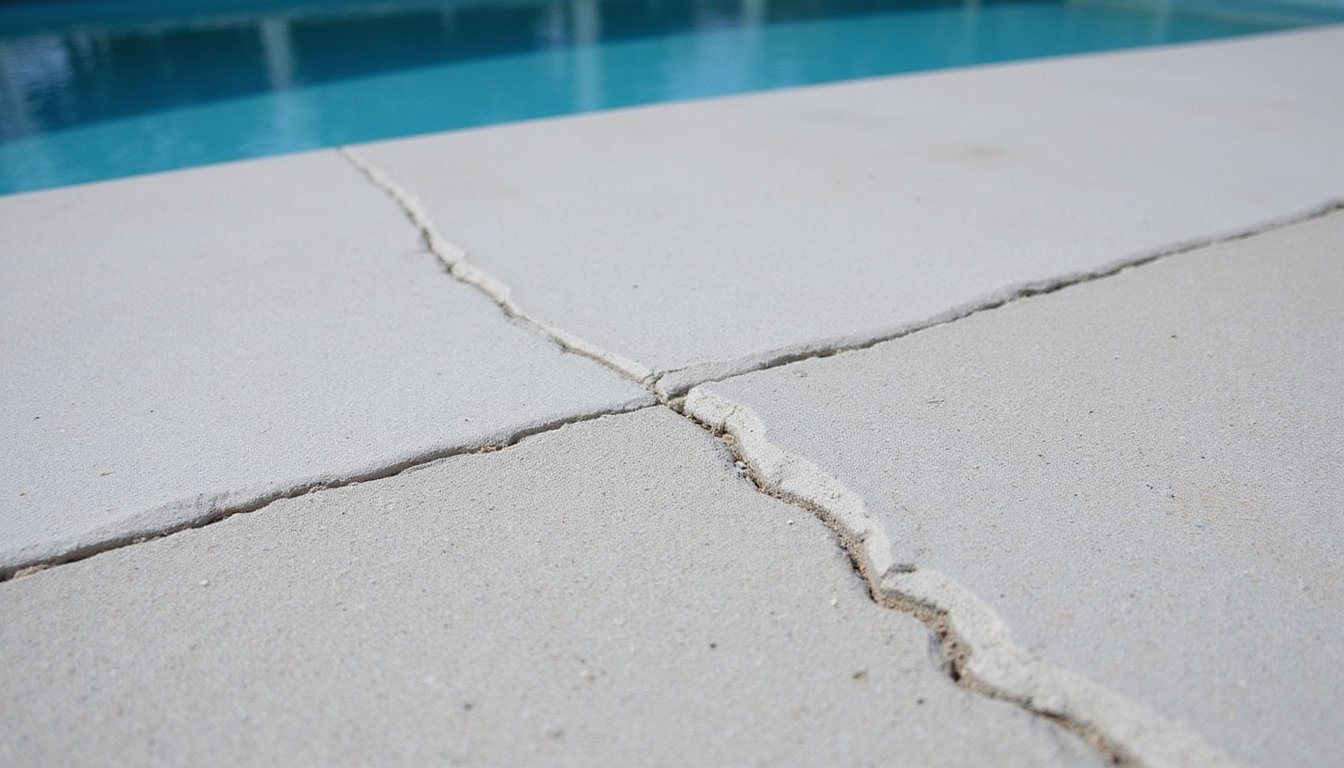
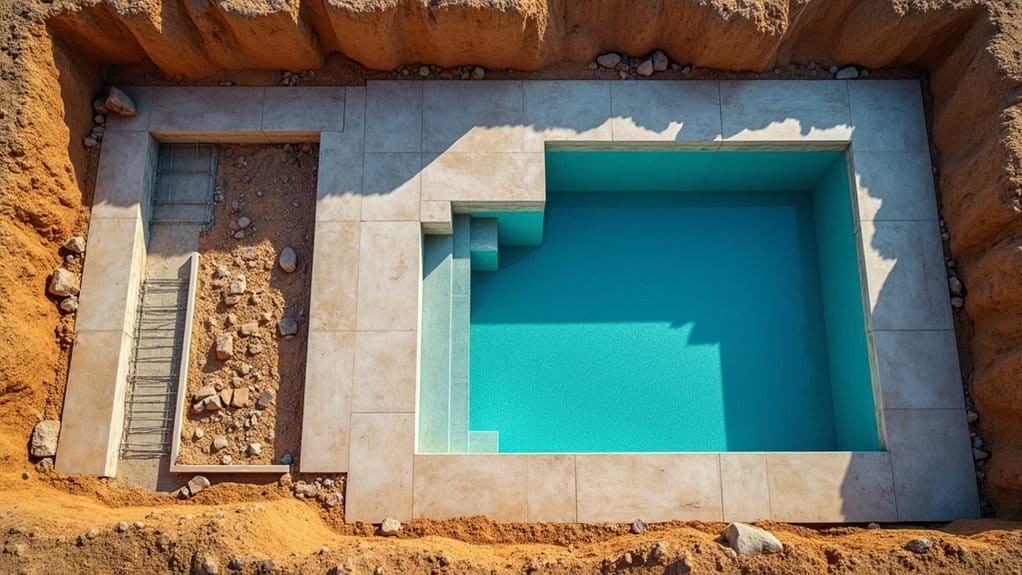
Fiberglass resurfacing transforms your aging concrete pool through a multi-step process that bonds a composite lining directly to the existing shell. First, technicians grind the surface to remove contaminants, flaking plaster, and algae. They’ll fill cracks, voids, and seal lines around jets, drains, and lights with resin-based putty.
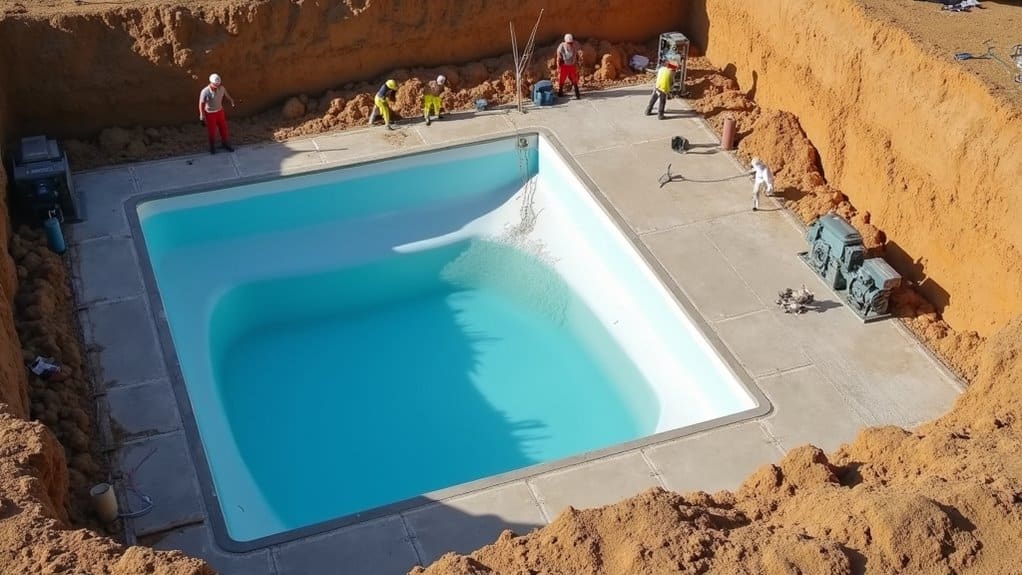
Next, a specially formulated resin coat goes onto the prepared surface. Technicians lay Owens Corning fiberglass mat over the damp resin, then apply additional resin on top. A ribbed roller eliminates air bubbles and creases, sandwiching the layers into a seamless, interlocking fiberglass overlay for concrete pools. This process repeats along the bottom and sides for complete coverage. Your pool’s ready to fill within one to three days after application. Once filled, the water requires proper treatment and balancing to ensure safety and cleanliness before swimming.
Is Fiberglassed Concrete the Same as a Fiberglass Pool?
Now that you understand how a fiberglass overlay bonds to a concrete shell, you might wonder whether the end result matches what you’d get with a factory-built fiberglass pool. The short answer is no. A factory fiberglass pool arrives as a single pre-molded shell with composite layers and a gel coat finish engineered under controlled conditions. It’s non-porous, resists algae growth, and flexes with ground movement.
A fiberglass pool coating system applied over concrete creates a hybrid structure. You’re still working with a porous concrete base that expands and contracts differently than the fiberglass layer above it. The concrete structure underneath still demands periodic inspection, and you won’t gain fiberglass’s signature flexibility or its reduced weekly maintenance of roughly 30 minutes. You’ll retain concrete’s durability but inherit bonding challenges. Because the concrete base remains prone to cracking over time, you may face costly repairs with concrete that a true factory-built fiberglass pool would help you avoid.
What You Need Before Fiberglassing a Concrete Pool
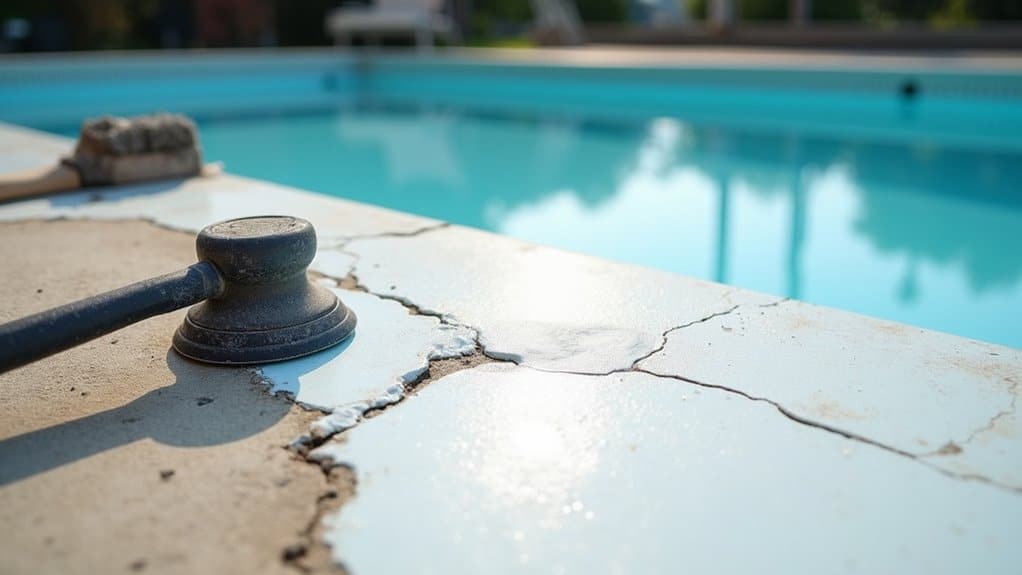
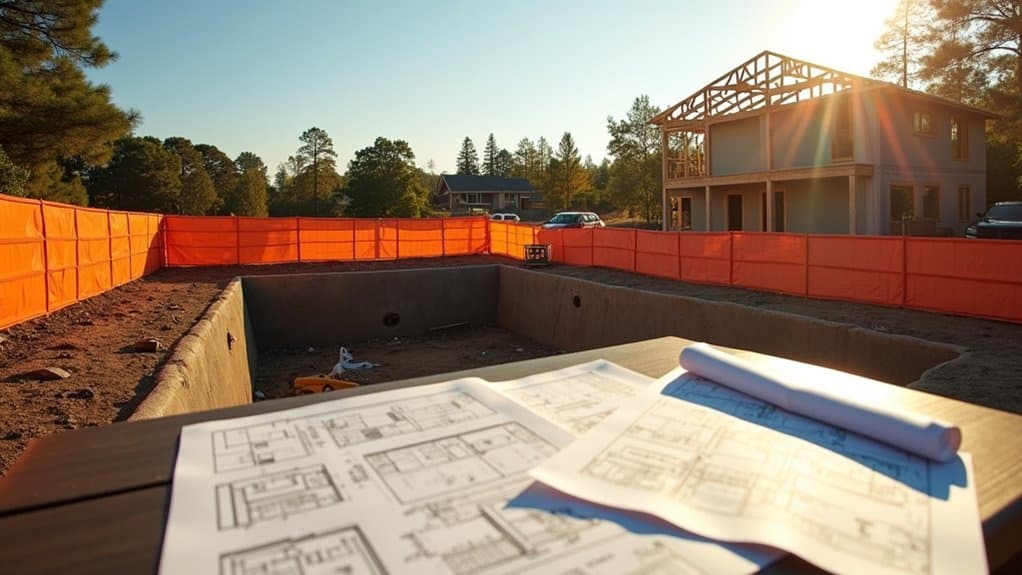
Before you mix a single batch of resin, you’ll need to address five critical preparation categories: surface assessment, structural repair, materials procurement, equipment setup, and permits.
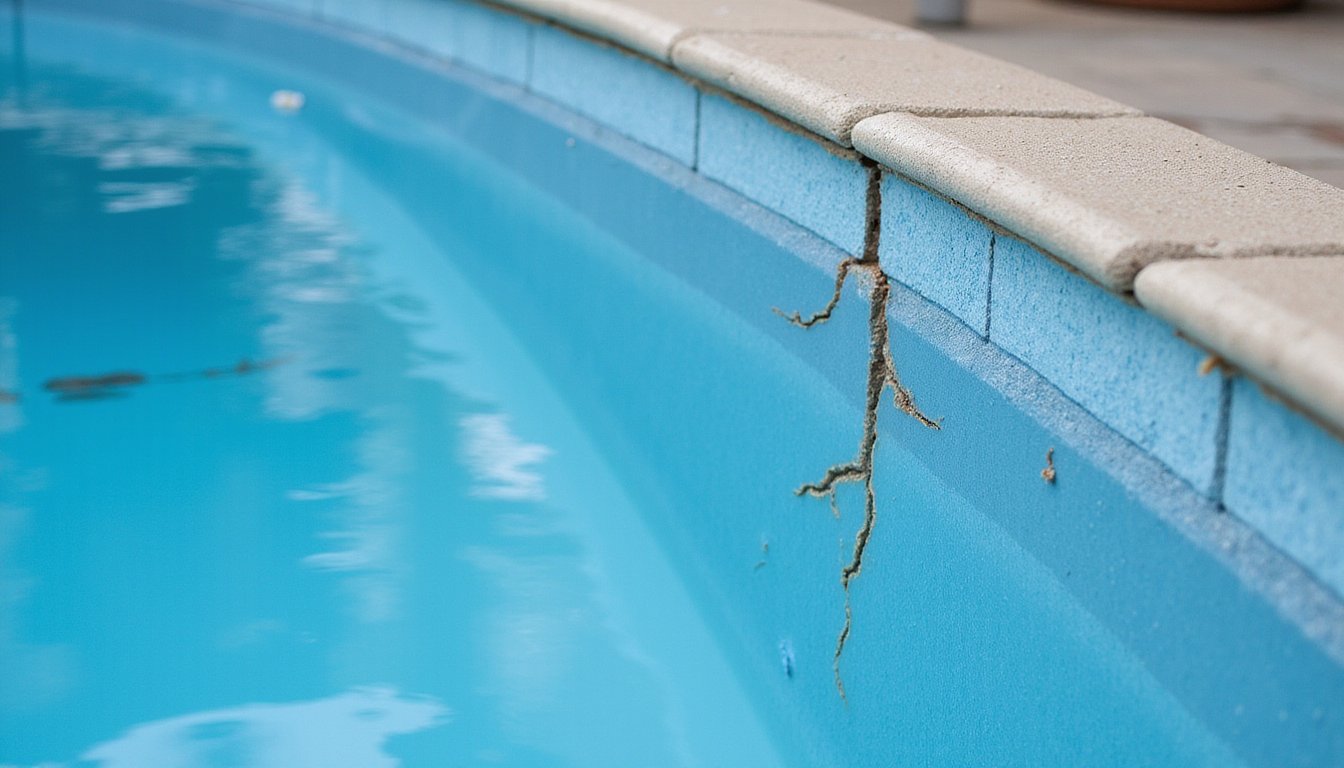
For concrete pool resurfacing with fiberglass, start by inspecting your shell for cracks, delamination, and moisture content above 4%. Remove all existing plaster to expose bare substrate. Repair cracks exceeding 1/16 inch with epoxy filler, then sandblast to a CSP 3, 5 profile. Effective crack sealing methods play a crucial role in prolonging the life of your pool’s surface. A thorough application can prevent water intrusion and further damage to the structure.
Source vinyl ester resin for your waterproof base layer, chopped strand mat, woven roving, and gelcoat. You’ll need spray guns, rollers, mixing drums, and respirators. Map all plumbing and electrical lines, secure building permits, and verify grounding rebar installation before starting any application work. Throughout each stage, implement quality checks similar to those used in fiberglass pool manufacturing to catch cracks and inconsistencies before moving to the next step.
How to Fiberglass a Concrete Pool Step by Step
You’ll need to follow a structured sequence, starting with surface preparation, moving through fiberglass and resin application, and finishing with a protective gelcoat, to achieve a durable bond between the fiberglass coating and your concrete pool shell. Each step builds on the previous one, so skipping or rushing any phase can compromise the entire resurfacing job. Below, you’ll find the specific procedures for preparing your pool surface, applying fiberglass reinforcement with resin, and completing the project with a smooth gelcoat finish.
Prepare The Pool Surface
Five critical steps transform a worn concrete shell into a surface ready for fiberglass application: removing loose materials, deep cleaning, sanding, moisture testing, and final inspection. You’ll start by chipping away loose plaster and removing delaminated sections to expose sound concrete. Among effective pool surface waterproofing solutions, proper preparation determines long-term success.
Deep clean using fiberglass-safe vacuums and degrease with acetone or MEK. Sand the entire surface with 80-120 grit sandpaper, making light parallel passes to create uniform texture without exposing substrate.
You’ll then place plastic sheets on floors and walls for 24-48 hours to detect moisture. Complete dryness is essential for bonding integrity.
Finish by vacuuming loose particles, checking for pinholes, and confirming no oils, dust, or moisture remain before proceeding.
Apply Fiberglass And Resin
Coat the prepared concrete shell with a resin primer to establish the critical bond between the concrete substrate and fiberglass layers. Allow the primer to tack up for 30-60 minutes before hand-laying fiberglass mat from the shallow to deep end, overlapping sheets by 1-2 inches.
| Layer Component | Specification | Coverage Rate |
|---|---|---|
| Resin Primer | Polyester or epoxy diluted | 1 gal per 100-150 sq ft |
| Fiberglass Mat | 6-10 oz per sq yard minimum | Overlap 1-2 inches |
| Saturating Resin | 1-2% catalyst ratio at 75°F | 1-1.5 qt per sq yard |
Build up 3-5 layers to achieve your fiberglass reinforced polymer pool coating at 1/16-1/8 inch thickness. Sand lightly between layers, inspect for pinholes, and allow 24-48 hours full cure before final sanding.
Finish With Gelcoat
Once your fiberglass layers have fully cured and passed inspection, the gelcoat becomes your pool’s final defense, the visible, functional surface that’ll face daily chemical exposure and foot traffic. You’ll apply this gelcoat finishing system as a gel that hardens through polymerization, creating a chemical bond that delivers lasting structural integrity.
- Apply gelcoat uniformly across the entire surface to guarantee consistent thickness and protection
- Allow proper curing time before exposing the surface to water or chemical treatment
- Sand progressively from coarse to fine grit, removing excess material and surface irregularities
- Verify algae-resistant properties are intact by confirming complete polymerization across all treated areas
Your gelcoat finishing system provides the smooth, durable interior that resists algae growth and reduces long-term maintenance demands on your resurfaced concrete pool.
How Much Does It Cost to Fiberglass a Concrete Pool?
You should expect to spend between $8,000 and $20,000 to fiberglass a concrete pool, with final costs depending on your pool’s size, condition, and the extent of surface preparation required. While this upfront investment is comparable to high-end pebble finishes, fiberglass coatings can reduce your long-term maintenance expenses to roughly $800, $1,200 annually, potentially saving thousands over a 10-year period compared to concrete’s recurring resurfacing and acid-washing costs. Material costs for fiberglass resin, matting, and gelcoat typically run lower than premium aggregate finishes, but labor-intensive surface prep can offset those savings if your existing shell needs significant crack repair or plaster removal.
Minimum Cost Expectations
At minimum, resurfacing a concrete pool with fiberglass coating runs between $8,000 and $20,000, depending on pool size, surface condition, and repair scope. These figures cover surface preparation, fiberglass matting, resin application, and gelcoat finishing.
When evaluating pool remodeling fiberglass solutions, you’ll want to budget for these baseline cost drivers:
- Surface prep: Sandblasting and crack repair add $1,500, $3,000 before any fiberglass work begins
- Material layers: Fiberglass cloth, polyester or epoxy resin, and gelcoat typically account for 40%, 50% of total project cost
- Labor: Expect $5.50 per square foot or $10,000, $20,000 for skilled application crews
- Pool size impact: A 10×20-foot pool stays near the $8,000 floor, while larger shells push toward $20,000
You should confirm all estimates include warranty coverage.
Long-Term Savings
While the upfront cost of resurfacing a concrete pool with fiberglass runs $8,000, $20,000, the real financial picture emerges when you factor in long-term maintenance savings.
You’ll spend approximately $150, $200 annually on chemicals for a fiberglass surface compared to $700, $800 for concrete. That difference accumulates to roughly $5,000 over ten years. Concrete pool maintenance totals approximately $25,000 across that same period.
Fiberglass pool renovation services deliver additional savings by eliminating repeated resurfacing cycles and reducing algae-related chemical treatments. The smooth gel surface won’t require sealants or finishing treatments that concrete demands. You’ll also benefit from lower energy costs during operation.
For homeowners planning extended residence, these compounding savings offset the initial investment and establish fiberglass resurfacing as a financially sound long-term decision.
Material Price Comparisons
Because fiberglass resurfacing and full fiberglass replacement represent fundamentally different projects, their costs diverge sharply, and understanding each price point helps you make the right call.
Fiberglass laminate pool resurfacing typically runs $8,000, $20,000, covering surface prep, resin layers, and gelcoat application. A complete concrete-to-fiberglass replacement, however, starts at $50,000 and can exceed $70,000 once you factor in demolition, shell installation, and backfill. The costs involved in pool resurfacing can also vary based on the type of materials used and the complexity of the design. Homeowners should consider additional expenses such as permits and inspections, which can add to the overall budget.
Here’s how key material costs break down:
- Small fiberglass shells (up to 26 ft): $12,000, $16,000
- Medium shells (27, 34 ft): $15,000, $20,000
- Large shells (35+ ft): $18,000+
- Pump and filtration systems: $1,200, $4,500
Limited site access alone can add $3,500, $10,000. You’ll want to weigh these figures against comparable pebble finishes before committing to either approach.
How Long Will a Fiberglass Layer Last on Concrete?
How long can you expect a fiberglass layer to hold up on a concrete pool? With proper fiberglass pool restoration techniques, you’ll see 25, 50 years of service life. Installation quality, water chemistry, and UV exposure directly determine durability.
| Factor | Impact | Expected Lifespan |
|---|---|---|
| High-quality installation | Maximizes adhesion and structural integrity | 30, 50 years |
| Balanced water chemistry | Prevents scaling and surface degradation | 25, 40 years |
| Poor maintenance practices | Accelerates delamination and gelcoat failure | 15, 25 years |
You’ll need gelcoat maintenance around the 15, 30 year mark to address fading or minor surface cracks. Unlike concrete plaster requiring resurfacing every 10, 15 years, fiberglass overlays eliminate that recurring cost cycle, reducing your lifetime maintenance expenses considerably.
Why Delamination Is the Biggest Risk With Fiberglass on Concrete
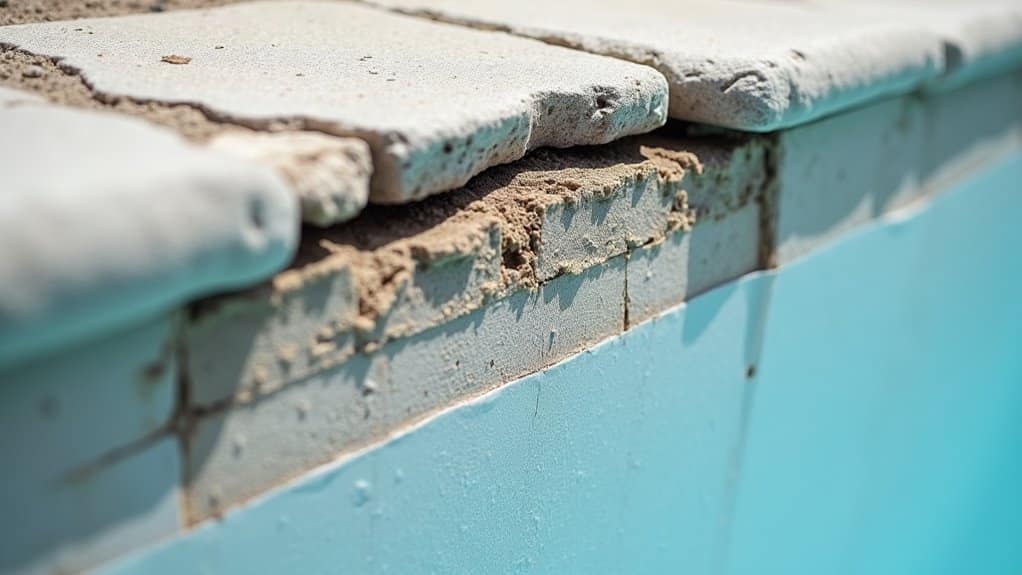
When fiberglass coating separates from the concrete shell, it peels away in sheets because the two materials expand and contract at different rates under temperature changes. Once even a small area lifts, pool water migrates behind the fiberglass layer, accelerating damage across the entire bonded surface. If you don’t achieve a thorough mechanical bond during surface preparation, you’ll greatly reduce the coating’s functional lifespan and face costly repairs within just a few years.
Peeling From Concrete Shell
Although fiberglass coatings can extend a concrete pool’s lifespan, delamination remains the single greatest risk you’ll face with this resurfacing method. When the fiberglass layer separates from the concrete shell, air cavities form underneath, producing hollow spots that escalate into volcano-like pop-offs. You’ll notice these blisters break open, exposing damaged substrate that turns grey over time.
The concrete pool crack sealing fiberglass method demands precise surface preparation to prevent this failure cascade:
- Remove all existing plaster and grind the structure at a 45° angle before tucking fiberglass edges
- Repair fine construction cracks in weak concrete areas before applying resin layers
- Seal coping junctions where chemicals erode sealant and allow water behind the coating
- Maintain balanced water chemistry to prevent corrosive conditions that widen micro-cracks
Water Trapping Spreads Damage
Once fiberglass separates from a concrete pool shell, trapped water becomes the primary driver of accelerating damage. Moisture infiltrates the gap between fiberglass and concrete, spreading deterioration well beyond the original delamination site. You’ll find that this trapped water weakens adjacent bonded areas, causing progressive failure across the entire surface.
As water accumulates beneath the coating, concrete cracking accelerates and allows further penetration through the pool structure. This cycle produces significant leaks and substantial water loss that you can’t resolve with spot repairs alone.
When evaluating fiberglass pool lining installation on concrete, you should recognize that extensive water trapping often demands complete fiberglass stripping and refinishing. Alternative surfaces like plaster or pebble finishes bond more reliably to concrete, reducing your long-term risk of sub-surface moisture damage and costly structural repairs.
Poor Bonding Reduces Lifespan
Because fiberglass and concrete form an inherently weak bond compared to traditional finishes, delamination stands as the single greatest threat to your resurfaced pool’s longevity. When resin fails to adhere uniformly, sections peel away, exposing concrete to water infiltration and accelerating structural deterioration.
Pool structural reinforcement with fiberglass typically lasts around ten years before requiring a complete redo, significantly less when bonding fails prematurely. Resurfacing frequency for fiberglass pools can vary based on environmental factors and maintenance practices. Regularly monitoring the pool’s surface can help detect signs of wear and tear early on.
- Incomplete plaster removal creates weak attachment points that trigger unpredictable delamination patterns
- Onsite gelcoat curing produces inferior durability compared to factory-finished fiberglass pools
- Thermal expansion mismatches between concrete and fiberglass stress bond lines with each temperature cycle
- Trapped water beneath delaminated sections compounds damage, often demanding full resurfacing rather than spot repairs
You’ll achieve better longevity choosing pebble finishes, which last 10, 20 years with superior concrete adhesion.
How Does Fiberglass Compare to Plaster, Pebble, or Tile?
When weighing fiberglass against traditional concrete pool finishes, you’ll find each material occupies a distinct position regarding durability, cost, maintenance, and aesthetics. Plaster offers the smoothest texture at $5, $6 per square foot but lasts only 5, 10 years. Pebble finishes run around $10 per square foot, resist chemicals and staining, and deliver 15, 25 years of service. Tile represents the premium tier with 25+ years of lifespan and virtually no sealing requirements.
A fiberglass gelcoat finishing system provides strong chemical resistance but faces thermal expansion challenges on concrete substrates. Pebble handles fluctuating water chemistry better, while tile delivers unmatched aesthetic versatility through mosaics and light reflection. For long-term cost-effectiveness on concrete pools, pebble and tile finishes typically outperform fiberglass coatings due to superior bonding reliability and proven track records.
When to Strip the Fiberglass Off Your Concrete Pool
How do you know it’s time to strip the fiberglass coating off your concrete pool? Watch for these clear failure signals that indicate your concrete pool to fiberglass conversion method has reached its end:
- Surface powdering: The fiberglass laminate degrades and powders off, exposing the underlying concrete shell.
- Persistent metal staining: Gray (iron) or tan (copper) stains return despite repeated chemical treatments.
- Gel coat damage: Harsh acid applications have compromised the protective finish beyond recovery.
- Concrete deterioration: Cracks or concrete cancer develop beneath the fiberglass layer, requiring structural access.
Once you’ve identified these conditions, strip the fiberglass completely. Then repair the concrete structure, address metal contamination with sequestering agents, and evaluate your next resurfacing option.
Should You DIY or Hire a Contractor for This Job?
Whether you tackle fiberglass resurfacing yourself or hire a contractor depends on your skill level, budget, and tolerance for risk. DIY efforts can reduce upfront costs and offer scheduling flexibility, but fiberglass application demands specialized tools and precise surface preparation. Errors during bonding or resin curing often lead to leaks, delamination, and costly repairs.
Concrete pool resurfacing contractors bring trained expertise, professional-grade equipment, and experience that prevent common pitfalls like uneven surfaces or improper adhesion. You’ll pay more upfront, but you gain workmanship guarantees and long-term durability that DIY approaches rarely match.
Evaluate your budget, available time, and hands-on experience honestly. If the project involves structural repairs or complex fiberglass layering, hiring a professional minimizes liability and protects your investment over the pool’s lifespan.
Ready to Transform Your Backyard?
Your dream pool is closer than you think. At Schiller Pools, our experienced team brings over 40 years of expertise to every project, delivering stunning fiberglass pool installations and custom pool construction that turn ordinary backyards into extraordinary outdoor retreats. With flexible financing options and lifetime warranty backing, there has never been a better time to get started. Call (561) 475-5997 today for your free estimate.
Frequently Asked Questions
Does Fiberglass Resurfacing Affect Your Concrete Pool’s Resale Value?
Fiberglass resurfacing can lower your concrete pool’s resale value. Buyers often view it as a hybrid solution carrying concrete’s cracking risks without a factory fiberglass pool’s durability. You’ll face concerns about delamination, shorter lifespan, and higher future maintenance costs that savvy buyers recognize. Market trends favor either full fiberglass pools or premium pebble/tile finishes. You’re better off investing in proven resurfacing options that signal long-term reliability to potential buyers.
Can You Apply Fiberglass Over an Existing Pebble or Tile Finish?
You shouldn’t apply fiberglass directly over an existing pebble or tile finish. These textured surfaces prevent proper resin saturation and create bonding failures that lead to delamination. You’ll need to strip the existing finish completely, then clean, repair, and prime the concrete substrate before applying fiberglass matting. Skipping this step risks water infiltration beneath the fiberglass layer, causing secondary damage that’ll require costly repeated repairs down the line.
What Water Chemistry Levels Protect a Fiberglassed Concrete Pool Surface Best?
You’ll protect a fiberglassed concrete pool surface best by maintaining pH between 7.2 and 7.4, total alkalinity at 80, 120 ppm, and calcium hardness between 200 and 300 ppm. Keep chlorine at 1, 3 ppm using liquid chlorine, CYA at 30, 50 ppm, and metals at 0 ppm. Target a Langelier Saturation Index between -0.30 and +0.30, and check levels bi-weekly to prevent etching, staining, or delamination.
Does a Fiberglassed Concrete Pool Heat Faster Than a Plastered One?
You won’t see a meaningful difference in heating speed between a fiberglassed and plastered concrete pool. Your pool’s heat-up time depends far more on water volume, heater output, solar exposure, and whether you’re using a cover than on surface material alone. Fiberglass’s smoother finish may improve water circulation slightly, distributing heat more evenly, but no available data confirms it actually accelerates heating. Focus your investment on an efficient heater and quality pool cover instead.
Are There Newer Alternatives to Fiberglass for Resurfacing Concrete Pools?
Yes, you’ll find several newer alternatives worth considering. Polymer coatings like AquaGuard 5000 and ecoFINISH’s aquaBRIGHT deliver smooth, non-porous surfaces that resist algae, UV damage, and chemicals, with warranties up to 15 years. You can also choose pebble and quartz aggregate finishes lasting 15+ years with superior durability. These options often outperform fiberglass coatings by eliminating thermal expansion mismatches while giving you faster fill times and lower long-term maintenance costs.