Yes, you can resurface a fiberglass pool, and it’s often the smartest move before considering a full replacement. Modern coatings like ecoFINISH and epoxy bond directly to your existing shell, restoring both structure and appearance. The process typically takes 5, 14 days and can extend your pool’s life by 10, 20 years. Costs range from $3,000 for gelcoat refinishing to $26,000 for premium thermoplastic coatings. Below, you’ll find everything you need to choose the right approach.
Can You Resurface a Fiberglass Pool?
With proper maintenance, high-quality gelcoat lasts decades. However, neglected water chemistry accelerates wear, and over 85% of pools need surface restoration within 15 years. Modern coatings like ecoFINISH and Aquaguard 5000 bond directly to fiberglass, offering durable, long-lasting results. The ecoFINISH resurfacing process takes just a few days, making it a convenient option for pool owners looking to minimize downtime.
Professional fiberglass pool restoration services guarantee correct surface preparation, groundwater management, and coating application, critical steps that prevent peeling or premature failure. You’ll spend considerably less than shell replacement while achieving like-new results.
Signs Your Fiberglass Pool Needs Resurfacing
Your fiberglass pool will tell you when it needs resurfacing if you know what to look for. Blisters and osmosis damage appear as raised bumps across the gelcoat surface when water penetrates the fiberglass laminate, while fading and surface cracks signal that UV exposure and chemical wear have broken down the protective finish. Rough, peeling surfaces can also harbor dirt and bacteria, making the pool uncomfortable and harder to maintain. Catching these signs early lets you schedule resurfacing before minor surface issues escalate into costly structural repairs.
Blisters And Osmosis Damage
Although fiberglass pools resist many problems that plague concrete and vinyl alternatives, they’re uniquely vulnerable to osmotic blistering, a process where water molecules penetrate the semipermeable gelcoat and react with the polyester resin beneath it. This reaction creates solute molecules that can’t pass back through, drawing more water inward and forming pressurized voids that lift the gelcoat into visible bubbles. While alarming in appearance, these blisters are cosmetic issues rather than structural threats, so they won’t compromise the shell’s integrity on their own.
You’ll spot blisters immediately after draining, they deflate within hours if you delay inspection. Fiberglass pool blister repair before resurfacing requires grinding each blister plus 25, 30mm beyond it to a 5mm depth, wiping with isopropyl alcohol, and applying epoxy filler. Among fiberglass pool surface repair techniques, this step prevents coating failure over hidden damage. Untreated blisters compromise any resurfacing work you apply over them.
Fading And Surface Cracks
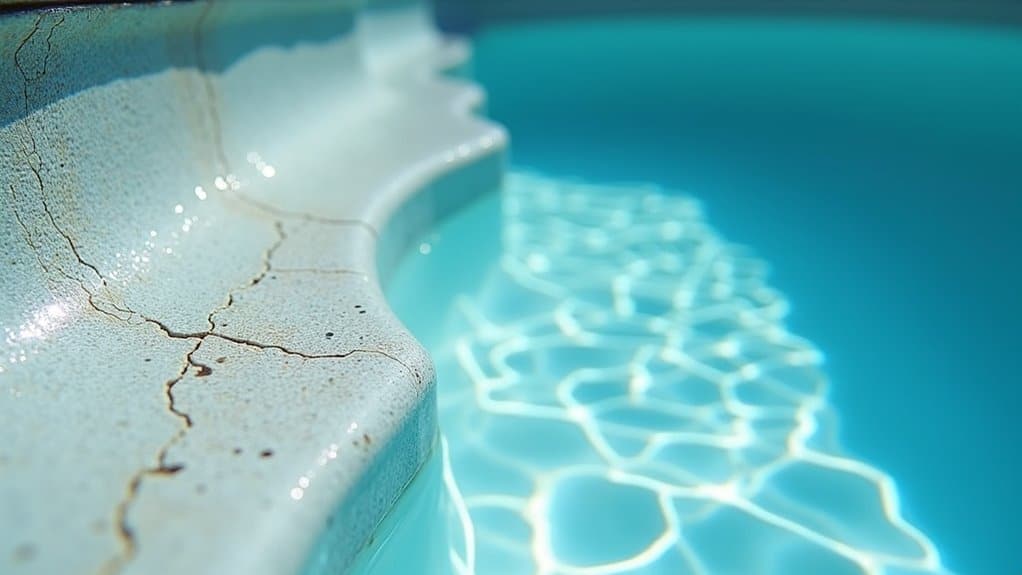
Once a fiberglass pool’s gelcoat has endured 10, 15 years of UV exposure and chemical contact, you’ll notice the surface color distorting into a whitish, flaky layer that no amount of scrubbing reverses. These fading characteristics intensify in sun-heavy regions, with waterline areas deteriorating first. Run your hand along the surface, if it feels gritty and leaves chalky residue on your fingers, the gelcoat’s breaking down and releasing particles that pose respiratory risks if inhaled.
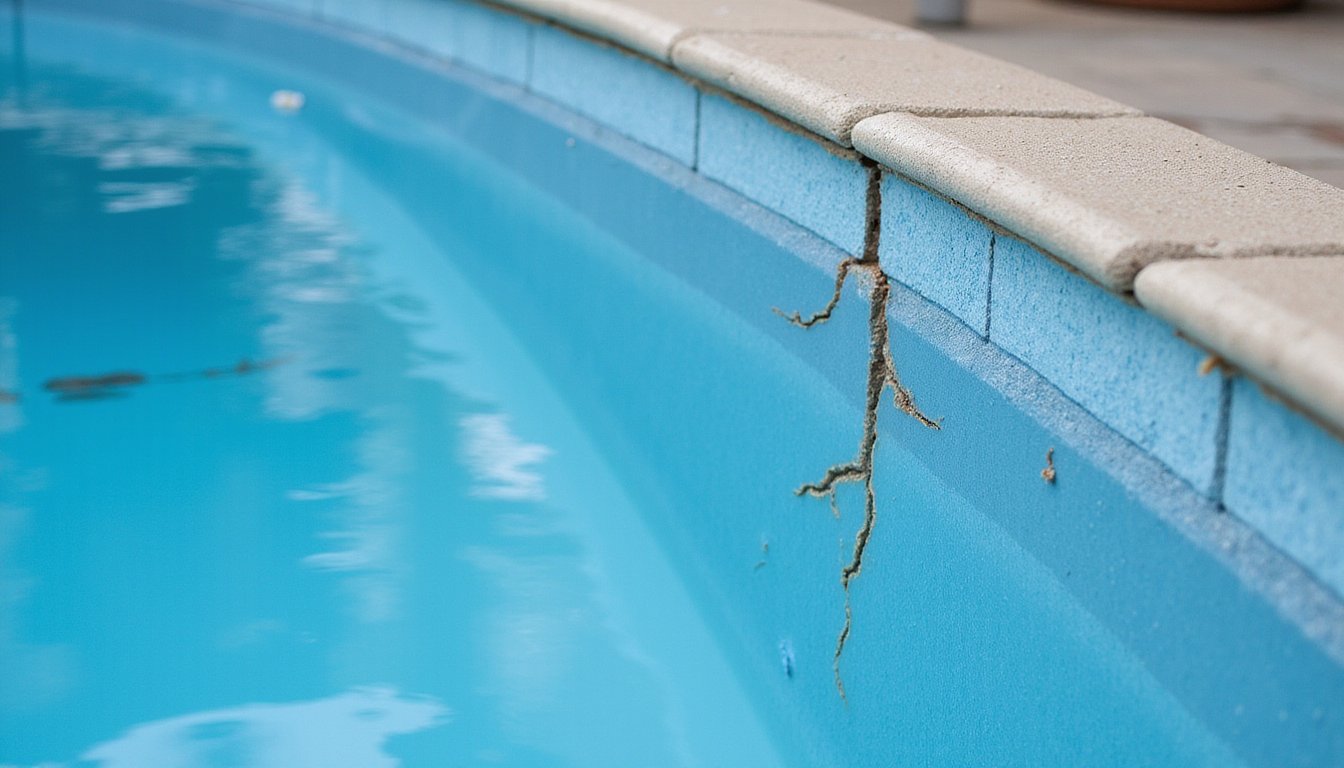
Cracking patterns typically emerge in pools aged 15, 50 years, especially around steps and benches where contact wear accelerates damage. Structural cracks from soil shifting or temperature fluctuations allow water loss and bacterial harboring. When you spot cracks paired with persistent staining and rough textures, you’re past maintenance territory, professional resurfacing is your next step. Filling and sealing fiberglass cracks can significantly extend the life of your pool. It is essential to address these issues promptly to prevent further deterioration.
Gelcoat vs. Epoxy vs. ecoFINISH Compared
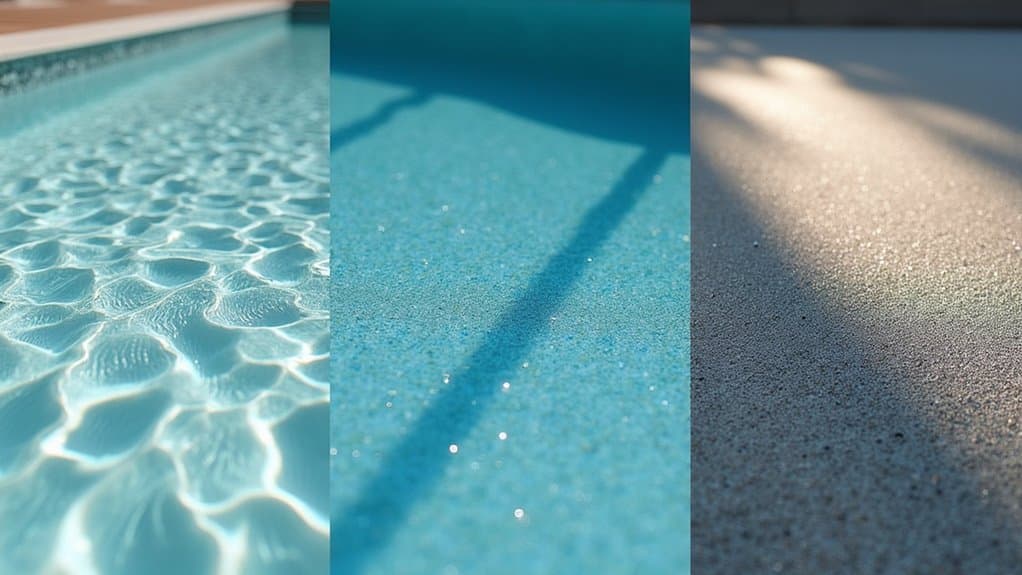
When it’s time to resurface your fiberglass pool, you’ll typically choose between three main coating systems: gelcoat, epoxy, and ecoFINISH, each with distinct performance characteristics, lifespans, and application requirements.
| Feature | Comparison |
|---|---|
| Gelcoat | Most durable factory finish; gelcoat resurfacing contractors can’t replicate controlled manufacturing conditions in-ground |
| Epoxy | A fiberglass pool epoxy resurfacing system delivers 8, 10 year lifespans with strong chemical resistance and in-ground application |
| ecoFINISH | Thermoplastic polymer lasting up to 20 years with superior stain and UV resistance |
| Bond Strength | ecoFINISH chemically penetrates gelcoat pores; ArmorKote epoxy bonds 5X stronger than standard options |
| Best For | ecoFINISH for total resurface; epoxy for cost-effective restoration |
How Fiberglass Pool Resurfacing Works, Step by Step
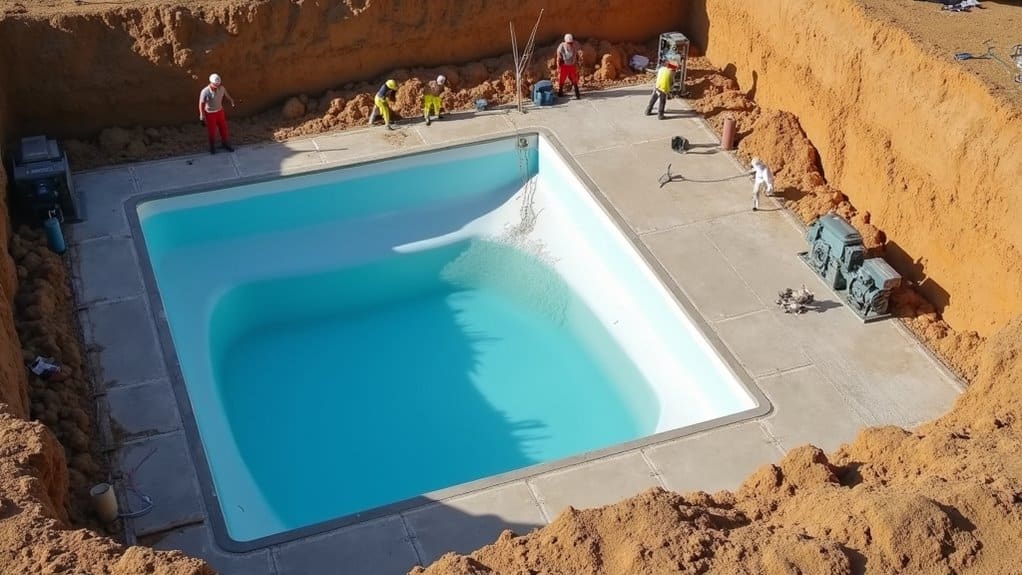
Knowing which coating system fits your pool is only half the equation, you also need to understand the physical process that makes a lasting bond possible. Successful fiberglass pool resurfacing follows a strict sequence: groundwater assessment, draining, surface prep, cleaning, and coating application.
Before you drain anything, dig a test hole near the pool to check groundwater levels. Skip this step and you risk hydrostatic pressure popping the shell.
Once drained and dry, fiberglass pool surface sanding preparation begins. You’ll grind out blisters, cracks, and discolorations using coarse grit, then finish with 220-grit for a uniform profile. Vacuum debris, degrease with acetone, and tack-wipe thoroughly.
Coating application involves priming, rolling resin, laying fiberglass mat, and adding final resin coats, eliminating air bubbles with a ribbed roller between layers.
How Long Does Fiberglass Pool Resurfacing Take?
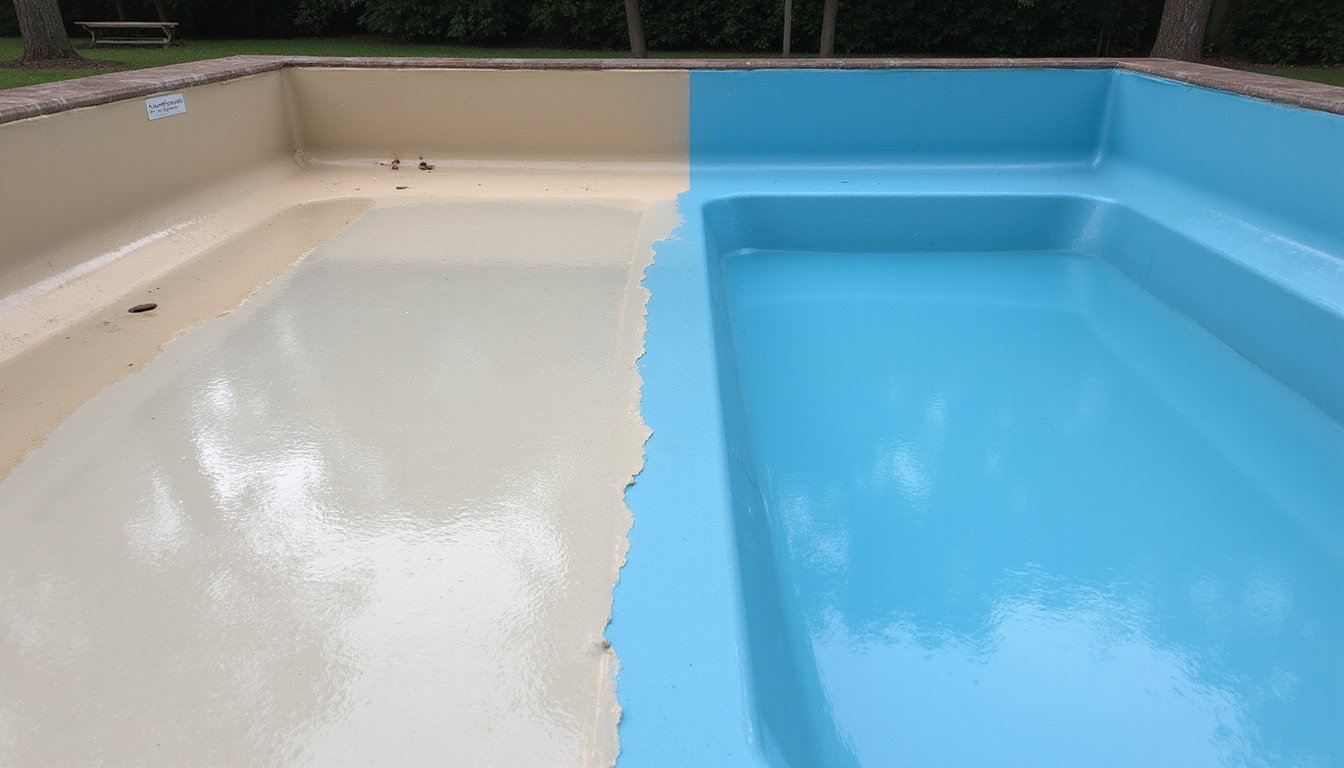
Once your pool is drained and prepped, you’re looking at a total resurfacing timeline of 5 to 14 days from start to finish, with most professional teams completing the job within 7 business days. The actual duration depends on several key factors, including your pool’s size, the condition of the existing gelcoat, the extent of any structural repairs needed, and current weather conditions. Understanding each phase, draining, surface preparation, application, and curing, helps you plan accurately and avoid surprises that could extend your project timeline.
Typical Resurfacing Timeline
- Inspection and planning: 1, 2 days
- Draining: 1, 2 days
- Surface preparation and repairs: 1, 2 days
- Coating application: 1, 3 days
- Curing and refilling: 3, 5 days
The pool shell refinishing process moves faster when your existing surface has minimal damage. Fiberglass coatings cure quicker than plaster alternatives under ideal temperature and humidity conditions. You should also factor in time for chemical balancing after refilling, your water needs proper adjustment before you can swim again.
Factors Affecting Duration
Several variables can push your fiberglass pool resurfacing project well beyond that standard 5, 10 day window, or help you wrap it up faster. Cost factors for fiberglass pool resurfacing can vary significantly based on the materials used and the complexity of the job. A detailed cost breakdown for resurfacing fiberglass pools should include labor, materials, and any additional services required. Understanding these costs can help homeowners better budget for their pool projects.
| Factor | Impact on Timeline |
|---|---|
| Pool size and shape complexity | Adds 1, 3 days for larger or irregular pools |
| Surface condition (cracks, algae, structural damage) | Can double prep time to 4+ days |
| Weather disruptions (rain, humidity, extreme temps) | Extends curing and application by 2, 7 days |
Your choice of fiberglass pool renovation contractors matters greatly, skilled crews finish in 5, 7 days, while inexperienced teams may need 14. Material selection also plays a role; gel coat cures faster than pebble or quartz finishes. Understanding your fiberglass pool maintenance and resurfacing cycle helps you schedule during ideal dry-weather windows, minimizing costly delays.
How Much Does Fiberglass Pool Resurfacing Cost?
Here’s a breakdown by finish:
- Epoxy paint, $1 to $2 per square foot, making it the most budget-friendly option
- Gel-coat refinish, $3,000 to $6,000 total, restoring the factory-original surface
- Thermoplastic coating (ecoFINISH), $10,000 to $26,000, delivering maximum durability
Labor alone costs approximately $7.50 per square foot. For a standard 1,000-square-foot pool, you’ll spend roughly $6,500 total. Custom shapes or angles push costs beyond $6.50 per square foot.
What Resurfacing Does for Your Fiberglass Pool
Resurfacing transforms a worn fiberglass pool by addressing structural, aesthetic, and functional issues simultaneously. Modern fiberglass laminate refinishing methods restore your pool’s protective barrier while eliminating safety hazards from rough, deteriorated gelcoat. You’ll notice reduced algae growth, lower chemical consumption, and smoother surfaces that prevent cuts.
Swimming pool surface restoration techniques deliver measurable benefits across five key categories:
| Benefit Category | Before Resurfacing | After Resurfacing |
|---|---|---|
| Surface Texture | Rough, chalky gelcoat | Smooth, non-porous finish |
| Algae Resistance | Frequent buildup | Noticeably reduced growth |
| UV Protection | Faded, discolored | UV-resistant coating applied |
| Maintenance Demand | High, unpredictable | Lower, consistent requirements |
| Property Value | Diminished appeal | Enhanced curb appeal |
You’re protecting your investment while extending pool life by 10, 20 years.
How to Avoid Resurfacing Your Fiberglass Pool
While resurfacing restores a fiberglass pool’s protective barrier, you can delay or prevent it entirely through proactive maintenance and smart material choices. Cost analysis of pool resurfacing is crucial for homeowners considering this investment. It helps in understanding the long-term benefits versus immediate costs.
- Maintain precise water chemistry. Keep pH between 7.2, 7.4, chlorine at 1, 3 ppm, calcium hardness under 120 ppm, and total alkalinity at 80, 120 ppm. This prevents fiberglass pool surface discoloration repair needs before they escalate.
- Minimize UV exposure. Apply UV-resistant coatings and use pool covers during peak sun hours to block gelcoat degradation that causes chalkiness and brittleness.
- Use gentle cleaning methods. Stick to soft cloths, nylon brushes, and fiberglass-safe products. Harsh tools gouge gelcoat and accelerate erosion.
These steps reduce residential fiberglass pool remodeling costs by extending your surface’s lifespan well beyond 15 years.
Ready to Transform Your Backyard?
Your dream pool is closer than you think. At Schiller Pools, our experienced team brings over 40 years of expertise to every project, delivering stunning fiberglass pool installations and custom pool construction that turn ordinary backyards into extraordinary outdoor retreats. With flexible financing options and lifetime warranty backing, there has never been a better time to get started. Call (561) 475-5997 today for your free estimate.
Frequently Asked Questions
Can You Resurface a Fiberglass Pool Without Draining All the Water?
You can’t fully resurface a fiberglass pool without draining all the water. Resurfacing requires a completely dry surface for vapor blasting, sanding, and applying new gelcoat, none of which work on wet surfaces. Before draining, you’ll need to check groundwater levels using test holes to prevent hydrostatic pressure from damaging your shell. If groundwater’s high, you’ll install well points to relieve pressure safely. There’s no shortcut around a full drain for proper resurfacing.
What Water Chemistry Levels Should You Maintain After Fiberglass Pool Resurfacing?
You’ll want to maintain pH between 7.2 and 7.4, total alkalinity at 80 to 120 ppm, and calcium hardness below 200 ppm to protect your new finish. Keep chlorine at 1 to 3 ppm using liquid chlorine only, avoid cal-hypo, which causes scaling on fiberglass. Don’t add any chlorine during the first 48 hours post-resurfacing to allow proper curing. Test your water at least twice weekly to catch imbalances early.
Can You Resurface a Fiberglass Pool Yourself as a DIY Project?
You can tackle minor fiberglass pool repairs yourself, small scratches and localized damage are manageable with the right skills. However, full resurfacing demands professional-grade equipment, precise surface preparation, and specialized coating techniques that most homeowners don’t possess. You’ll need orbital sanders, degreasing solvents, and spray application tools to achieve proper results. If you’re dealing with anything beyond cosmetic touch-ups, you’ll get a far more durable finish by hiring experienced professionals.
Does Resurfacing a Fiberglass Pool Affect Its Structural Warranty Coverage?
Resurfacing your fiberglass pool typically doesn’t void the structural warranty, since that coverage protects the shell’s integrity against material or workmanship defects. However, your original surface warranty, usually covering gelcoat fading, defects, and osmosis blisters for 7 to 15 years, likely ends once you’ve replaced that layer. Your aftermarket resurfacing contractor should offer their own warranty. Always review your manufacturer’s exclusions for alterations before proceeding to avoid unexpected gaps in coverage.
How Soon After Resurfacing Can You Safely Swim in the Pool?
You can typically swim in your resurfaced fiberglass pool within 5 to 10 days after the coating’s applied. The curing process itself takes 24 to 72 hours, but you’ll need additional time for refilling, chemical balancing, and ensuring the finish has fully hardened. Don’t rush it, swimming too early risks damaging the new coating. Avoid using automatic vacuums or robotic cleaners for the first 30 days to prevent permanent surface lines.