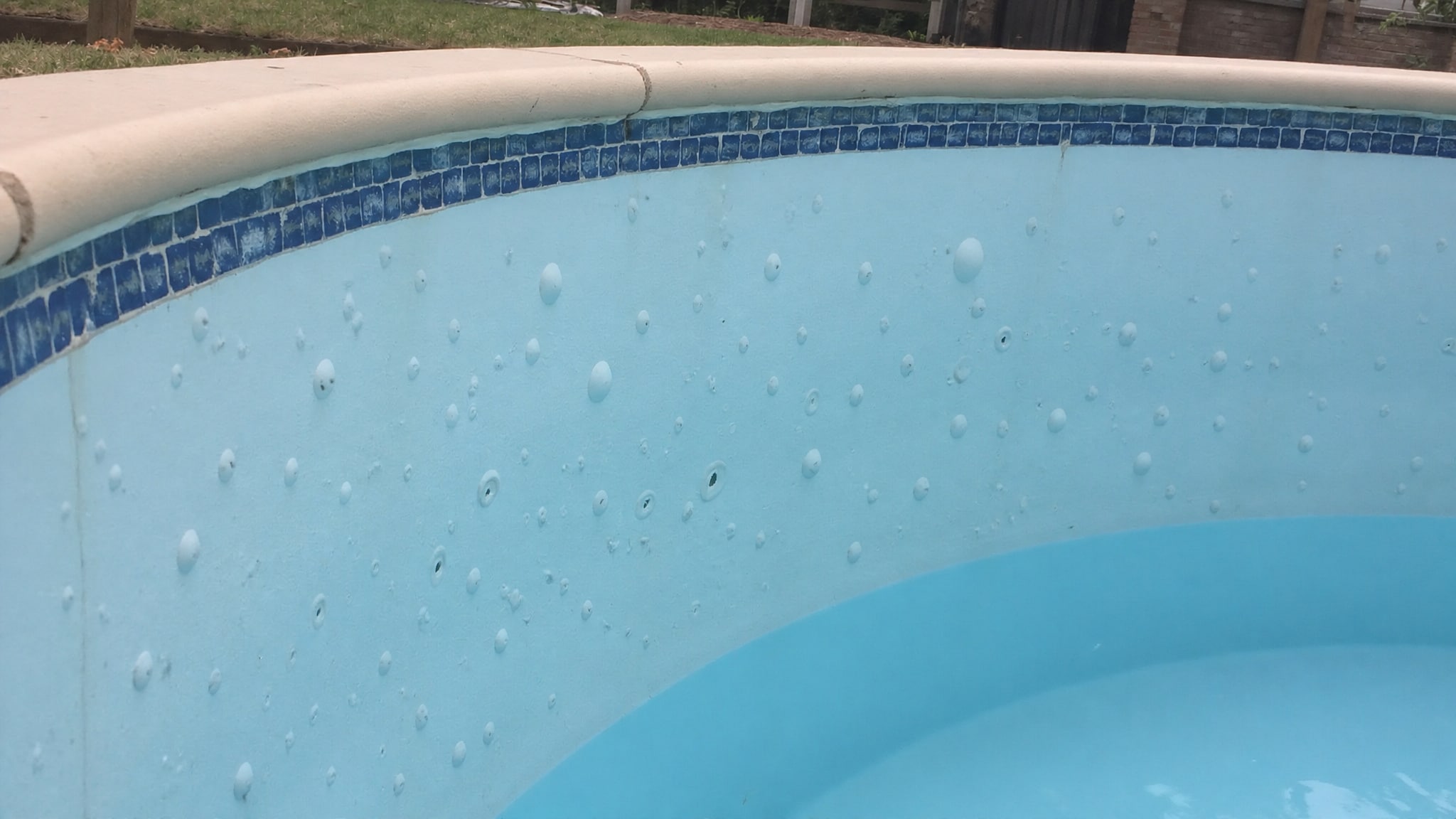
You can use a Magic Eraser on a fiberglass pool, but it’s riskier than most guides suggest. Melamine foam acts like 3000-grit sandpaper, micro-scratching your gel coat with every pass and shedding millions of microplastic fibers into your water. If you do use one, keep it wet, apply light pressure, and rewax immediately after. Safer alternatives like soft nylon brushes and targeted chlorine treatments exist, and understanding the full picture will help you protect your pool long-term.
Can You Use a Magic Eraser on a Fiberglass Pool?
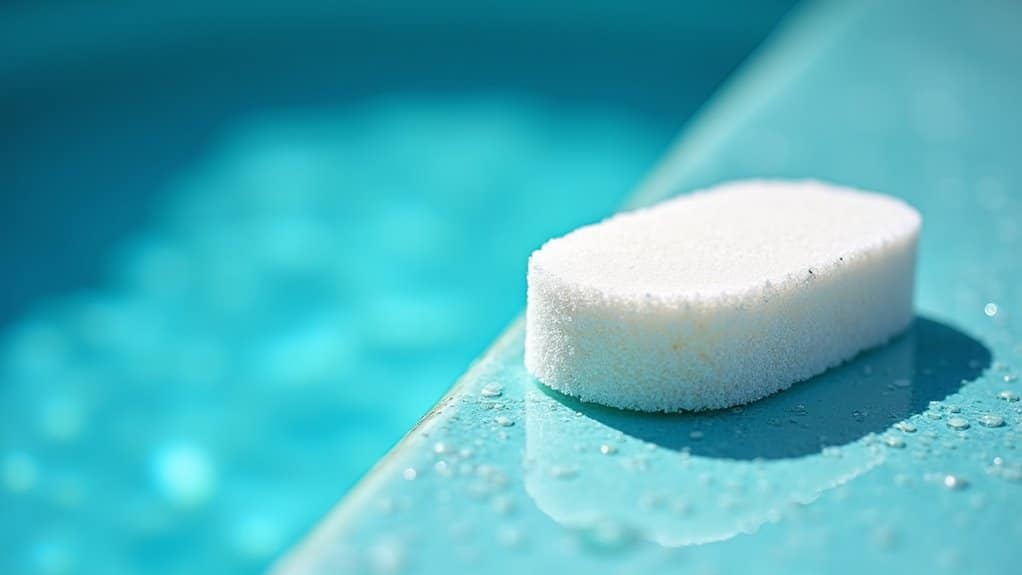
Yes, you can use a Magic Eraser on a fiberglass pool, but only with specific precautions. The melamine foam acts as a fine abrasive that effectively removes surface stains like sunscreen residue and discoloration from fiberglass steps. Video demonstrations confirm that magic eraser fiberglass pool cleaning restores white steps with up to 80% stain removal.
However, you must keep the eraser wet at all times, rinse it frequently, and apply moderate pressure. Never place it in the skimmer or submerge it in pool water, as chlorine may react with melamine. When melamine mixes with CYA in pool water, it can potentially create melamine cyanurate, a toxic byproduct. The manufacturer hasn’t tested this product for pool use, so limit application to small, targeted surface areas rather than scrubbing large sections of your pool’s gelcoat.
Why Magic Eraser Is More Abrasive Than You Think
While a Magic Eraser can remove stains from fiberglass pool surfaces, most pool owners underestimate just how aggressively it works. Melamine foam cleaning pads have a microstructure nearly as hard as glass, functioning like ultra-fine sandpaper rather than a soft sponge. During the cleaning process, dirt and debris are pulled into open spaces between the foam’s slender strands, which is why the pads wear down so rapidly with each use.
Here’s what makes them riskier than they appear:
- Dry melamine foam matches approximately 3000-grit sandpaper, removing both stains and surface material indiscriminately.
- The foam’s microscopic filaments scrape rather than dissolve stains, meaning they’ll abrade your gelcoat with every pass.
- Dry application considerably amplifies abrasiveness, increasing the likelihood of scratching your pool’s protective finish.
You should always wet melamine foam cleaning pads before use, which softens the structure slightly and reduces unnecessary gelcoat damage.
How Magic Eraser Scratches and Dulls Fiberglass Gel Coat
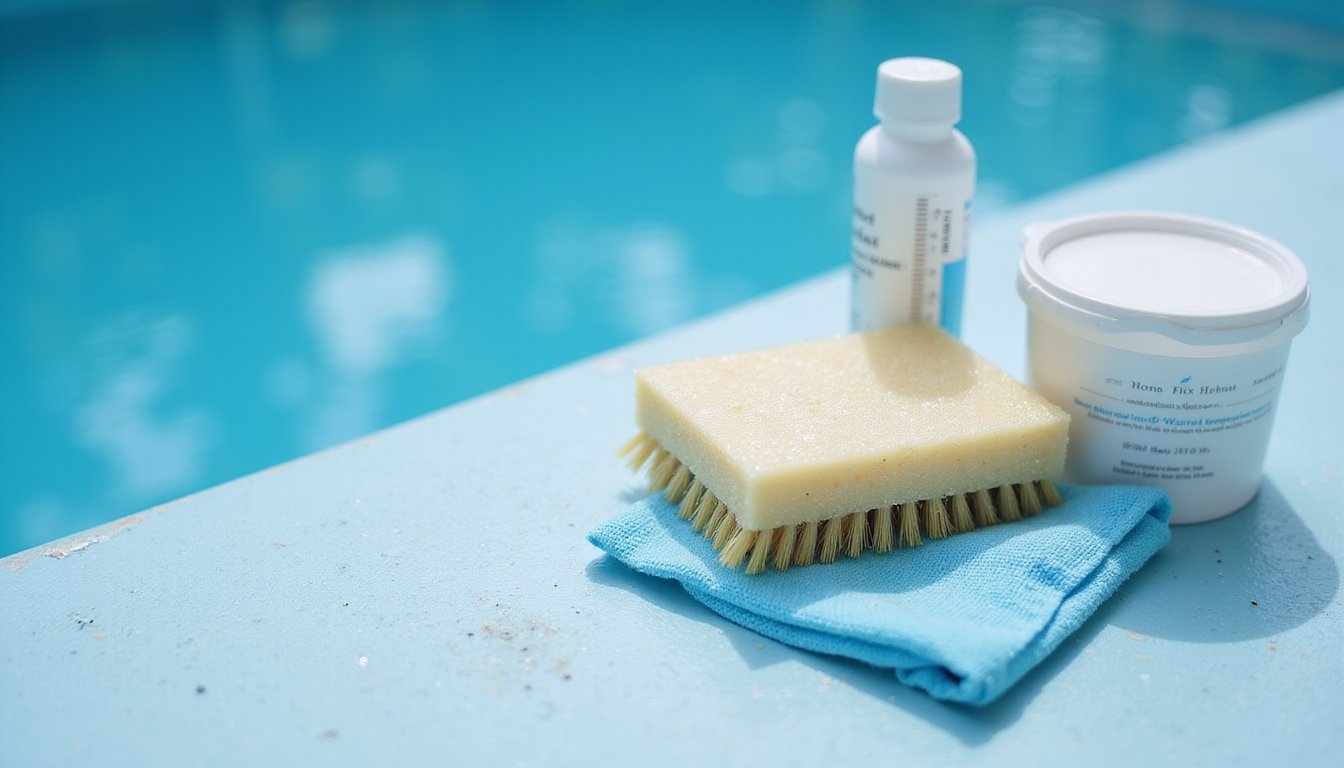
Because melamine foam acts as ultra-fine sandpaper, every pass across your fiberglass pool’s gelcoat removes a microscopic layer of the surface material, not just the stain. A magic eraser functions as very fine sandpaper on gelcoat surfaces, stripping protective wax and leaving a matte finish where gloss once existed.
| Effect | Cause | Prevention |
|---|---|---|
| Surface dulling | Wax layer removal | Apply polish after use |
| Micro-scratching | Dry or heavy pressure | Always use wet, light touch |
| Gelcoat thinning | Repeated passes | Limit to small, targeted areas |
| Matte patches | Abrasion of gloss layer | Test inconspicuous spot first |
| Sealant failure | Deep scratch penetration | Follow with sealant curing |
You’ll need to reapply wax or sealant like F11 immediately after any melamine foam contact. For longer-lasting defense against UV damage and future scratching, consider applying a chemically bonded ceramic coating instead of traditional wax, as it offers superior durability for up to 18 months.
Why Melamine Foam Creates Toxic Byproducts in Pool Water
Surface damage isn’t the only concern when you scrub your fiberglass pool with a magic eraser, what dissolves into the water matters too. Melamine foam is poly(melamine-formaldehyde), a non-biodegradable compound that sheds approximately 6.5 million microplastic fibers per gram during use. These particles enter your pool water and resist breakdown.
Every gram of magic eraser sheds millions of microplastic fibers into your pool water, where they resist breakdown indefinitely.
Current research hasn’t confirmed specific toxic byproducts from melamine foam reacting with chlorinated pool water. However, three documented concerns exist:
- Microplastic shedding introduces non-biodegradable particles into your pool’s filtration system.
- Formaldehyde off-gassing is a known property of melamine-formaldehyde polymers.
- Unknown chemical interactions between melamine particles and pool disinfectants remain unstudied.
Until research clarifies these risks, choose fiberglass pool maintenance products specifically formulated for gelcoat surfaces rather than introducing unverified materials into your water.
Safe Ways to Remove Organic Stains From Fiberglass Pools
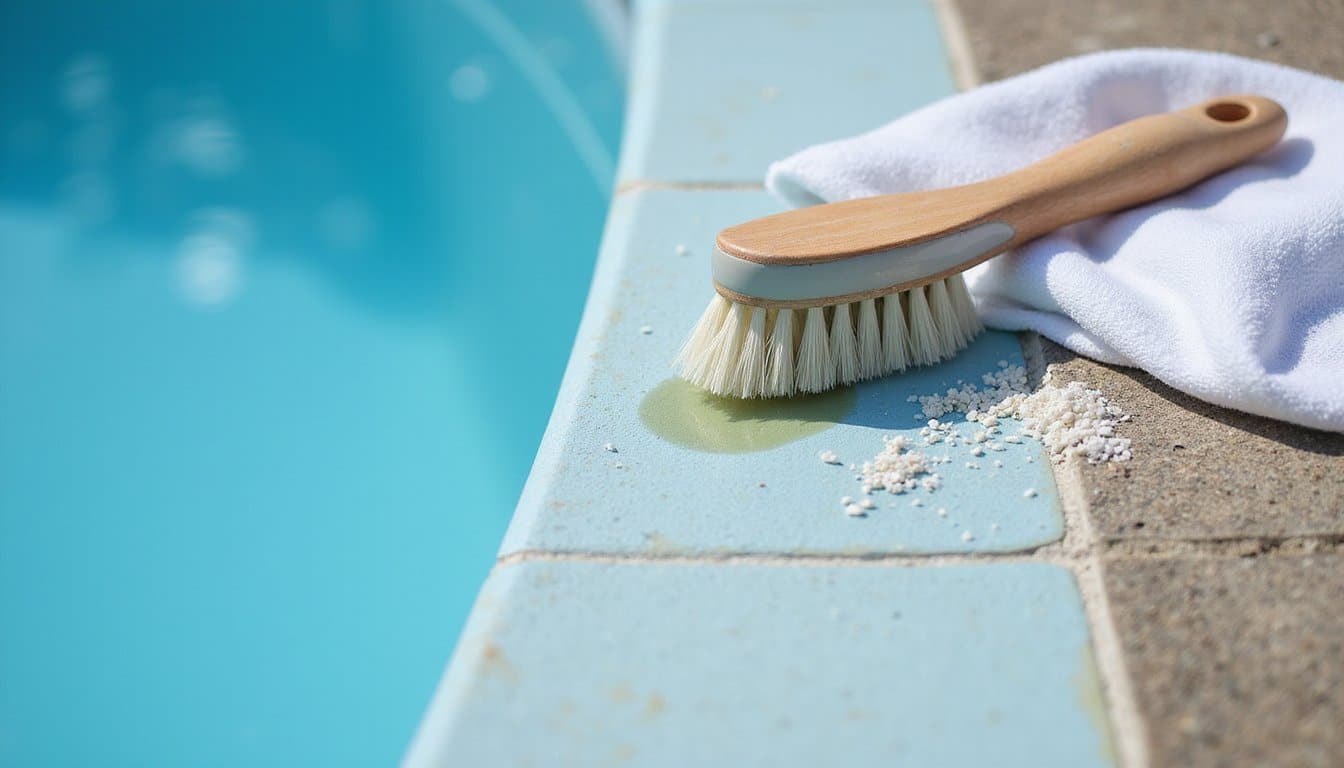
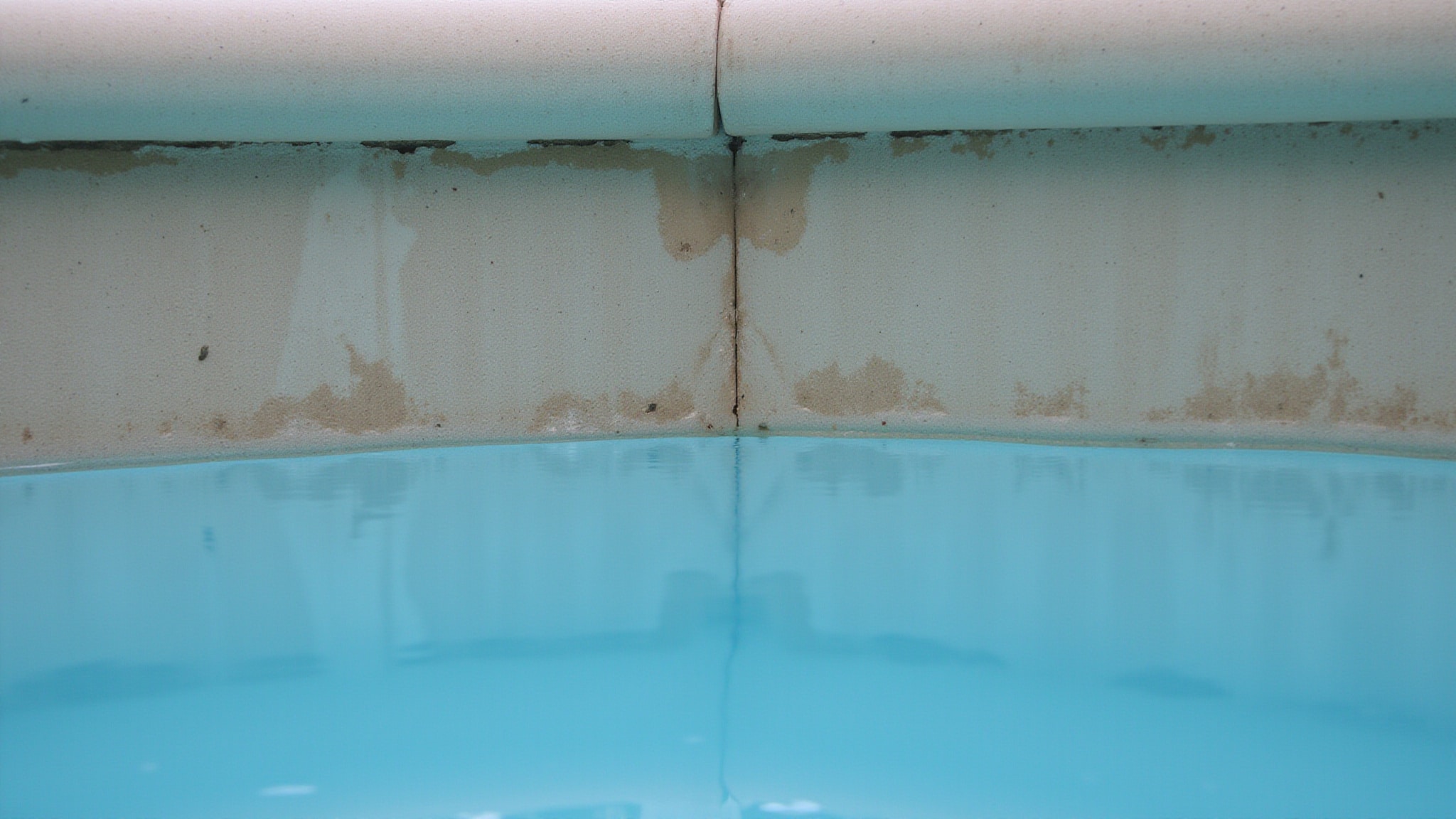
Once you’ve ruled out abrasive melamine foam, you’ll need proven methods that remove organic stains without compromising your pool’s gelcoat. Start by brushing affected areas with a soft nylon bristle brush. Balance your water first, alkalinity between 100, 150 ppm, pH at 7.4, 7.6, then shock with liquid or granular chlorine at twice your daily dose. Run the pump overnight and brush walls and floor again afterward.
For stubborn stains, place granular chlorine in a stocking directly on the stain for one to six hours, checking hourly to prevent bleaching. This technique works well for fiberglass pool scum line cleaning where organic buildup concentrates.
If stains persist, use a fiberglass-safe stain eraser, not standard melamine products. Maintain balanced chemistry and weekly vacuuming to prevent recurrence.
How to Remove Metal Stains From a Fiberglass Pool
If you notice discoloration on your fiberglass pool walls that won’t respond to standard cleaning, you can confirm metal staining by pressing a vitamin C tablet against the affected area, if the stain dissolves instantly, metals are the culprit. To treat the entire surface, lower your chlorine level first, then broadcast ascorbic acid across the pool and brush the fiberglass thoroughly. Once the stains lift, add a metal sequestering agent like Pool Magnet Plus within one hour to bind freed metals and prevent them from redepositing on the gelcoat.
Vitamin C Treatment Method
Everything from light rust spots to widespread iron discoloration on a fiberglass pool’s gelcoat responds effectively to ascorbic acid treatment, a method that uses vitamin C’s natural chelating properties to dissolve metal stains without abrading the surface. Among fiberglass pool stain removal tools, this vitamin C treatment method stands out for its surface-safe effectiveness.
- Spot test first, rub a vitamin C tablet directly on the stain. Instant fading confirms you’re dealing with a metal stain.
- Prepare your water, lower chlorine below 1 ppm and reduce pH, since chlorine neutralizes ascorbic acid on contact.
- Treat the full pool, add one pound of ascorbic acid per 10,000 gallons around the perimeter, run the filter for one hour, then brush walls and floor thoroughly before vacuuming.
Metal Sequestering Agents
Although vitamin C treatment lifts metal stains effectively, it doesn’t actually remove dissolved metals from your pool water, they’ll precipitate right back onto the gelcoat once chlorine and pH levels return to normal. That’s where metal sequestering agents become essential.
These agents bind iron, copper, manganese, and calcium in solution through tight chemical bonds, preventing them from reacting with your fiberglass surface. They don’t remove metals, they lock them in place so they can’t cause staining or scale buildup.
For initial treatment, apply Sequa-Sol at 16 fl oz per 10,000 gallons, then maintain with 4 fl oz weekly. Metal sequestering agents work with chlorine, salt water, and mineral systems alike. For complete metal elimination, pair your sequestrant with a metal removal device like CuLator to physically extract metals from circulation.
Best Tools to Clean a Fiberglass Pool Without Scratching
Choosing the right cleaning tools protects your fiberglass pool’s gelcoat, a thin, smooth finish that resists algae and staining but scratches easily under abrasive contact. Prioritizing fiberglass pool surface scratch prevention starts with selecting tools engineered for delicate surfaces. Are fiberglass pools slippery, especially around the edges? It is essential to take extra care when walking near the pool to prevent accidents.
Protecting your fiberglass pool’s gelcoat starts with choosing the right tools, gentle enough to clean without scratching.
- Soft-bristle nylon brushes clean walls and floors without damaging the gelcoat layer. Regular brushing prevents algae buildup before stains set in.
- Manual vacuums designed for fiberglass remove debris using long, overlapping strokes from the shallow end toward deeper sections, eliminating scratching risks.
- Robotic pool cleaners offer programmable, energy-efficient operation with built-in filtration systems that deliver thorough cleaning safely.
For surface debris, use a mesh skimmer net on a telescopic pole to collect leaves and insects before they sink and require more aggressive removal.
How to Protect Your Fiberglass Gel Coat After Cleaning
Once you’ve removed dirt and stains using the right tools, the next step is preserving your pool’s gelcoat so it stays smooth, glossy, and resistant to future damage. Effective fiberglass gelcoat surface protection starts with applying the right products immediately after cleaning.
| Protection Method | Product Type | Reapplication Frequency |
|---|---|---|
| Marine-grade wax | UV-inhibitor wax | Quarterly in sunny climates |
| Ceramic coating | Semi-permanent sealant | Every 1, 2 years |
| UV protectant spray | Dedicated spray formula | Monthly |
Apply wax in thin, even layers using a microfiber applicator pad. For longer-lasting defense, consider ceramic coatings that provide self-cleaning properties. You’ll also want to maintain balanced water chemistry, keeping pH between 7.2 and 7.8, to prevent chemical degradation of your protected surface.
Common Mistakes That Damage Fiberglass Pool Surfaces
Even after you’ve applied protective coatings and balanced your water chemistry, certain avoidable mistakes can still compromise your fiberglass pool’s gelcoat and structural integrity. Chemical savings with fiberglass pools can significantly reduce your overall maintenance costs. Salt water benefits for fiberglass pools include improved water quality and reduced chemical use. This natural approach not only enhances the swimming experience but also contributes to the longevity of the pool’s materials.
- Using abrasive cleaners or harsh chemicals, Calcium hypochlorite raises pH and calcium hardness, etching your gelcoat. Instead, adopt pool surface gentle cleaning methods with fiberglass-specific products.
- Relying on sand backfill, Sand saturates and liquefies under groundwater pressure, creating force that bulges walls and stresses your shell beyond design limits.
- Skipping regular water testing, Using cheap test strips instead of quality kits misreads chemistry, allowing prolonged imbalances that promote osmotic blistering and surface discoloration.
You’ll also want to avoid applying concrete pool maintenance advice to fiberglass surfaces, since different materials demand distinct care protocols. Considerations for above ground fiberglass pools include ensuring proper water chemistry to prevent algae growth. Regular inspections for any signs of wear or damage are crucial for maintaining the longevity of these pools.
When to Call a Professional for Fiberglass Pool Stains
How do you know when a stubborn stain has crossed the line from a DIY fix to a job that demands professional expertise? Use this guide to decide:
| Stain Type | DIY Threshold | Call a Professional When |
|---|---|---|
| Organic | Brushing or stain eraser application | Stain persists beyond two months of treatment |
| Metal | Vitamin C tablet rubbing + sequestering agent | Large stains don’t respond to ascorbic acid treatment |
| Calcium Silicate | Fiberglass-safe scaling treatment | Deposits resist pool surface stain treatment products |
You should also call a professional if you can’t identify the stain type, your water chemistry remains imbalanced despite corrections, or chlorine drops below 1 ppm persistently. Professional diagnosis prevents gelcoat damage from misapplied DIY methods.
Ready to Transform Your Backyard?
Your dream pool is closer than you think. At Schiller Pools, our experienced team brings over 40 years of expertise to every project, delivering stunning fiberglass pool installations and custom pool construction that turn ordinary backyards into extraordinary outdoor retreats. With flexible financing options and lifetime warranty backing, there has never been a better time to get started. Call (561) 475-5997 today for your free estimate.
Frequently Asked Questions
Can a Magic Eraser Affect Pool Water Chemical Balance When Submerged?
Yes, a magic eraser can affect your pool’s chemical balance when submerged. Its melamine content may react with chlorine and existing CYA (stabilizer) in your water, potentially forming melamine cyanurate, a toxic byproduct. The manufacturer hasn’t tested the product in swimming pools, so these chemical interactions remain incompletely studied. You shouldn’t leave magic erasers soaking in pool water. Instead, use fiberglass-specific cleaners and maintain proper water chemistry for safe, effective cleaning.
How Thick Is a Fiberglass Pool Gelcoat and Can It Be Repaired?
Your fiberglass pool’s gelcoat typically measures 15, 20 mils (0.015, 0.020 inches) thick, though some areas may run as thin as 10 mils. You can repair minor scratches using a fiberglass repair kit, sand the area, apply gelcoat filler, and cure it under UV light. If the gelcoat’s worn below 10 mils from abrasive cleaning tools like Magic Erasers, you’ll need professional refinishing to restore the protective barrier and prevent structural damage.
Do Robotic Pool Cleaners Work Better Than Manual Scrubbing on Fiberglass?
Yes, robotic pool cleaners outperform manual scrubbing on fiberglass surfaces. They remove 95, 99% of debris in a single pass, clean 30, 50% faster, and reduce gelcoat wear by 60% compared to hand tools. You’ll also avoid inconsistent pressure that causes scratches. Robotic brushes stay gentle on your gelcoat, helping it last twice as long. For fiberglass pools, you’re better off investing in a robotic cleaner to protect your pool’s finish.
How Often Should You Test Calcium Hardness Levels in Fiberglass Pools?
You should test calcium hardness levels in your fiberglass pool at least once a week during swimming season and biweekly during the off-season. Keeping calcium hardness between 175 and 275 ppm protects your pool’s gelcoat from scaling and etching. If you’ve recently added fresh water or noticed surface discoloration, test immediately. Consistent testing helps you avoid mineral buildup that could lead to stains requiring abrasive removal methods.
Is It Safe to Use Magic Eraser on Vinyl Pool Liners?
You shouldn’t use a Magic Eraser on vinyl pool liners. Its melamine foam acts as a fine abrasive that removes thin layers of material, causing color fading, dulling, and premature wear on delicate vinyl surfaces. Additionally, melamine combined with cyanuric acid in pool water can produce toxic melamine cyanurate. Instead, you’ll get safer results using a soft sponge with fiberglass-specific cleaners, vitamin C tablets for metal stains, or metal sequestering agents.