For stunning, long-lasting results on your fiberglass pool, you’ll want to use a two-part epoxy pool paint, it’s the only coating that chemically bonds to fiberglass surfaces. You’ll get 8, 10 years of durability with a proper two-coat application, and its non-porous finish resists UV rays, chemicals, and water penetration. It’s also self-priming on bare fiberglass, which simplifies your prep work. Below, you’ll find the exact steps to achieve a professional-grade finish.
Why Epoxy Is the Best Fiberglass Pool Paint
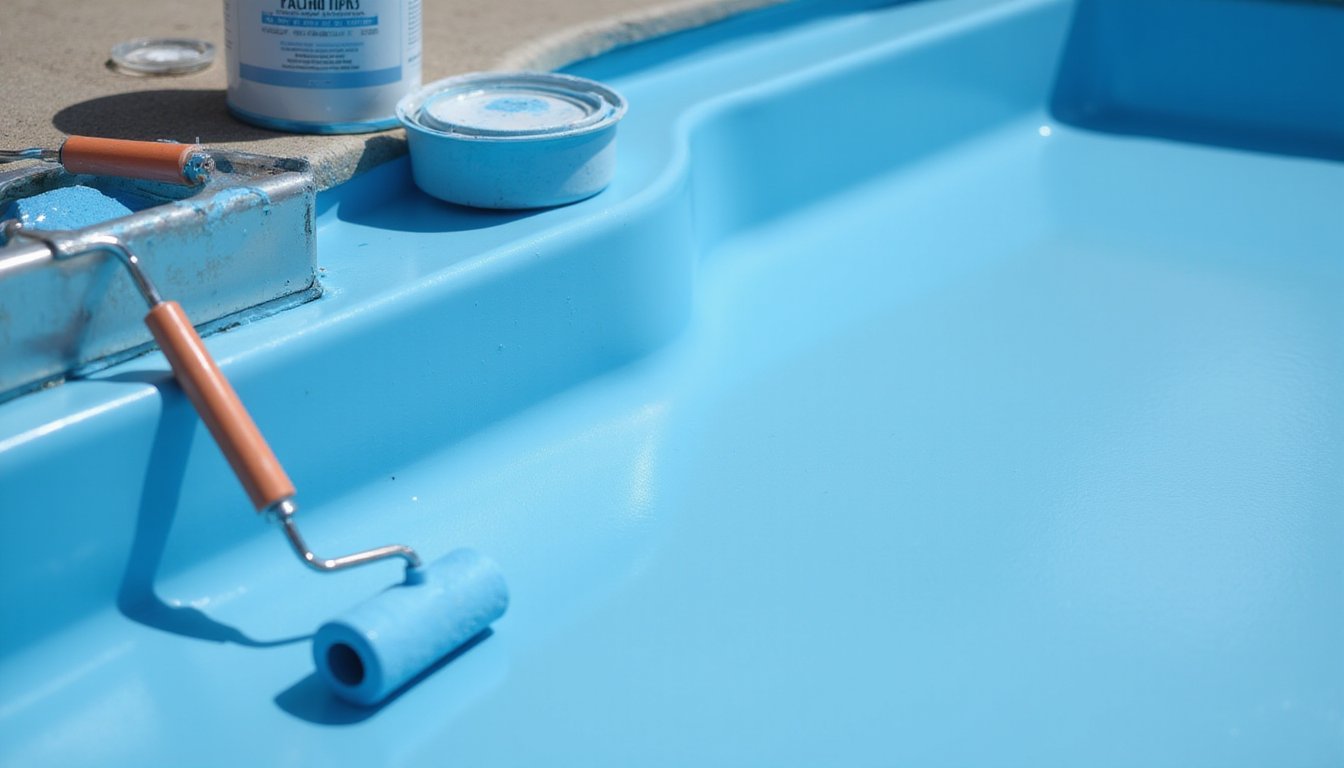
When you’re choosing a coating for a fiberglass pool, epoxy paint stands out as the most reliable option due to its chemical curing process and compatibility with gelcoat surfaces. A two part epoxy pool coating consists of a resin and hardener that react to form a dense, non-porous barrier resistant to UV rays, chemicals, and abrasion.
Epoxy pool paint for fiberglass delivers up to 8 years of service life in a two-coat system under normal conditions. It’s self-priming, bonding directly to bare fiberglass without additional primers. Each coat builds to 8 mils thick, creating a smooth satin finish that hides surface imperfections. You’ll get superior water resistance and long-term protection that outperforms conventional pool coatings. However, epoxy requires a long drying period to prevent issues like discoloration, so careful timing during application is essential.
Sand, Clean, and Prime Your Fiberglass Pool Surface
Before you apply any epoxy pool paint, you’ll need to sand the entire fiberglass surface with 60-80 grit sandpaper using an orbital sander for broad areas, creating a rough mechanical profile that guarantees strong coating adhesion. Once sanding is complete, scrub the surface with tri-sodium phosphate (TSP) mixed at 8 oz per gallon of warm water to strip away oils, calcium deposits, and contaminants, then rinse thoroughly before the solution dries. After the surface passes a condensation test confirming it’s completely dry, you’re ready to apply Gunzite primer in thin, even coats at a 4:1 base-to-catalyst ratio, working in small sections within the 65°F-85°F temperature range for ideal bonding. Using a crosshatch technique during primer application ensures even coverage, especially in corners and curves where fiberglass pools tend to be most challenging.
Sanding With Coarse Grit
Grab a sheet of 50-80 grit sandpaper and start abrading the gelcoat surface to create the anchor pattern that epoxy pool paint needs for a lasting bond. Use wet/dry sandpaper or an orbital sander with a coarse emery disk to prevent heat damage during abrasion. This pool paint adhesion preparation fiberglass step directly determines coating longevity. Sand in straight lines or parallel grooves to maximize mechanical bond strength across the entire pool shell.
Don’t skip to finer grits prematurely, 80 grit maximum guarantees sufficient surface profile. Among fiberglass pool resurfacing paint options, epoxy phenolic coatings like AquaGuard 5000 require this coarse profile for proper chemical bonding. Sand any patched areas with 36-ounce matting down to quarter-inch thickness before proceeding. Inspect sanded sections for uniform scratch patterns, confirming adequate profile. This foundation supports a 5-8 year epoxy lifespan before advancing to 400-800 grit finishing passes.
TSP Surface Cleaning
Mix half a cup of trisodium phosphate (TSP) into one gallon of hot water in a non-metallic bucket, this heavy-duty degreaser strips grease, sunscreen oils, waxes, and soap films that survive coarse-grit sanding. Apply with a stiff bristle brush, scrubbing each section vigorously. Let the solution dwell five to ten minutes for full penetration.
| Step | Action | Detail |
|---|---|---|
| 1 | Apply TSP solution | Scrub with stiff bristle brush |
| 2 | Dwell time | 5, 10 minutes per section |
| 3 | Rinse thoroughly | High-pressure fresh water |
| 4 | Water break test | No beading confirms cleanliness |
| 5 | Dry surface | Lint-free towels before priming |
During tsp surface cleaning, you’re preparing the substrate for fiberglass pool refinishing compounds. Rinse multiple times, residual phosphate compromises coating adhesion. Repairing fiberglass pool filters effectively will enhance the longevity of your pool system. Proper maintenance of these filters ensures that water remains clear and free of debris.
Applying Gunzite Primer
Gunzite primer bridges the gap between your sanded, TSP-cleaned fiberglass surface and the epoxy topcoat that’ll ultimately face years of chemical exposure and water immersion. This two-part epoxy primer pairs 1 gallon of base with 1 quart of catalyst, delivering heavy viscosity that fills surface irregularities left after pool surface sanding before painting.
Mix the base and catalyst thoroughly, then apply by brush, roller, or spray. If spraying, dilute with 1.5 pints of No. 1109 Solvent per gallon. At 75°F, spray immediately to achieve 10, 12 mil film thickness. Coverage runs 100, 150 square feet per gallon.
Among fiberglass pool paint types, Gunzite works exclusively as an undercoat for POXOLON 2 or ZERON epoxy paints, ensuring maximum adhesion to faded or deficient gel coat surfaces.
Apply Two Coats of Epoxy to Your Fiberglass Pool
A proper two-coat epoxy application delivers 22-24 mils of dry film thickness, giving your fiberglass pool 8-10 years of protection against UV rays, chlorine, algae, and chemical staining. Unlike chlorinated rubber pool paint, this self-priming, high-build formula hides minor divots and smooths surface imperfections without requiring a separate primer coat.
Mix your 2-gallon kit at a strict 1:1 ratio. For easier roll-out, thin with 6-8 ounces of Xylene per mixture. Apply the first coat evenly, then follow with the second for maximum durability. Among residential fiberglass pool repainting systems, 100% solids epoxy delivers superior resistance, withstanding 21 chemicals including chlorine, acid, and salt water. Add silica sand to the final coat on steps for slip resistance. After ensuring the pool surface is smooth and clean, you can then proceed to resurface a fiberglass pool slide. This process will not only enhance the appearance but also improve safety for users.
Let the Paint Cure Before Filling the Pool
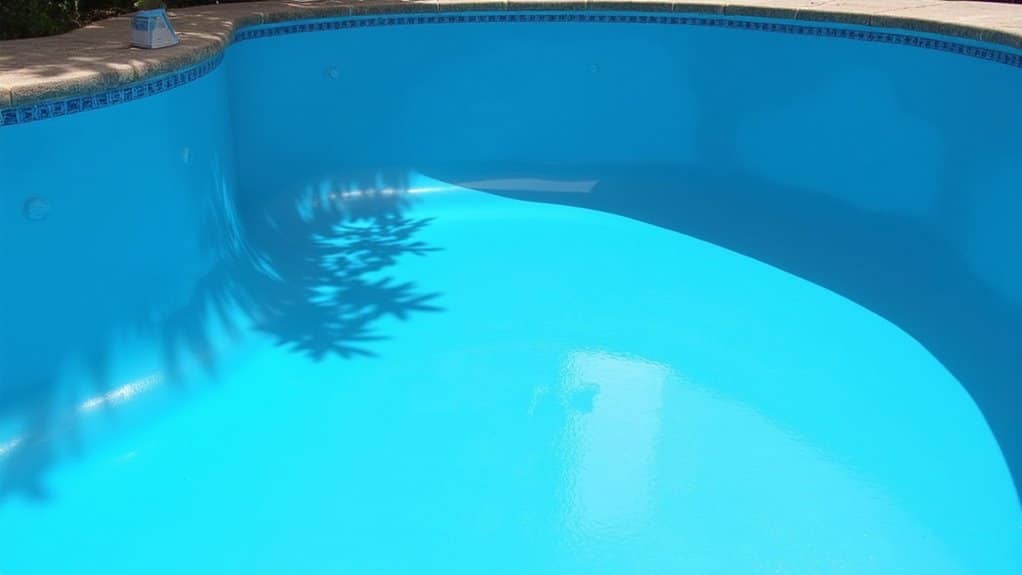
Once you’ve applied both epats, resist the urge to refill, curing time directly determines how well the paint bonds to your fiberglass gelcoat. Epoxy requires 5, 7 days outdoors; indoor pools need up to two weeks. Check manufacturer guidelines, as weather conditions directly affect cure duration. When considering repair solutions for fiberglass pools, it’s essential to familiarize yourself with the different options available. You may want to explore both DIY methods and professional services to find the best fit for your needs.
Ensure at least four consecutive dry days before starting your project. Rain, humidity, or fog after application extends drying beyond the standard window and compromises your swimming pool surface repair coatings. Use the plastic sheet test to verify surface dryness before filling.
When you’re ready, place the fill hose in the deep end so water doesn’t cascade down uncured slopes. Following these pool maintenance coating solutions protocols prevents adhesion failure, peeling, and premature repainting, giving your epoxy finish its full 6, 8 year lifespan.
Balance Your Water Chemistry to Protect the Paint
Once your epoxy coating has fully cured and you’re ready to refill the pool, you’ll need to balance your water chemistry immediately to protect the new paint surface. Keep your total alkalinity above 100 ppm, as this critical buffer prevents the pH fluctuations that stress and crack epoxy coatings on fiberglass. You should also maintain your pH above 7.4 at all times, since acidic water actively degrades the epoxy bond and shortens your paint’s lifespan well below the expected 7- to 10-year range.
Maintain Proper Alkalinity Levels
Because total alkalinity acts as a buffer that stabilizes your pool’s pH, maintaining it between 80 and 120 ppm is essential for protecting an epoxy-coated fiberglass surface. When levels drop below 80 ppm, acidic conditions accelerate corrosion of waterproof pool coating products, causing staining and premature paint failure. Levels exceeding 120 ppm promote scaling and cloudy water that diminish your fiberglass pool renovation materials’ longevity.
To raise alkalinity, add diluted sodium bicarbonate with your pump running, starting with half the calculated dose. Retest after four to six hours before adding more. To lower alkalinity, apply sodium bisulfate or muriatic acid carefully, then circulate water several hours before retesting. Always adjust alkalinity before correcting pH, since both shift simultaneously during chemical treatment.
Keep pH Above 7.4
While maintaining total alkalinity between 80 and 120 ppm stabilizes your water’s buffering capacity, you’ll also need to keep pH consistently above 7.4 to prevent surface stress on your epoxy-coated fiberglass pool. Fluctuations below this threshold etch and weaken the gelcoat, compromising fiberglass gelcoat refinishing systems you’ve invested in.
Target a pH range of 7.4 to 7.6 for ideal sanitizer efficiency and swimmer comfort. Test pH twice weekly, adjusting upward with soda ash if levels drift low. Avoid calcium hypochlorite; use liquid chlorine to maintain stability without pH spikes. Keep calcium hardness below 120 ppm to prevent scaling, and monitor chlorine at 1 to 3 ppm alongside your pH readings. This precision protects pool shell UV resistant coatings from premature degradation caused by chemical imbalance.
How Long Does Epoxy Pool Paint Last?
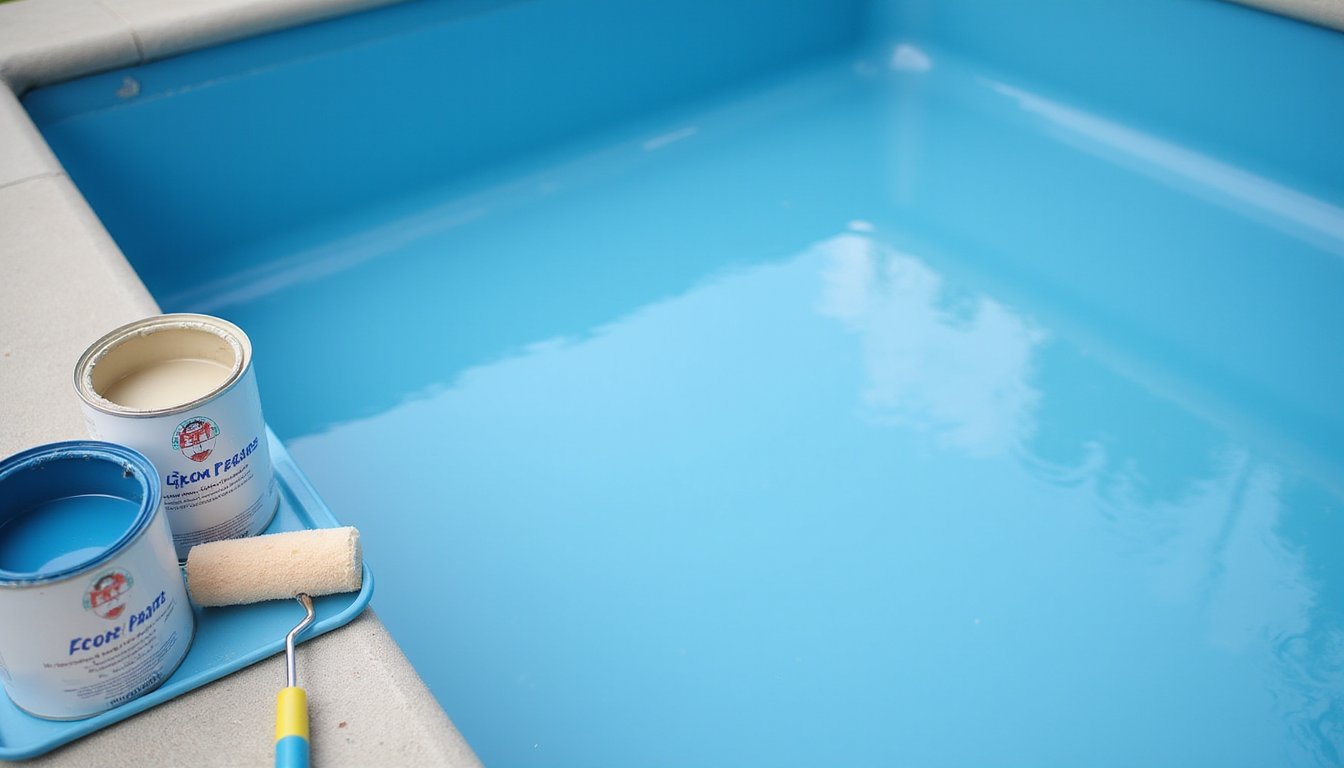
How long can you expect epoxy pool paint to hold up on a fiberglass surface? Two-part epoxy formulations typically deliver 8, 10 years of fiberglass laminate surface protection when you apply them correctly. Solvent-based variants average 7, 8 years, while standard single-coat applications last around 5 years with consistent maintenance.
Two-part epoxy pool paint protects fiberglass surfaces for 8, 10 years when applied correctly.
Four factors directly influence your coating’s service life:
- Climate exposure, extreme temperatures and humidity accelerate epoxy breakdown
- Swimming traffic volume, heavy usage wears down the coating’s surface faster
- Chemical balance, improper chlorine or pH levels degrade the paint prematurely
- Application thickness, adding a third coat can extend durability to 12, 15 years
Watch for cracking, fading, or rough texture as deterioration indicators.
Ready to Transform Your Backyard?
Your dream pool is closer than you think. At Schiller Pools, our experienced team brings over 40 years of expertise to every project, delivering stunning fiberglass pool installations and custom pool construction that turn ordinary backyards into extraordinary outdoor retreats. With flexible financing options and lifetime warranty backing, there has never been a better time to get started. Call (561) 475-5997 today for your free estimate.
Frequently Asked Questions
Can You Paint a Fiberglass Pool a Different Color Than the Original?
Yes, you can paint your fiberglass pool a different color than the original gelcoat. You’ll need a two-part epoxy paint, like Platinum Ultra or Platinum Plus, which bonds securely to sanded fiberglass surfaces. Sand the gelcoat with #80 grit pads to create a rough profile, then apply two coats of epoxy in your chosen color. Options typically include white, dawn blue, and black, fully transforming your pool’s appearance.
How Much Does It Cost to Paint a Fiberglass Pool?
You’ll spend between $260 and $342 on a 2-gallon epoxy paint kit, plus $30, $60 for primers like Gunzite or Poxoprime II. Add sanding supplies, rollers, and tape, and your total materials typically run $350, $450 for an average-sized pool. If you’re hiring professionals, labor adds considerably more. However, since epoxy lasts 5, 7 years on fiberglass, it’s a cost-effective alternative to full gelcoat resurfacing.
Can You Paint a Fiberglass Pool Yourself Without Professional Help?
Yes, you can paint a fiberglass pool yourself without professional help. You’ll need two-part epoxy paint, like Platinum Ultra or In The Swim, since it’s the only coating that bonds reliably to fiberglass. Sand the gelcoat with #80 grit sandpaper, dry-wipe the surface, then apply two coats with long, overlapping roller strokes. Allow 4, 7 days of curing before refilling. Two people can typically complete the painting step in 1, 2 hours.
Is Painting a Fiberglass Pool Better Than Gelcoat Resurfacing?
Painting isn’t necessarily better than gelcoat resurfacing, it depends on your pool’s condition and budget. Epoxy paint gives you 7 to 10 years of durable protection when you apply it correctly with proper surface preparation. However, gelcoat resurfacing restores the original factory finish and generally lasts longer. You should choose epoxy painting if you’re seeking a cost-effective restoration, but consider gelcoat resurfacing when your pool’s surface has extensive structural deterioration beyond cosmetic damage.
What Happens if You Use Non-Epoxy Paint on Fiberglass Pools?
If you use non-epoxy paint on a fiberglass pool, you’ll encounter adhesion failures, peeling, and coating separation within months. Acrylic paints require recoating after just 1, 2 years, while rubber-based options last only 2, 4 years, far short of epoxy’s 7, 10 year lifespan. Non-epoxy formulations can’t withstand constant chlorine exposure between 1, 3 ppm or bond effectively with sanded gelcoat surfaces. You’ll face premature deterioration, increased maintenance costs, and eventual full reapplication.