
To resurface your fiberglass pool slide, you’ll start by inspecting it for chips, cracks, and loose hardware, then sand the surface from coarse to 220-grit and clean it with acetone. Next, you’ll repair cracks using epoxy-saturated fiberglass cloth and Dura Glass filler built up in layers. Once cured, apply a high-gloss gelcoat, buff it smooth, and seal it with UV-resistant coating. Each step below breaks down the full process so you can tackle it safely and confidently.
Inspect Your Fiberglass Pool Slide for Damage
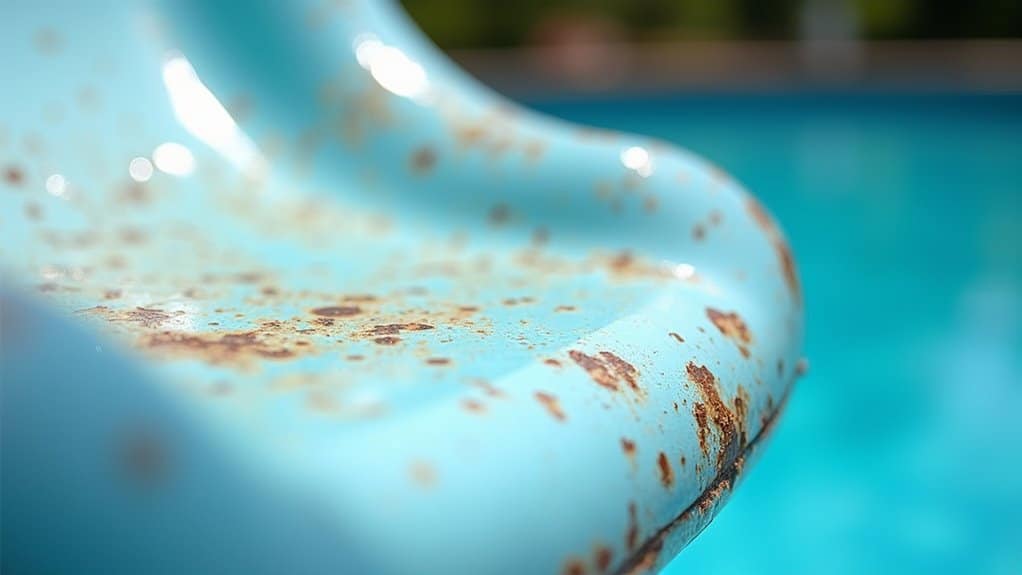
Before you apply any resurfacing materials, you’ll need to conduct a thorough inspection of your fiberglass pool slide to identify all existing damage. Check the gelcoat surface for chips, gouges, rough patches, and stress cracks by running your hand along the riding surface. Examine outer edges, bolting flanges, and section joints for fractures indicating structural compromise. Resurfacing options for fiberglass swimming pools can vary widely, so it’s essential to choose the right materials suitable for your specific pool type.
Inspect all hardware for loose, missing, or rusted fasteners. Verify water supply connections for leaks or worn components. Check the underside for mold, warpage, or corrosion from improper chemical exposure. Understanding fiberglass slide crack repair methods helps you determine whether damage requires professional intervention. For extensive structural issues, consult fiberglass slide surface repair contractors before proceeding. Perform this inspection annually and address minor cracks immediately. Maintain a log of all safety checks and repairs performed, including dates and details of any issues identified, to aid in future inspections and maintenance.
Prep the Pool Slide Surface for Resurfacing
Strip away all standing water from the slide surface using a submersible pump before any prep work begins. Direct drained water to a suitable drainage area to prevent flooding, then sweep away remaining debris. While draining, monitor the structure carefully for any signs of bulging or warping that could indicate underlying damage. Once the surface is clean and fully dried, assess the damage to determine the best fiberglass crack repair materials for the job. High-quality epoxy resin is often recommended for its durability and bonding capabilities.
Your fiberglass slide sanding preparation involves these critical steps:
Proper sanding preparation is the foundation of a lasting fiberglass slide repair, skip these steps at your own risk.
- Sand with an orbital sander, starting with coarse grit and progressing to 220-grit for a smooth, even texture.
- Vacuum dust between grit changes to prevent surface contamination.
- Deep clean surface by applying acetone or MEK in sections, changing rags frequently.
- Wipe with a tack cloth for final particle removal; inspect under bright light.
- Dry thoroughly for 24, 48 hours in humid conditions, maintaining temperatures between 65°F and 85°F with humidity below 50%.
Fix Cracks With Epoxy and Fiberglass Cloth
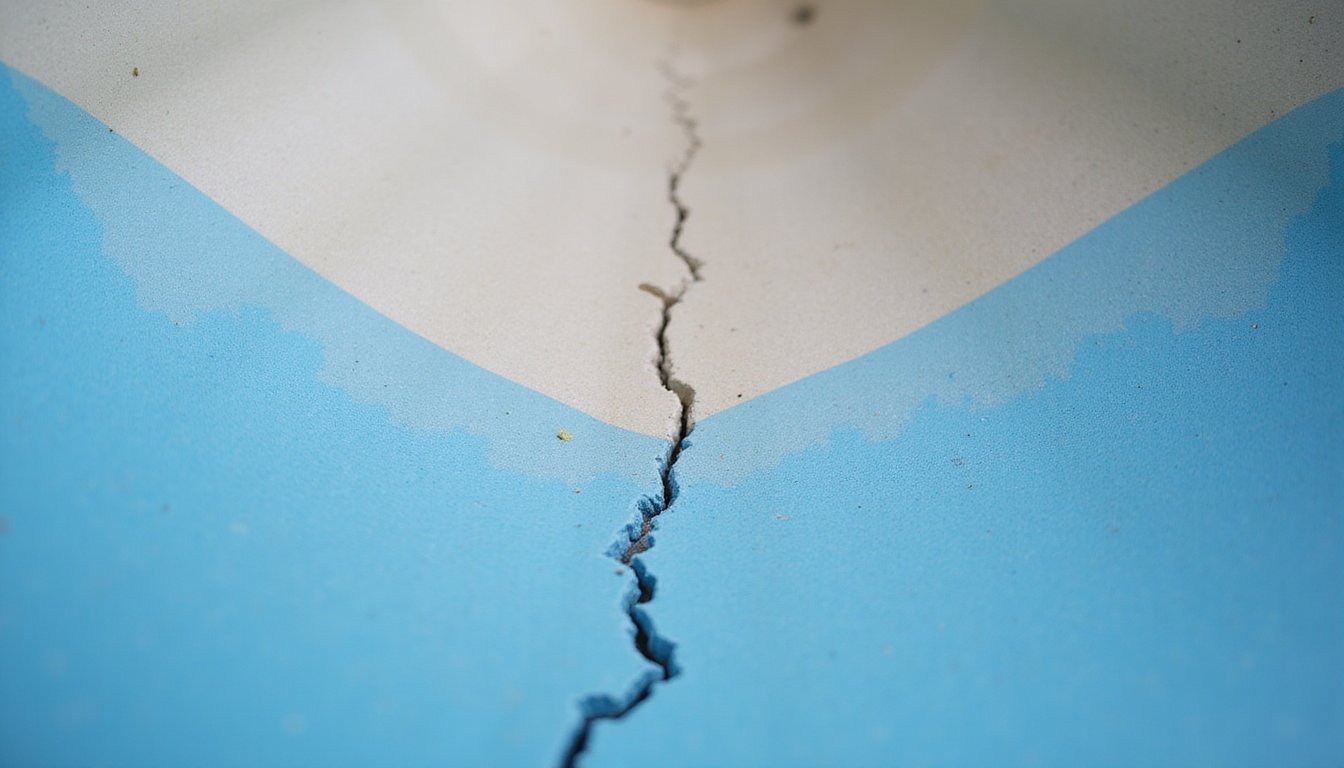
Once your sanded and cleaned slide surface has fully cured and dried, you’ll need to address any cracks before applying a new coating. Use a die grinder with a carbide burr to grind each crack into a V-groove from both the front and back sides. This exposes raw fiberglass and allows deeper epoxy penetration for fiberglass slide structural reinforcement.
Saturate fiberglass cloth in West System epoxy and apply it to the backside of each groove. Epoxy bonds stronger than polyester resin for holding reinforcement layers. After the fiberglass resin repair coating cures for 24 hours, apply Dura Glass filler over the front-side V-grooves. Build thickness in layers, sanding smooth between each application. Inspect repaired areas for recurring cracks before proceeding. Recurring cracks in the same locations suggest underlying structural problems that may require professional assessment before moving forward with resurfacing.
Reinforce Structural Damage on Your Pool Slide
When reinforcing structural damage on your pool slide, you’ll need to layer fiberglass mat in three to four successive stages, ensuring complete resin saturation at each level to build reliable load-bearing strength. Use epoxy resin instead of standard polyester resin, as it provides superior adhesion and moisture resistance critical for high-exposure pool environments. Prioritize the most severe damage first, address large fractures and compromised bolting flanges before moving to smaller defects, since these areas bear the greatest structural loads and pose the highest safety risks.
Layering Fiberglass For Strength
Reinforce cracked or weakened sections of your pool slide by layering fiberglass cloth with epoxy resin to restore structural integrity. The fiberglass mat reinforcement slide repair process requires careful attention to the layering process for lasting results.
Follow these steps to build durable repairs:
- Pre-coat the damaged area with mixed epoxy resin before placing cloth
- Cut fiberglass mat to shape with slight overhang, then saturate fully with epoxy
- Build layers sequentially, apply initial fiberglass tape, cure for one day, then add additional layers
- Overlap mat edges slightly to maintain continuous reinforcement
- Apply subsequent layers while the previous coat remains workable for best bonding
You’ll achieve maximum strength using multiple layers of 1708 biaxial fabric with epoxy. Each layer must cure approximately one day before you add the next.
Epoxy Over Standard Resin
Because epoxy resin forms a stronger adhesive bond than standard polyester resin, it’s the preferred choice for reinforcing structural damage on fiberglass pool slides. You can apply epoxy directly over existing polyester resin in most repair scenarios without compatibility issues. During the epoxy application process, pre-coat the damaged area with mixed epoxy before laying fiberglass cloth to guarantee full saturation and maximum adhesion.
For fiberglass slide gelcoat refinishing, you’ll want to rub epoxy into stress cracks by hand before applying reinforcement layers. Use West Systems epoxy for superior bonding strength compared to standard fiberglass resin. Allow repairs to cure for a full day before grinding or trimming excess material. Always test compatibility with a small patch on previously painted or coated surfaces before committing to full coverage.
Prioritize Heavy Damage First
Before applying any new coating, you’ll need to address structural damage that compromises the slide’s load-bearing capacity. Your damage assessment and preparation protocol should follow this sequence:
- Inspect crack dimensions, length, width, and depth, to determine repair scope
- Drain the pool to relieve internal pressure that could accelerate damage progression
- Grind damaged areas using carbide burr tools to create V-groove foundations for reinforcement
- Deburr joint edges to eliminate sharp protrusions that compromise repair integrity
- Vacuum debris from joints, then clean inner faces with acetone
For effective fiberglass slide surface restoration, cracks extending through multiple layers require professional intervention. Stress cracks on inside curves and edges signal composite weakening that demands immediate attention. Hairline cracks confined to the gelcoat represent minor cosmetic issues you can address during resurfacing.
Coat Your Fiberglass Slide With High-Gloss Finish
Sand the cured gelcoat lightly with 400- to 600-grit wet/dry sandpaper to knock down any surface imperfections, orange peel texture, or minor high spots left from the sprayer application. Allow approximately 45 minutes of cure time before sanding to avoid pulling uncured material.
After sanding, apply a clear coat to seal and protect the gelcoat spray application slide surface. Once the clear coat cures, buff it using HD Speed compound with an orange cutting pad to restore a mirror-like shine. This fiberglass slide polishing and sealing step eliminates fine scratches left by wet sanding.
Finish by applying a UV-resistant wax layer to guard against sun damage and chemical exposure. You can also use polyFIBRO thermal-polymer for a permanent high-gloss bond.
Keep Your Pool Slide Smooth for Years
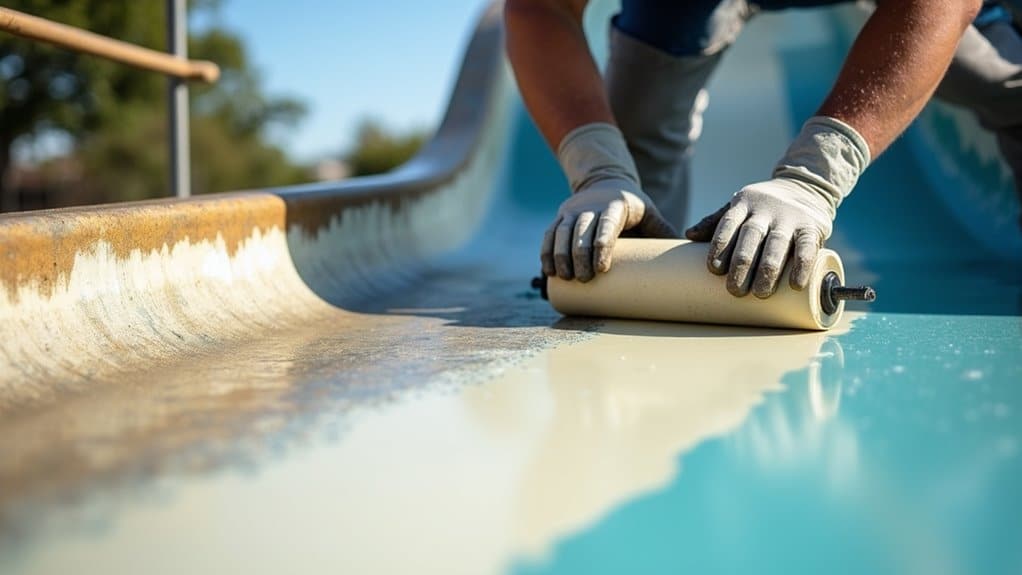
Once you’ve applied your high-gloss finish coat, you’ll need to polish light scratches and scuffs regularly using a product like Permatex Plastic Cleaner or Gel-Glass to maintain the slide’s smooth surface. Applying a UV-resistant coating protects the gelcoat from sun damage and extends the life of your resurfaced finish by several years. Setting a scheduled maintenance routine, including periodic inspections, cleaning, and touch-ups, prevents minor wear from developing into structural damage that requires full resurfacing.
Polish Light Scratches Regularly
- Clean the scratched area with a soft-bristle brush and pool-safe cleaner like Simple Green
- Apply a clay bar lightly to remove embedded contaminants from the surface
- Use HD Speed polish with an orange cutting pad on low aggression
- Buff the affected area with a clean cloth following product label directions
- Polish lightly after claying to restore color and glossy finish
Repeat this process routinely to prevent microscopic tears from developing into deeper structural damage.
UV-Resistant Coating Benefits
Regular polishing addresses surface-level wear, but it won’t stop ultraviolet radiation from breaking down the gelcoat at a molecular level. UV rays cause fading, chalking, and brittleness that compromise both appearance and structural integrity. Applying a fiberglass slide waterproof coating with UV-stable additives blocks this penetration, preserving color and gloss for years. When it comes to maintaining the beauty of your pool, choosing the best paint options for fiberglass pools is essential. These specialized paints will adhere well to the gelcoat and provide added protection against UV damage.
Products like Ramuc Slide Coat deliver up to four years of service life while resisting chlorine and pH adjusters. You’ll reduce uv damage repair frequency and avoid costly refinishing cycles. These coatings create a non-porous barrier that prevents rough patches responsible for swimmer injuries. The long-term savings from fewer replacements and lower maintenance outweigh your initial coating investment, keeping your resurfaced slide safe and smooth.
Scheduled Maintenance Prevents Damage
Because even the best UV-resistant coating degrades without upkeep, you’ll need a structured maintenance schedule to protect your resurfaced fiberglass pool slide from preventable damage. Follow these scheduled inspection protocols to catch issues early:
- Assess every inch of the surface annually for scratches and delamination.
- Check corners, steps, and curves for chemical buildup quarterly.
- Pressure wash the slide quarterly to remove algae, scale, and residues.
- Monitor for blisters indicating osmosis after five to ten years.
- Document damage with photography for accurate repair planning.
For ongoing maintenance to extend life, sand the gelcoat down to the FRP layer annually to fill pinholes. Apply thin primer coats at a 4:1 ratio, allowing two to four hours between applications.
Ready to Transform Your Backyard?
Your dream pool is closer than you think. At Schiller Pools, our experienced team brings over 40 years of expertise to every project, delivering stunning fiberglass pool installations and custom pool construction that turn ordinary backyards into extraordinary outdoor retreats. With flexible financing options and lifetime warranty backing, there has never been a better time to get started. Call (561) 475-5997 today for your free estimate.
Frequently Asked Questions
How Much Does It Cost to Resurface a Fiberglass Pool Slide?
You’ll typically spend between $300 and $1,000 to resurface a fiberglass pool slide, depending on the slide’s size and the severity of existing damage. If you’re using epoxy paint, expect material costs around $1 to $2 per square foot, plus labor rates ranging from $46 to $67 per hour. You can reduce long-term costs by applying UV-protective coatings and maintaining regular cleaning schedules to extend your resurfaced finish’s lifespan.
How Many Gallons per Minute Should Water Flow Down the Slide?
You should maintain a water flow rate of approximately 10 to 20 gallons per minute on your resurfaced fiberglass pool slide. This flow rate reduces friction on the new gelcoat surface and prevents riders from building excessive speed. You’ll need a dedicated water supply line to deliver consistent coverage across the slide’s width. After resurfacing, verify your flow rate meets these specifications before allowing swimmers to use the slide safely.
Can You Resurface a Rotomolded Plastic Pool Slide the Same Way?
No, you can’t resurface a rotomolded plastic pool slide using fiberglass methods. Rotomolded polyethylene won’t bond with epoxy resin or gelcoat coatings. Instead, you’ll need to use plastic welding techniques, melting matching PE plastic rods directly into cracks with a plastic welder. Since rotomolded slides carry color throughout the material rather than in a surface layer, the repair and finishing processes require completely different tools, materials, and procedures.
How Long Does a Resurfaced Fiberglass Pool Slide Coating Typically Last?
A properly resurfaced fiberglass pool slide coating typically lasts several decades before you’ll need to reapply it. You can extend this lifespan considerably by buffing and waxing the surface every two to three months, maintaining stable water chemistry, and minimizing UV exposure. Since fiberglass’s non-porous gelcoat resists fading, cracking, and chemical wear, you won’t face the frequent resurfacing cycles that vinyl or plaster surfaces demand every seven to fifteen years.
Is It Safe to Use Pool Chemicals Immediately After the Slide Is Resurfaced?
No, you shouldn’t expose your resurfaced slide to pool chemicals immediately. Uncured epoxy, gelcoat, or acrylic coatings risk degradation from chlorine and salt contact. You’ll need to wait 2, 7 days for all layers to fully cure before introducing chemical exposure. During this period, keep the slide dry and away from splashing pool water. Once cured, rinse surfaces daily, especially in saltwater pools, to prevent chemical buildup and protect your new coating.